
Venise, La Salute. Effet De Matin — History & Facts
When did color learn to lie? In the ethereal glow of twilight, nostalgia dances across the canvas, whispering secrets of a time long past. Each hue invites viewers to experience memories that feel both familiar and elusive, an intimate connection to a world that might have been. Focus on the gentle interplay of soft pastels as you explore the painting. Begin with the serene dome of the Basilica di Santa Maria della Salute, positioned to the left, its magnificent form bathed in a soothing gold and lavender light.
Notice the reflections shimmering upon the water’s surface, mirroring the beauty above while creating a dreamlike symmetry. The delicate brushwork captures the tranquil wavelets, offering a sense of movement that contrasts with the stillness of the scene, pulling you deeper into the ambiance. Beneath the surface, the painting embodies a juxtaposition of tranquility and longing. The glorious sky, alive with color, hints at a fleeting moment caught between day and night, reflecting the artist's yearning for both beauty and permanence.
The boats, silhouetted against the vibrant backdrop, suggest an echo of life that may be slipping away. This tension serves to evoke feelings of nostalgia, as if the viewer is momentarily grasping for a memory just out of reach. Félix Ziem created this work during his time in Venice, between 1860 and 1890, amidst a flourishing of artistic exploration in the city. This period saw an increasing fascination with the effects of light and atmosphere, as artists sought to capture the ephemeral beauty of their surroundings.
Ziem, known for his mastery of color and light, became a prominent figure in this movement, blending realism with a dreamy quality that would resonate with viewers for generations.
More Artworks by Félix Ziem
Browse all →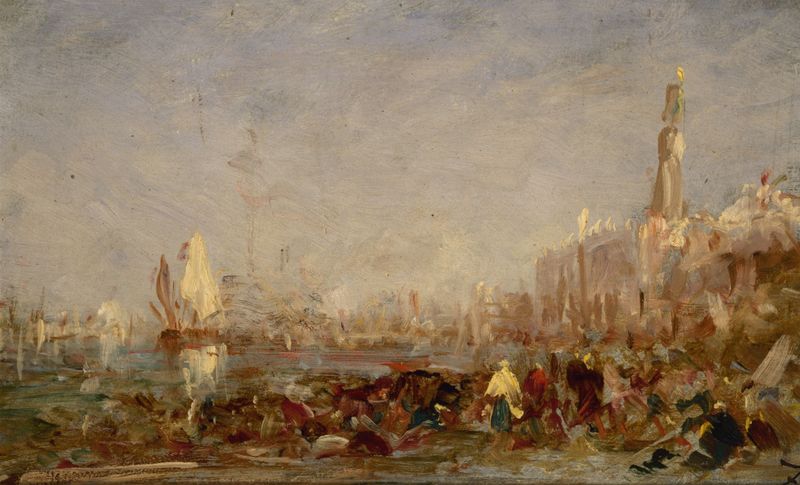
Venise
Félix Ziem
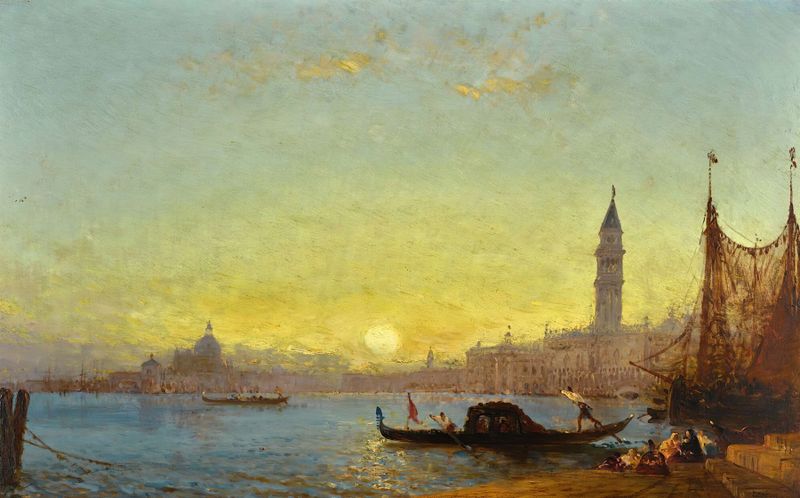
Coucher De Soleil À Venise
Félix Ziem
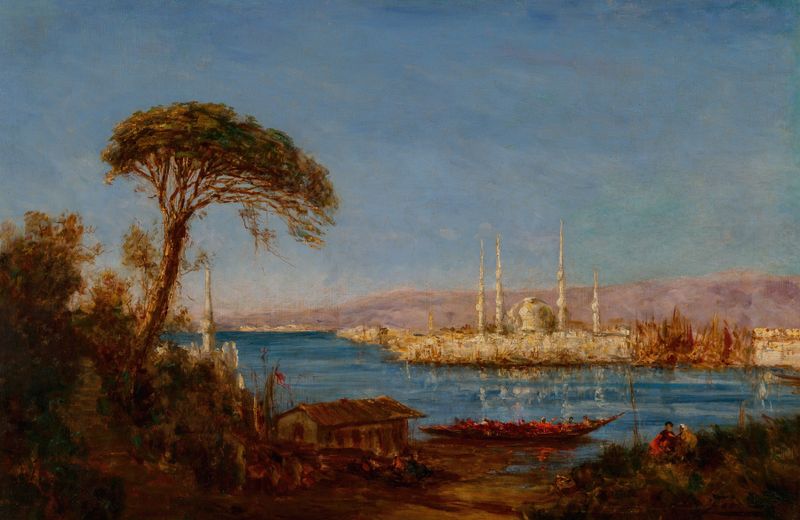
Constantinople
Félix Ziem
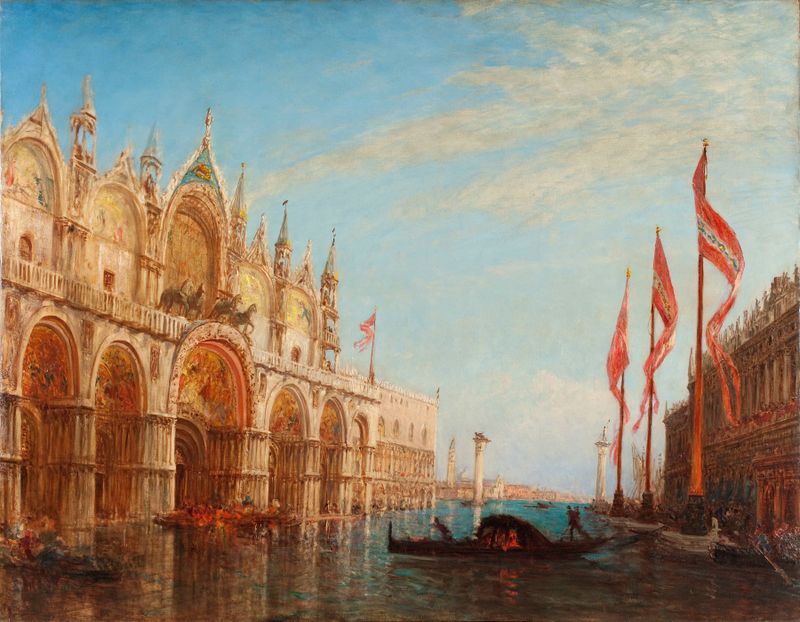
La place Saint-Marc, inondation de 1863
Félix Ziem
Bacino di San Marco
Félix Ziem
Le Palais Du Doge, Venise
Félix Ziem
Canal Grande
Félix Ziem
Vue d’Italie; la vieille porte
Félix Ziem
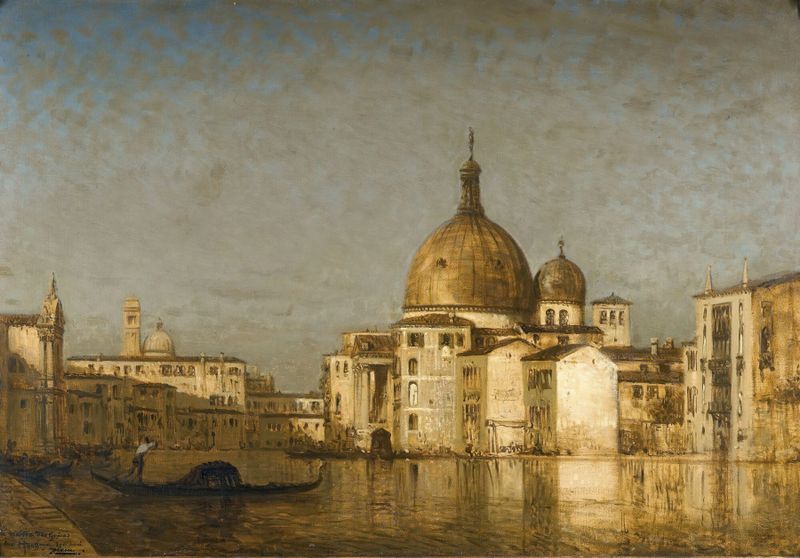
San Simeone Piccolo Au-Delà Du Grand Canal, Venis
Félix Ziem
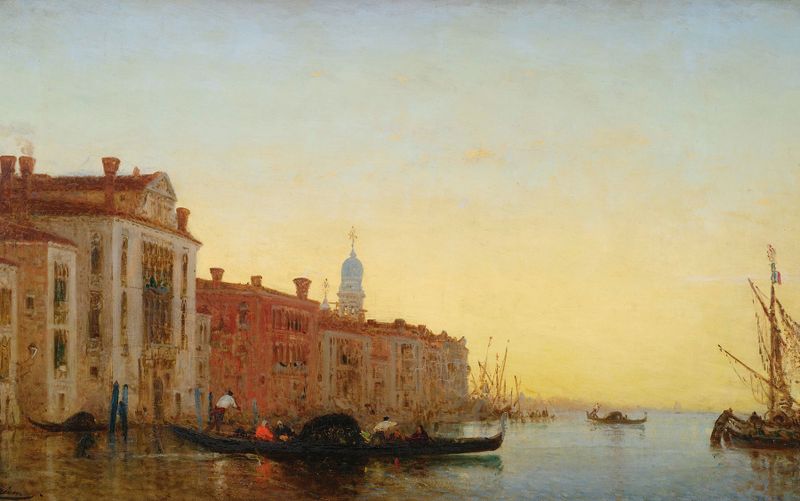
Gondole Traversant L’entrée Du Grand Canal
Félix Ziem





