
Vervallen woning en dorpskerk — History & Facts
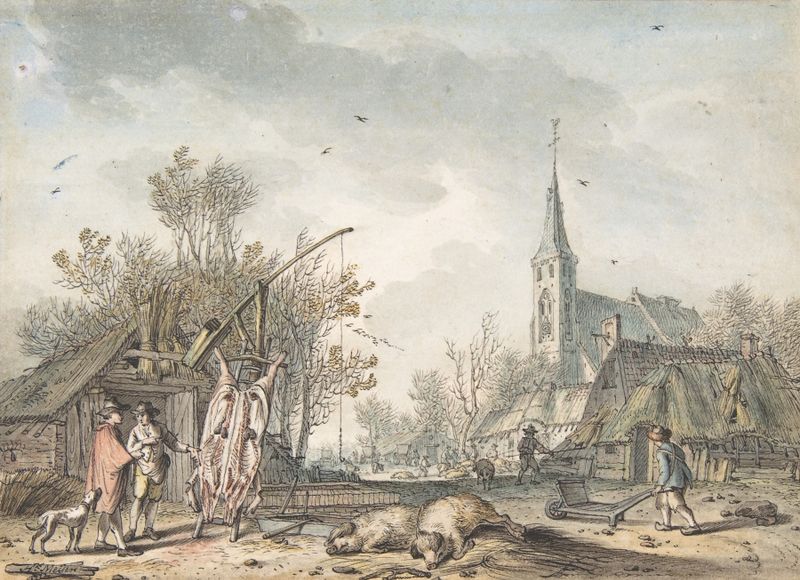
What if beauty was never meant to be finished? In the decay of time, there lies a haunting elegance that transcends the mundane. Look to the left at the crumbling facade of the house, where the weathered bricks speak of ages past. The artist’s brush captures the interplay of shadow and light, revealing a palette of browns and muted greens that reflects both decay and resilience. Focus on the village church, its steeple reaching toward an indifferent sky, symbolizing the steadfastness of faith amidst the ravages of time.
The composition draws the eye from the dilapidated residence to the church, invoking a sense of journey, both physically and spiritually. Beneath the surface, this work conveys a profound tension between desolation and hope. The contrast of the crumbling building against the enduring church suggests a dialogue between the transient and the eternal. Subtle details, like the overgrown weeds and cracked windows, embody the passage of time, while the church stands as a beacon of continuity.
This interplay invites viewers to reflect on their own relationship with mortality and permanence. In 1777, Hendrik Meijer painted this scene during a period of shifting artistic trends in the Netherlands. Emerging from the influence of the Dutch Golden Age, he was exploring themes of realism combined with an appreciation for the sublime beauty of nature and architecture. The changing landscape of Dutch society, marked by both progress and nostalgia, informed this work, which captures the essence of a world in transition, poised between the past and an uncertain future.
More Artworks by Hendrik Meijer
Browse all →
Watermolen en dorpskerk
Hendrik Meijer
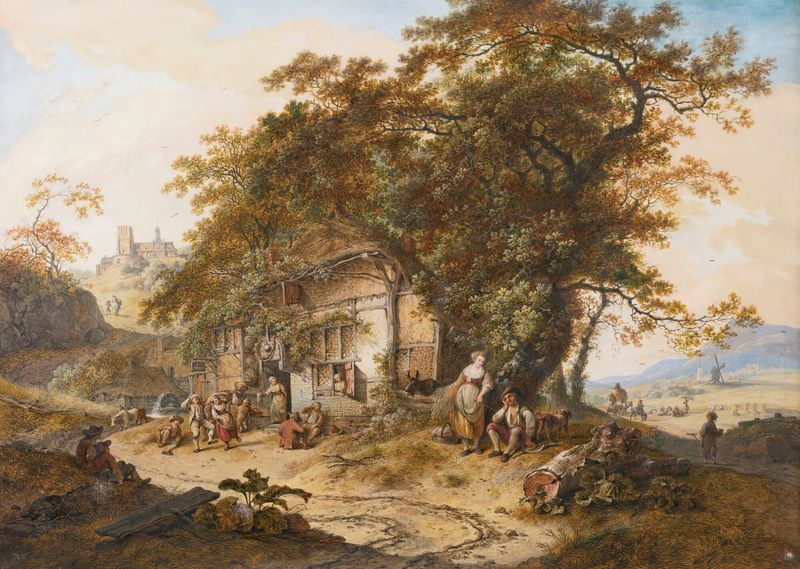
Extensive Landscape With Peasants Resting Before A Tavern, Others Harvesting In The Distance, And A Church On A Hill Behind
Hendrik Meijer
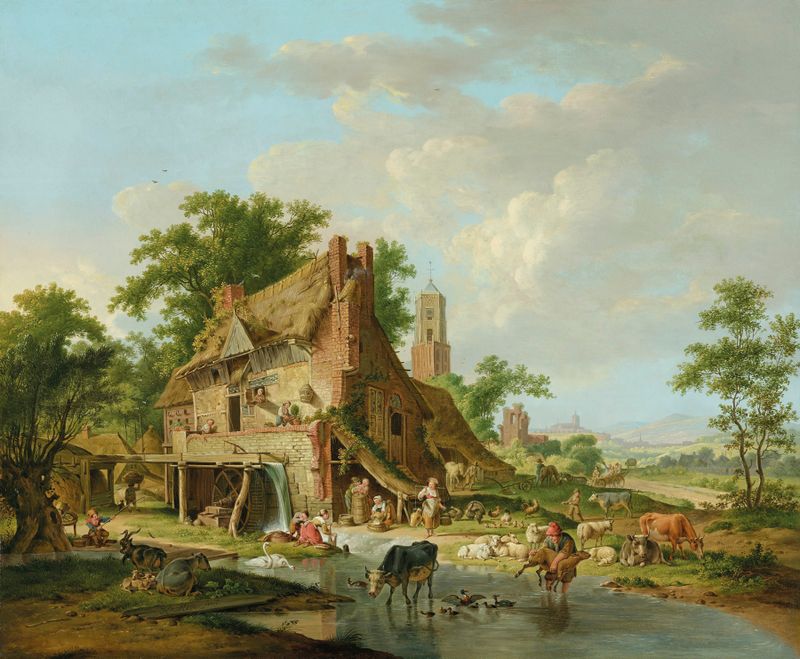
A watermill with farmyard animals and peasants, a landscape beyond
Hendrik Meijer
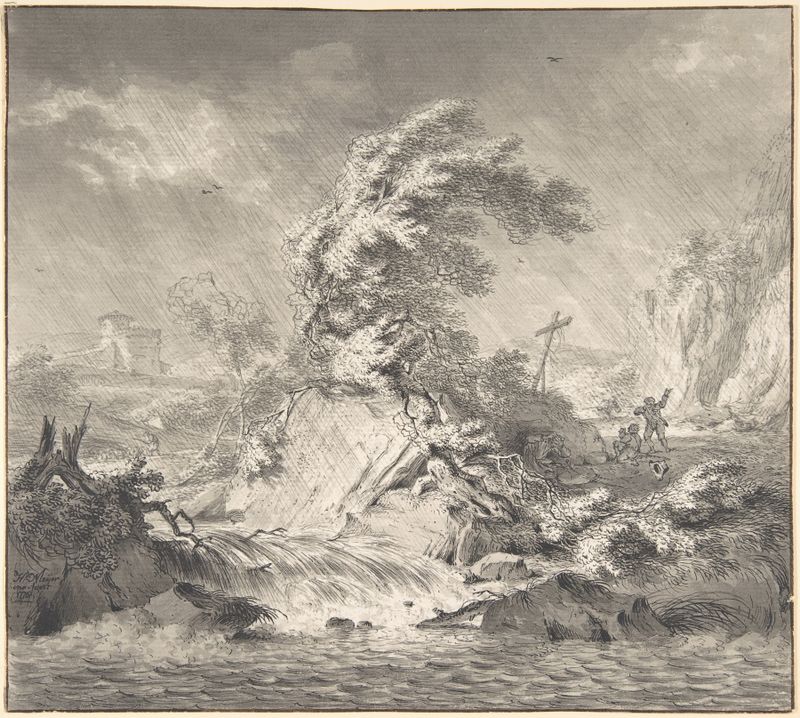
Stormy Landscape
Hendrik Meijer

The Twelve Months
Hendrik Meijer
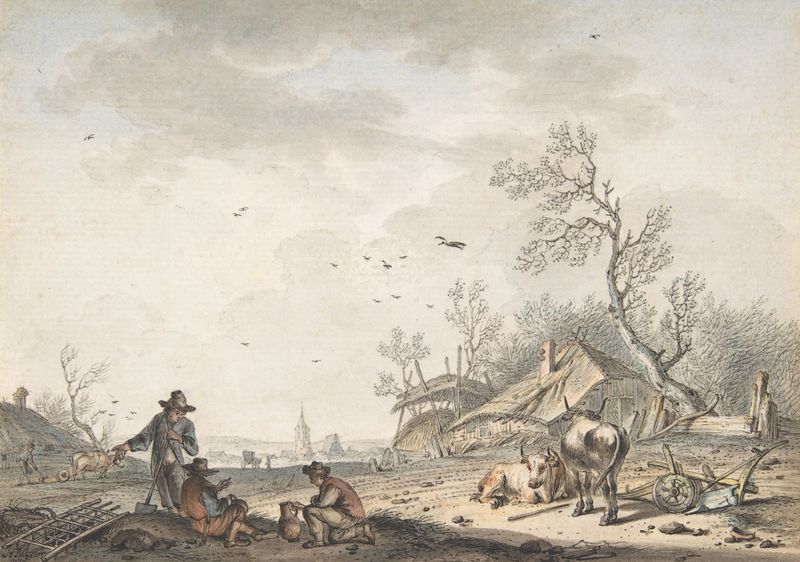
March
Hendrik Meijer
November
Hendrik Meijer

September
Hendrik Meijer

December
Hendrik Meijer
February
Hendrik Meijer





