
Via Appia — History & Facts
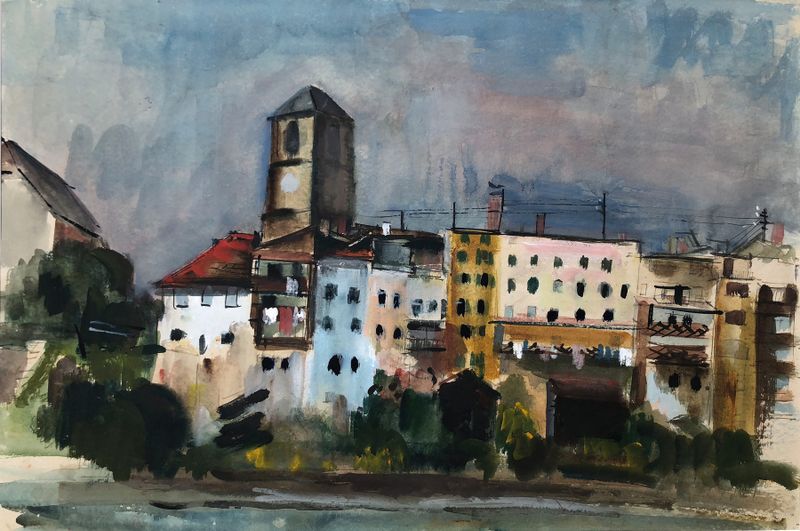
As movement weaves through the stillness of art, it challenges the confines of memory and time itself. With each brushstroke, the essence of the journey unfolds, whispering stories that travel beyond the surface. Look to the left where the winding path of the Via Appia leads the eye forward, inviting viewers into the depth of the canvas. The muted earth tones create a rich texture that captures the ancient stones, while dappled light flickers through the trees, suggesting the passage of daylight.
Focus on the subtle play of shadow and light, as it dances across the figures who traverse the path—an unhurried flow that suggests both motion and reflection, urging us to contemplate the journey of life. Beneath the surface, the artwork reveals a tension between the past and present, where the road symbolizes not just a physical journey, but the passage of time itself. The figures, though still, echo a sense of impending movement, illustrating the ever-present desire to seek, to advance, and to connect with what lies beyond. Each element—a stone, a shadow, a figure—speaks of continuity and the shared human experience of traversing life's roads, both literal and metaphorical. Created in 1940, this piece emerged during a tumultuous period for Otto Geigenberger, marked by the shadows of World War II looming over Europe.
Living in a time of uncertainty, he sought to explore themes of movement and memory through his work, drawing from the historical significance of the Via Appia, a road that has witnessed centuries of travel and transformation. His approach reflects both personal and collective journeys, grounding the artwork in a rich tapestry of human experience.
More Artworks by Otto Geigenberger
Browse all →
Hohe Munde bei Seefeld in Tirol
Otto Geigenberger
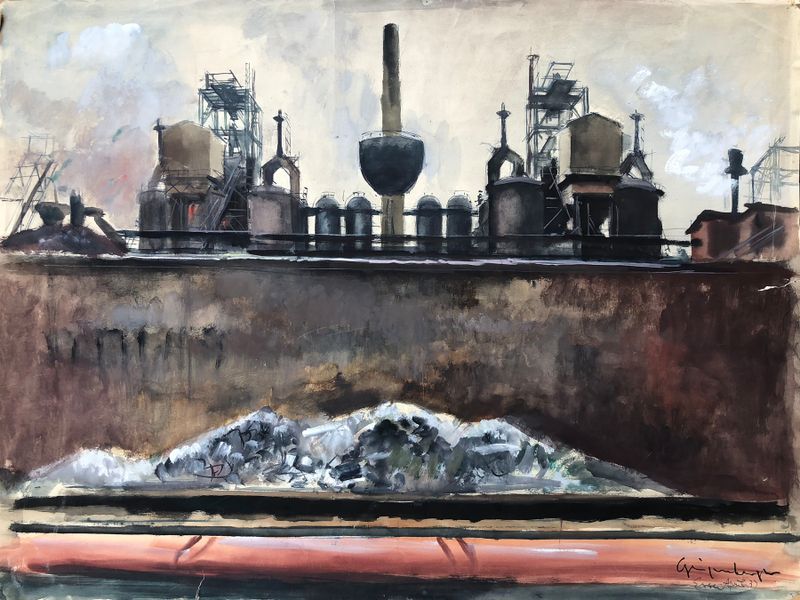
Stahlwerk Krupp in Essen
Otto Geigenberger

Landschaft mit Kirche
Otto Geigenberger

Passau am Inn 2
Otto Geigenberger
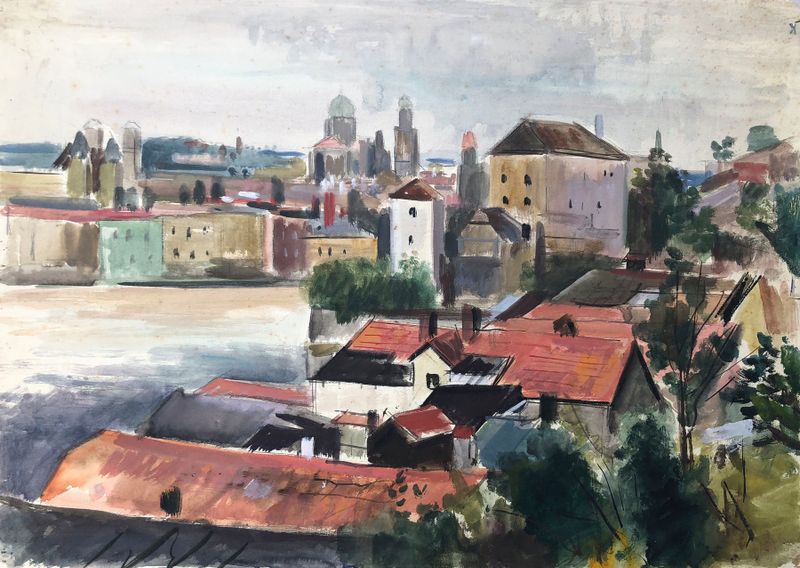
Passau am Inn
Otto Geigenberger
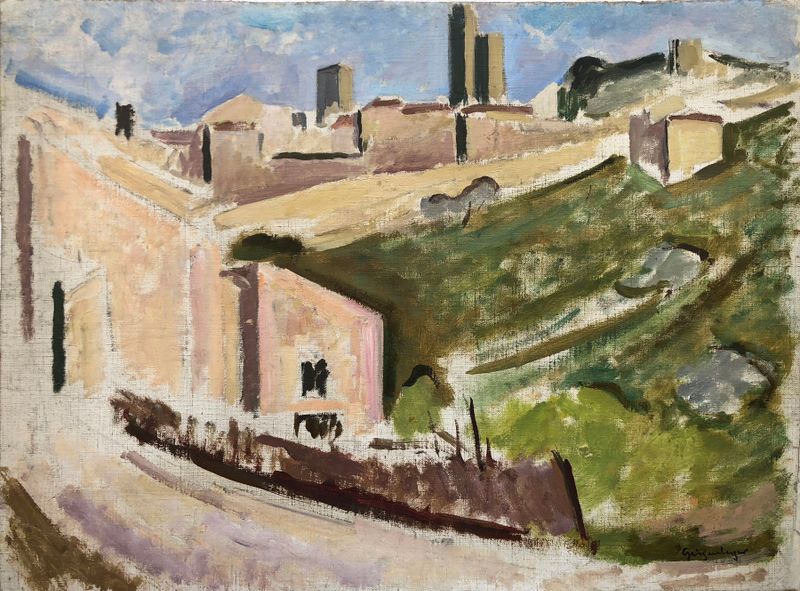
Südliche Stadt auf einem Hügel
Otto Geigenberger

Wasserburg am Inn – Häuserpartie am Inn
Otto Geigenberger

Wasserburg am Inn – Innfront
Otto Geigenberger
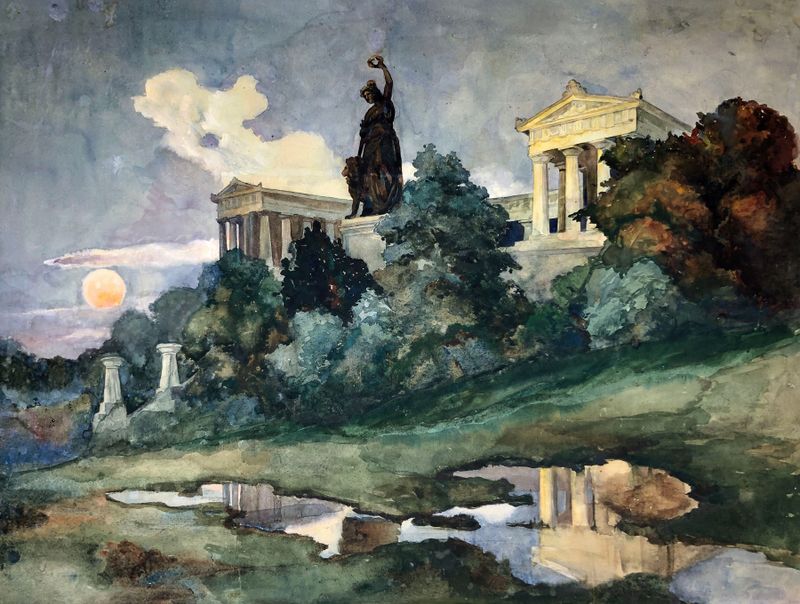
Sonnenuntergang an der Bavaria und Ruhmeshalle in München
Otto Geigenberger
Wasserburg am Inn – Innfront.
Otto Geigenberger





