Via con terrazze ad Amalfi — History & Facts
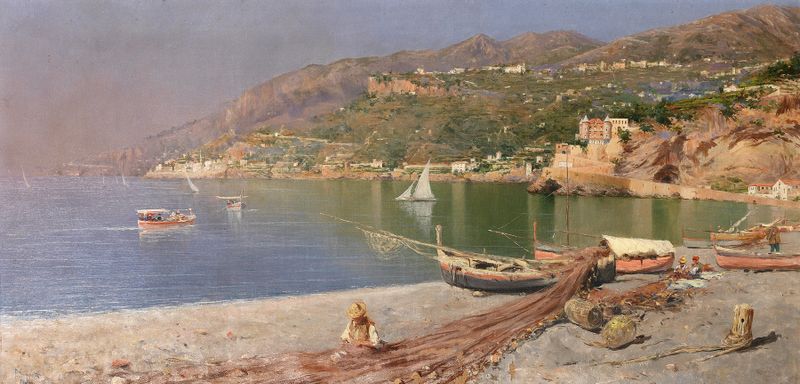
A quiet melancholy permeates the air, evoking the reflection of a past untraced yet deeply felt. In the midst of vibrant terraces overlooking the azure sea, the void of absence is palpable, drawing the viewer into a contemplation of what once was and what remains. Look to the right at the intricate details of the terraced landscape, where soft pastels blend seamlessly with the rich greens of foliage. The layered compositions create depth, inviting the eye to wander through winding paths that seem to disappear into the horizon.
Notice how the sunlight dances across the surface of the water, illuminating the scene in a way that feels both warm and haunting, suggesting a fleeting moment suspended in time. This artwork captures a delicate balance between presence and absence. The empty spaces, void of human figures, speak to the loneliness that can accompany beauty. Each terrace, vibrant yet isolated, serves as a reminder of connections once shared or longed for, emphasizing the emotional tension of solitude nestled within a picturesque landscape.
The rhythmic lines of the terraces reflect a structured life, contrasting the wild, untamed nature of the sea, embodying the push and pull of human aspiration against nature's indifference. Pietro Scoppetta created this piece during a period when artists were increasingly experimenting with color and form to express emotional landscapes. Though the exact date remains uncertain, it is believed he worked in the early to mid-20th century, navigating a world marked by dramatic change and a yearning for connection amidst isolation. His exploration of light and color reflects not just the beauty of the Italian coast but the internal struggles of humanity caught between desire and reality.