Paesaggio di Amalfi — History & Facts
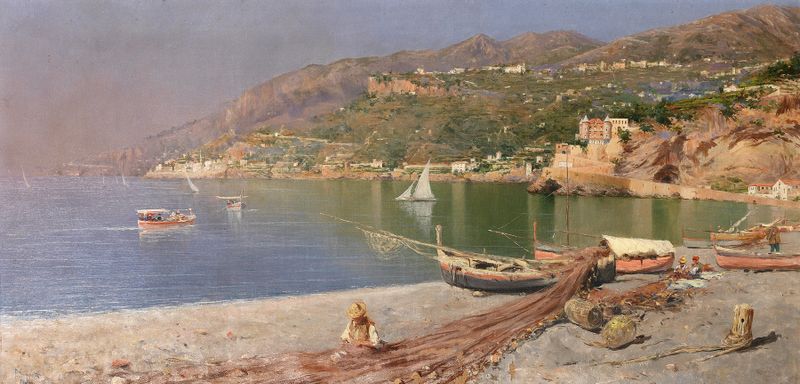
In the delicate interplay of colors and forms lies a testament to destiny, suggesting that life can weave beauty from disorder. Look to the center of the canvas where the vibrant blues of the Mediterranean Sea dance with the soft, sun-kissed yellows of the Amalfi coastline. The bold strokes create a rhythm that draws the eye from the serene horizon to the intricate details of the buildings nestled against the cliffs. Notice how the interplay of light and shadow captures the essence of a warm Italian afternoon, inviting the viewer to step into this idyllic escape. Yet beneath this picturesque scene, there lies a tension between tranquility and the relentless pull of nature.
The looming cliffs stand firm, representing both permanence and the inevitable, while the churning sea hints at the uncontrollable forces of life. Scoppetta’s choice of bold hues reflects not just the vibrancy of the landscape, but also the underlying emotions tied to human existence—joy intermingled with uncertainty. Created during a time when Italy was embracing the modernity of the 20th century, the artist painted this work in a period marked by both nostalgia for the past and excitement for the future. As he captured this Amalfi vista, he was influenced by the burgeoning movements of expressionism and the search for identity in art, rendering a scene that resonates not only with beauty but with the deeper currents of life itself.