
View From Floyd’s Grave, 1300 Miles Above St. Louis — History & Facts
When did color learn to lie? The world captured in this artwork transcends mere representation, inviting us to question the nature of reality and perception. Look to the center of the canvas, where swirling blues and greens collide, depicting the vast, undulating landscape that stretches out endlessly. The artist’s rich palette breathes life into the heavens, while the clouds hover delicately, tinged with soft oranges and whites. Notice how the horizon, a gentle gradient, gracefully separates earth from sky, evoking a sense of infinity that draws the viewer's eye upwards, inviting contemplation and wonder. As you explore further, consider the juxtaposition of the serene natural beauty with the stark loneliness of the grave marker.
The starkness of Floyd’s grave, a solitary figure against the expansive backdrop, speaks to a profound connection between humanity and nature. This contrast between the earthly and the ethereal suggests a meditation on mortality and legacy, urging us to reflect on our place within the grand tapestry of life. In 1832, George Catlin journeyed through the American wilderness, driven by a desire to capture the vanishing cultures and landscapes of Indigenous peoples. At this time, America was grappling with rapid expansion and change, and the artist found himself amidst conflicting narratives of progress and preservation.
This artwork stands as both a tribute to the natural world and a poignant reminder of the histories that linger in the spaces we inhabit.
More Artworks by George Catlin
Browse all →
Wichita Lodge, Thatched With Prairie Grass
George Catlin

Ball-play of the Choctaw–Ball Up
George Catlin

Sioux Worshiping At The Red Boulders
George Catlin
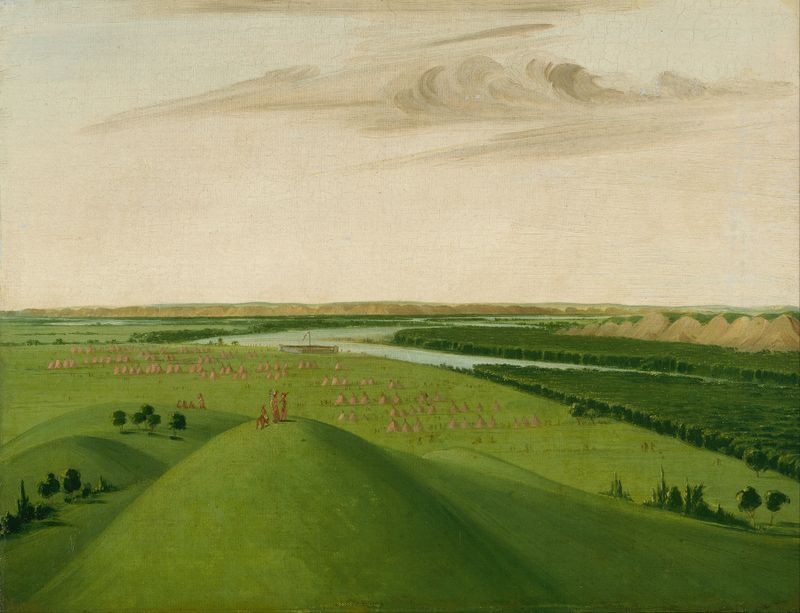
Fort Union, Mouth of the Yellowstone River, 2000 Miles above St. Louis
George Catlin
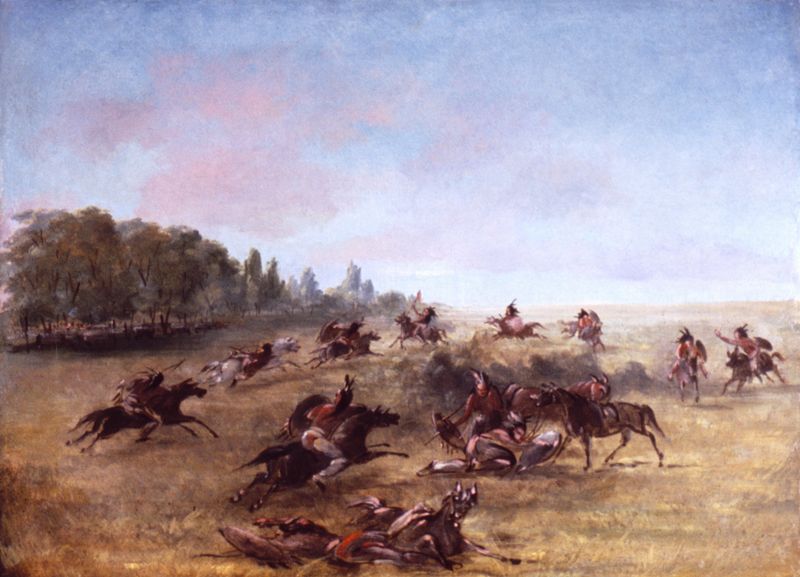
Mounted War Party Scouring A Thicket
George Catlin

Buffalo Chase, A Surround by the Hidatsa
George Catlin
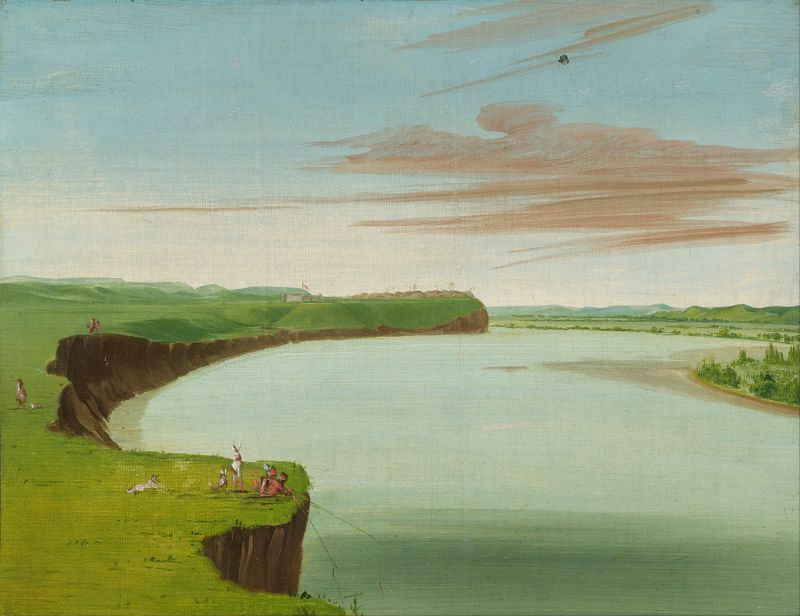
Distant View of the Mandan Village
George Catlin
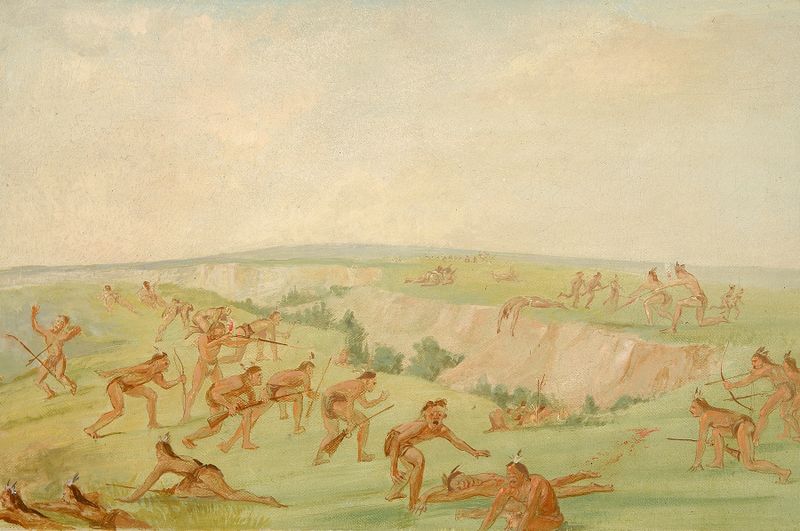
Mandan Attacking A Party Of Arikara
George Catlin
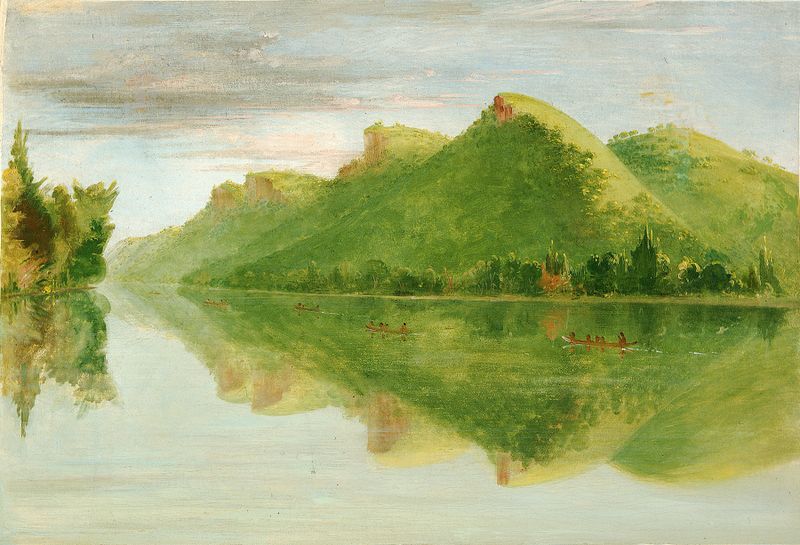
View On The Upper Mississippi, Beautiful Prairie Bluffs
George Catlin
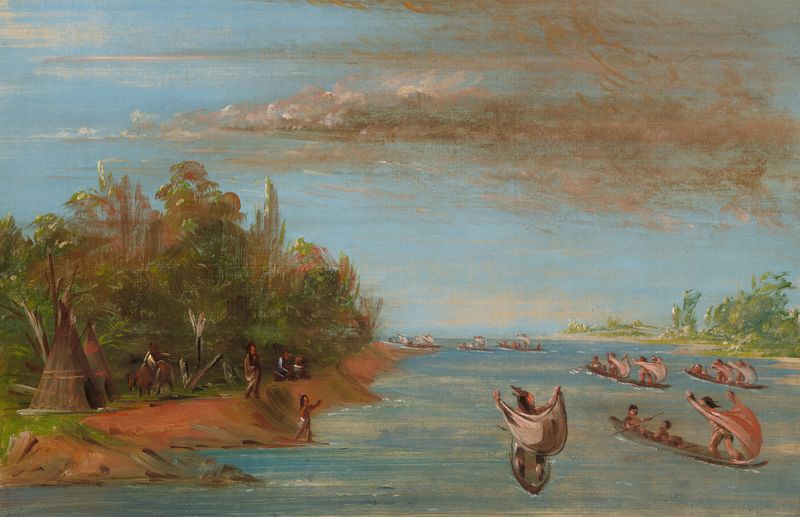
Sac And Fox Sailing In Canoes
George Catlin





