View in the Dunes — History & Facts
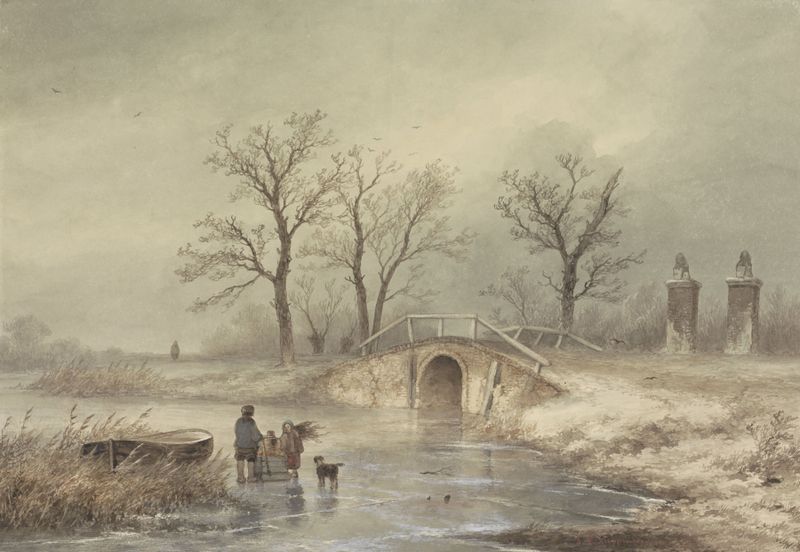
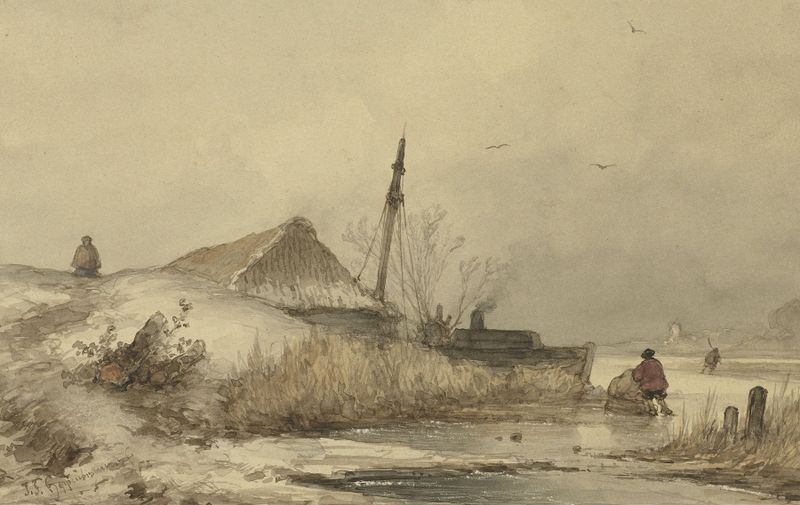
Did the painter know this moment would outlive them? In View in the Dunes, fragility dances delicately on the canvas, capturing a fleeting beauty that defies time. Focus on the horizon where soft, undulating dunes meet a pale sky, inviting your gaze into an expanse of tranquil solitude. The muted palette—earthy browns mingling with gentle greens—speaks of a quiet corner of nature. Notice how the light caresses the contours of the sand, creating a gentle play of shadows that emphasizes the undulating forms.
Each brushstroke seems deliberate, yet spontaneous, reflecting both precision and the transitory essence of the landscape. Beneath this serene surface lies a tension between permanence and ephemerality. The dunes, shaped by relentless winds, whisper stories of resilience and change. Yet amidst this perpetual motion, the distant figures—tiny against the vastness—embody a sense of human scale, reminding us of our fleeting presence within nature’s grand tableau.
Their quiet journey across the dunes speaks volumes of exploration and introspection, evoking deep emotional resonances about our place in the world. In 1855, Hoppenbrouwers found himself in the midst of a burgeoning Romantic movement, painting in the Netherlands where the love for nature’s portrayal was intensifying. The era was marked by a growing appreciation for landscape painting, as artists sought to express personal sentiments through depictions of the natural world. This work emerges from a time when the interplay of light and shadow was being explored, reflecting both the artist’s inner world and the broader artistic shifts of his time.