Wintergezicht met vrouw staand op het ijs — History & Facts
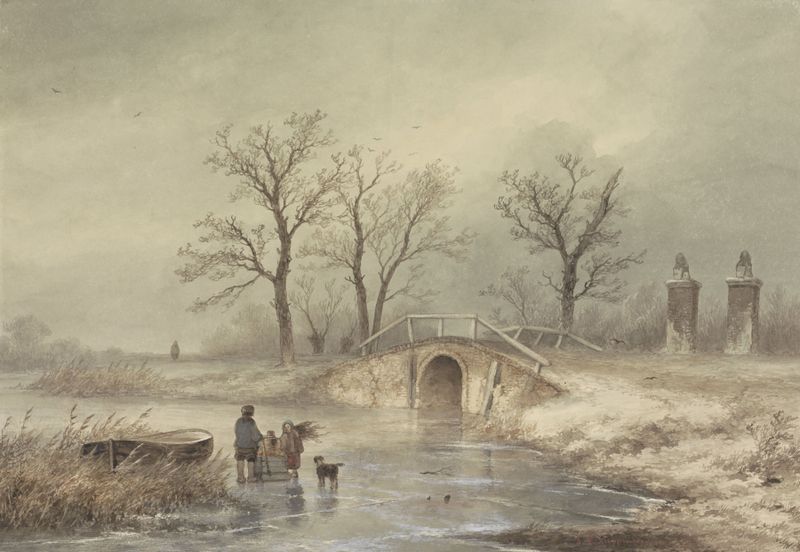
In the stillness of winter, beneath layers of frost and snow, life whispers of rebirth and resilience. A solitary figure, poised on the icy canvas, embodies the delicate balance between fragility and strength in the cold embrace of nature. Look to the foreground where the woman stands, her sturdy form contrasting against the shimmering, frozen expanse of ice. Notice how the cool blues and whites of the palette dominate, creating a serene landscape that belies the harshness of winter.
The soft brushwork captures the glistening surface of the ice, while the gentle, muted colors evoke a sense of tranquility and introspection, inviting viewers to step onto the ice alongside her. As the eye wanders, the subtle interplay of warmth and coolness becomes apparent. The woman’s posture, both upright and vulnerable, suggests a moment of contemplation amidst the starkness; she is at once part of the landscape and separate from it. The surrounding trees, bare and skeletal, stand in silent witness to her presence, hinting at life's cyclical nature—each season a canvas of its own, where the promise of rebirth lies beneath the surface. Hoppenbrouwers painted this piece during a time when the Netherlands was experiencing significant social change, between 1829 and 1866.
While navigating the influences of Romanticism and the early whispers of Realism in his work, he captured the essence of nature and humanity’s place within it. This artwork reflects his deep connection to the seasons, a theme that resonates profoundly during an era marked by transition and renewal.