Winterlandschap met boerderij aan sloot — History & Facts
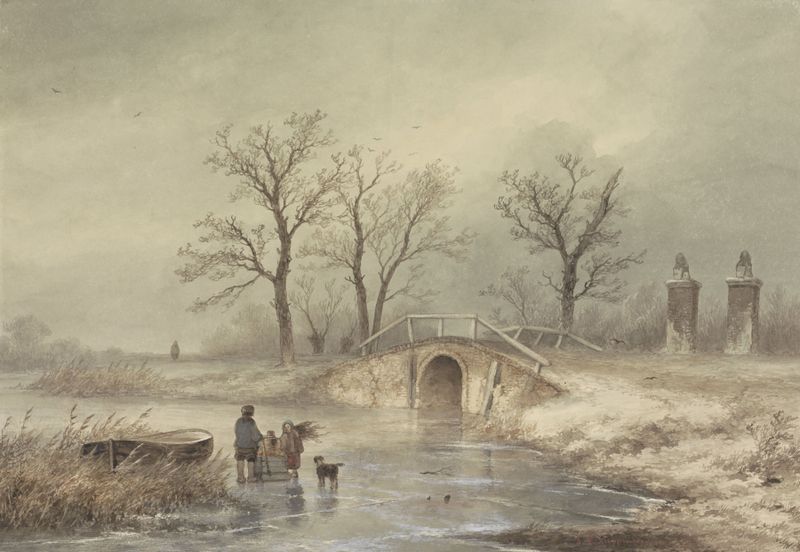
What if silence could speak through light? In the stillness of a winter landscape, an overwhelming sense of emptiness envelops the viewer, inviting introspection and contemplation. Look to the left at the quaint farmhouse, its thatched roof barely visible beneath a blanket of soft, white snow. The delicate brushstrokes capture the crisp chill of winter and the muted colors—icy blues and grays—evoke the desolation of the season. Notice how the light falls upon the frozen waterway, creating a shimmering contrast that draws your gaze into the depths of the scene.
The composition is both serene and haunting, where the gentle curves of the land meet the stark verticality of the trees lining the edge. Hidden within this tranquil landscape are emotional tensions that reflect the artist's deeper narrative. The farmhouse, isolated in the expanse, hints at the solitude of rural life, while the surrounding stillness might suggest isolation or a yearning for connection. The quietness of the scene serves as a meditation on the passage of time, where the weight of winter's embrace feels both oppressive and strangely beautiful.
Each element, from the wispy clouds to the frozen canal, whispers stories of patience and endurance. Johannes Franciscus Hoppenbrouwers painted this winter landscape in 1852, a period marked by artistic exploration and a shift towards realism in the Netherlands. Living in a time when industrialization began to reshape the countryside, he captured the essence of rural life amid change, offering a moment of stillness in a world on the brink of transformation.