Winterlandschap — History & Facts
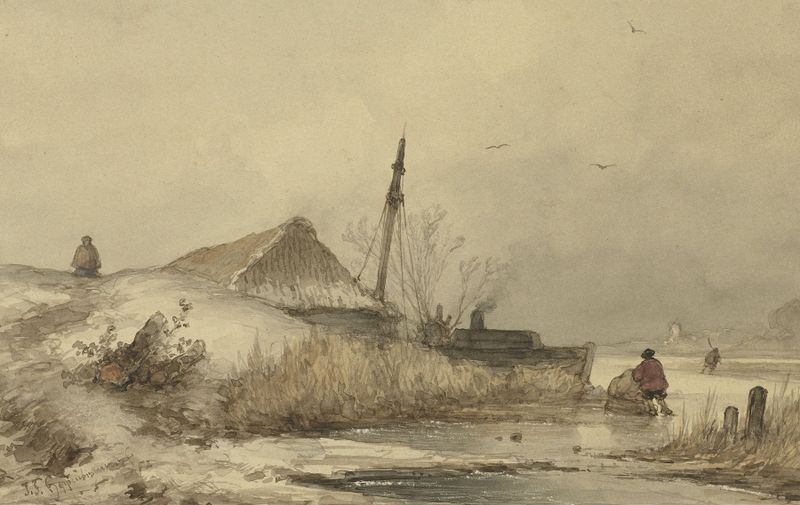
What if beauty was never meant to be finished? In the liminal space between the earth and sky, Winterlandschap invites viewers to ponder the divine intricacies of a winter landscape, untouched by the passage of time. Look closely at the foreground, where delicate brushstrokes create the illusion of a soft, powdery snow blanket. The pale blue sky stretches above, unfurling into muted grays that seem to breathe with life. Notice how light dances upon the icy branches of trees, casting intricate shadows that weave through the scene, emphasizing both stillness and motion.
The composition is carefully balanced, drawing the eye along the horizon where the subtle transition between land and sky unfolds. Within this serene winter tableau, there are echoes of isolation and tranquility, each whisper of wind suggesting a deeper connection to nature. The contrast between the starkness of the snow and the warmth of the distant horizon speaks to a fleeting moment—a reminder of both the harshness and beauty of the season. This duality captures a tension between solitude and serenity, inviting reflection on one’s own place within the vastness of creation. Johannes Franciscus Hoppenbrouwers painted Winterlandschap between 1829 and 1866, a period marked by a growing appreciation for the natural world in art.
During this time, the Romantic movement was gaining momentum, emphasizing individual emotion and the sublime beauty of nature. Working in the Netherlands, Hoppenbrouwers was immersed in a landscape that inspired a deep reverence for the divine aspects of the world around him, a sentiment that resonates profoundly in this work.