
View of a stone quarry in Bellevillé — History & Facts
The first thing to catch the eye in View of a stone quarry in Bellevillé is the monumental sweep of earth and rock, as if nature itself has been carved open to reveal its hidden bones. The painter, Abraham Teerlink, leads us into the scene with a winding path that draws the gaze past a cluster of cattle and figures toward the yawning mouth of the quarry. Sunlight pours over the pale cliffs, catching on their sharp edges and tracing the labor of human hands against the immensity of the landscape.
The lone tree to the right, lush and almost theatrical in its placement, stands in gentle contrast to the raw, geometric forms of the quarry, suggesting both the persistence of nature and the ambition of human industry. Every detail, from the scattered animals to the distant workers, is carefully orchestrated to invite the viewer to linger in this intersection of the pastoral and the industrial. Painted in 1808, this work belongs to a period when landscapes were gaining new prominence, not just as backdrops for myth or history, but as subjects worthy of attention in their own right. The early nineteenth century saw artists across Europe turning their eyes to the changing countryside, often capturing the effects of industry and agriculture on the land.
While little is recorded about the specific commission or journey of this painting, its presence today in the Dordrechts Museum signals its place within a tradition that valued both observation and idealization. Such scenes were often collected by those eager to celebrate progress or to reflect on the transformation of the world around them. The painting asks us to look again at the ordinary — to find drama not in grand events, but in the meeting of light, labor, and land.
More Artworks by Abraham Teerlink

Italian Landscape
Abraham Teerlink
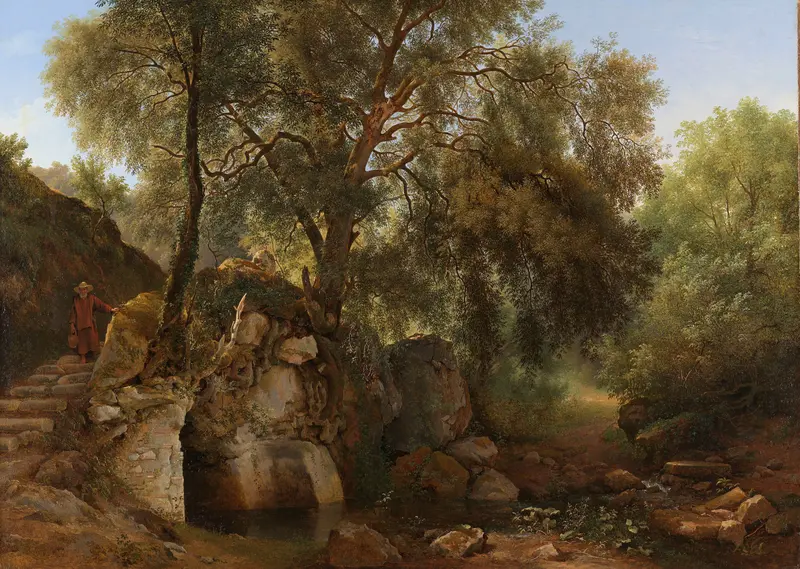
View in the Park of the Villa Chigi at Ariccia
Abraham Teerlink
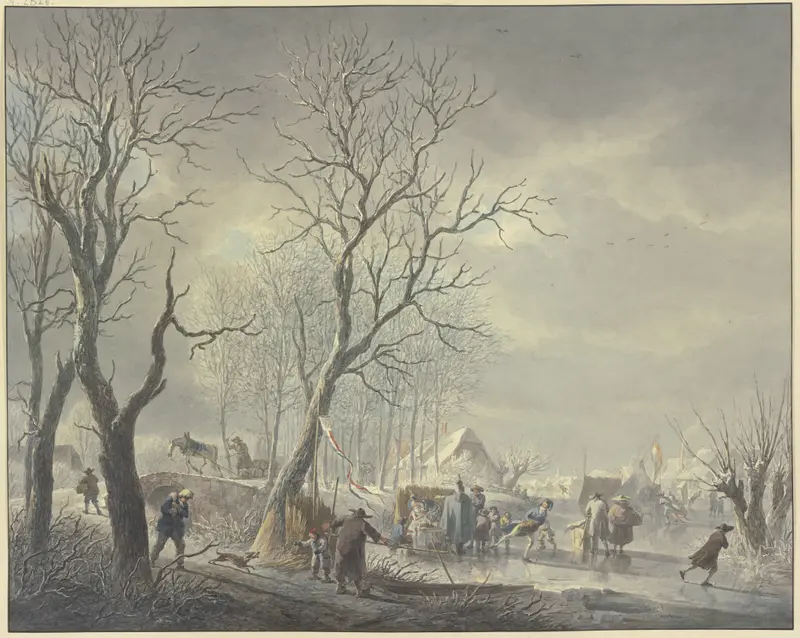
Winterlandschaft, Schlittschuhläufer bei Zelten auf dem Kanal, ein Husar umarmt ein Getränke haltendes Mädchen
Abraham Teerlink
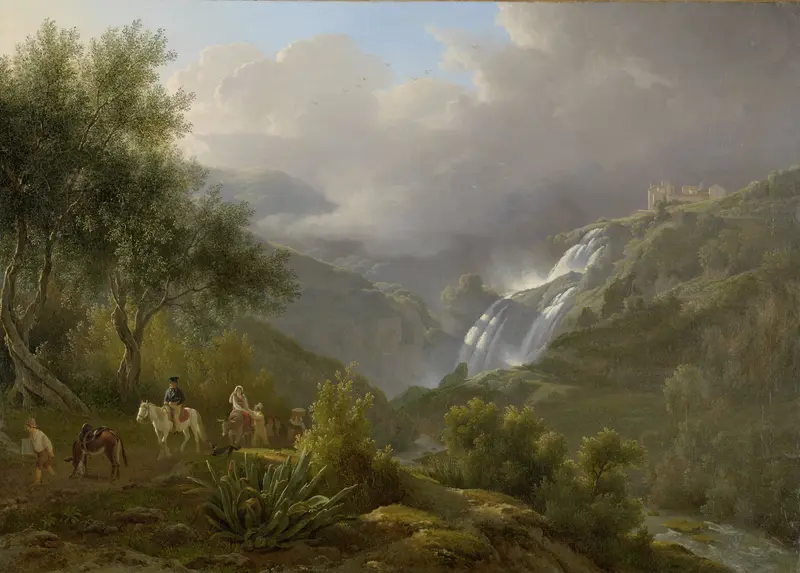
The Cascades at Tivoli, with a Storm Approaching
Abraham Teerlink
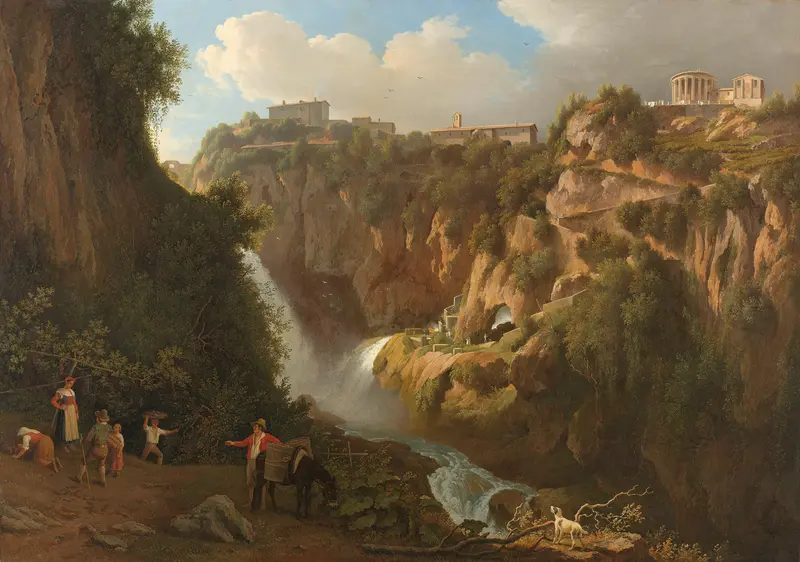
The Waterfall at Tivoli
Abraham Teerlink
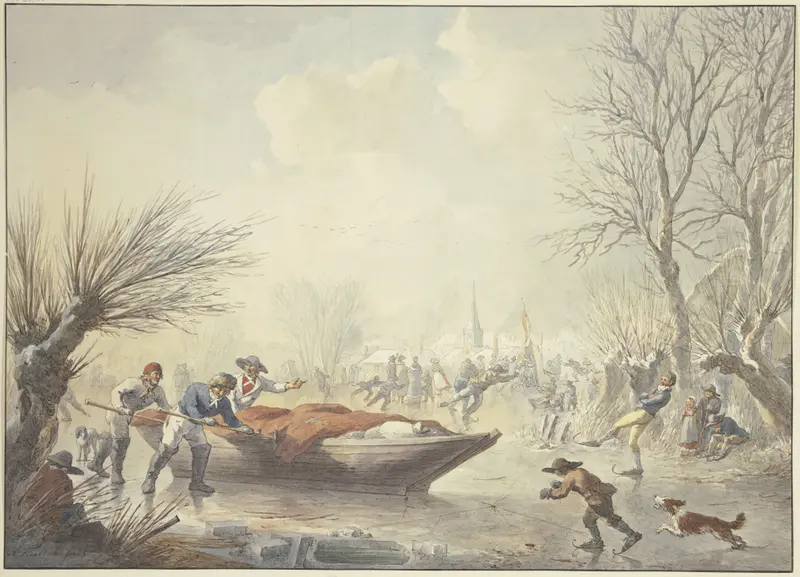
Winterlandschaft, auf dem Eis schieben drei Männer ein Boot dem Land zu, rechts ein Schlittschuhläufer, den ein Hund verfolgt
Abraham Teerlink
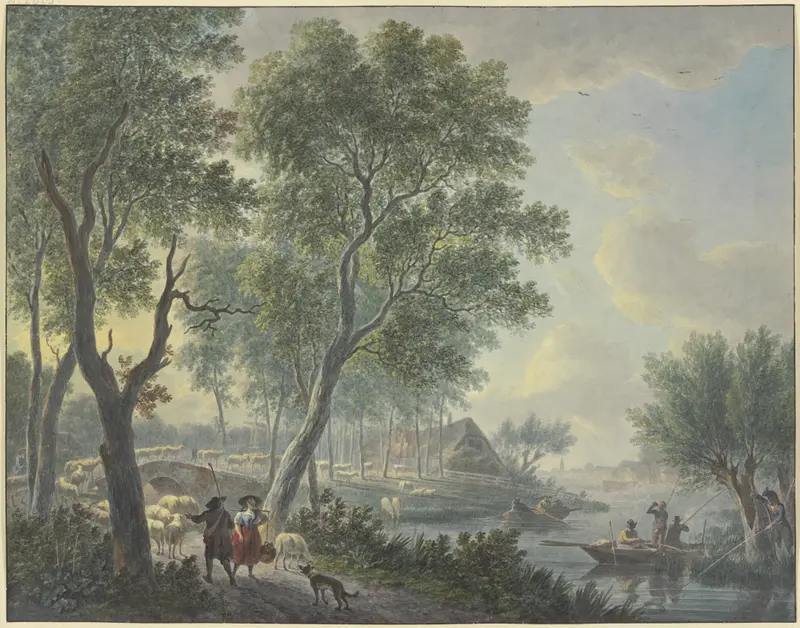
Links begegnet ein Schafhirte einem Milchmädchen, rechts in einem Kahn drei Fischer, und einer in Uniform hinter einem Weidenbaum
Abraham Teerlink
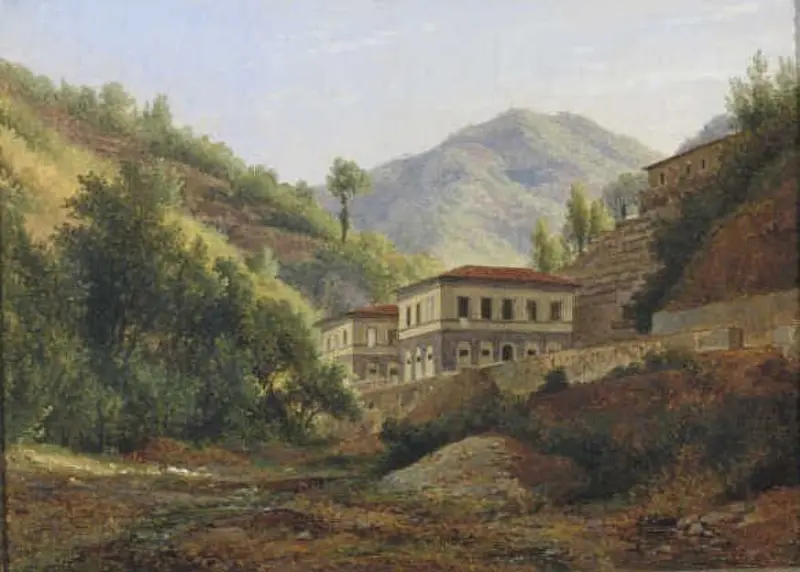
View of the Ospedale Demidoff in Bagni di Lucca
Abraham Teerlink
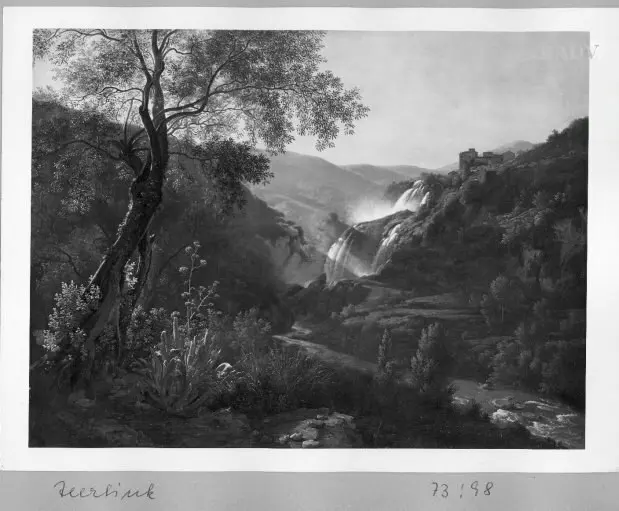
Landscape in Tivoli
Abraham Teerlink
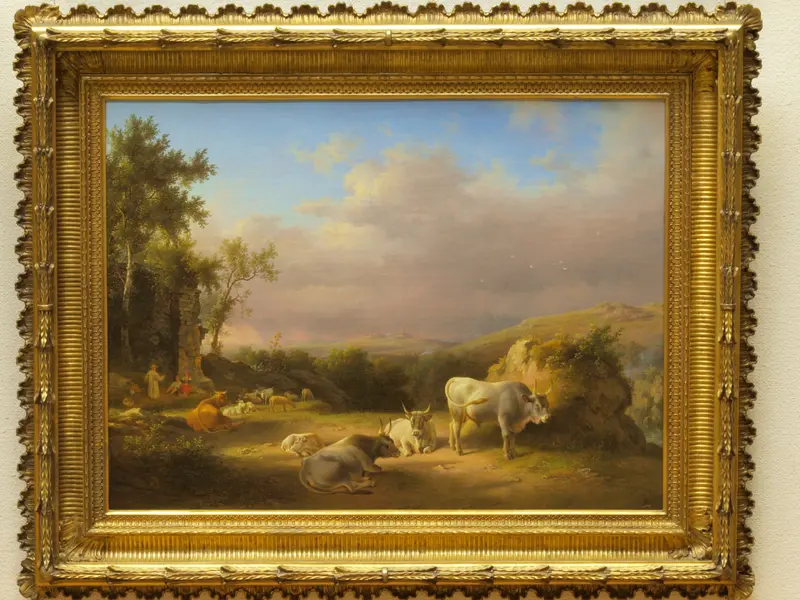
Landscape with cattle in the Campagna
Abraham Teerlink
More Landscape Art

The Starry Night
Vincent van Gogh

View of Delft
Johannes Vermeer

Water Lilies
Claude Monet

The Grand Canal, Venice, looking north-west from the Ca' Corner to the Ca' Contarini degli Scrigni, with the campanile of Santa Maria della Carità
Canaletto

Windsor Castle
Canaletto

The Grand Canal looking North-East from the Palazzo Dolfin-Manin to the Rialto Bridge
Canaletto