
View of the Ospedale Demidoff in Bagni di Lucca — History & Facts
What first draws the eye is the way the building nestles into the valley, its pale walls and red-tiled roof catching the afternoon light as if it had always belonged to this quiet fold of the Tuscan hills. The painter, Abraham Teerlink, guides us gently down a dry streambed, the rough earth and scattered stones leading toward the Ospedale Demidoff, whose arches and symmetry stand in contrast to the wild, irregular slopes around it. The soft haze of distance on the mountains behind, the careful dappling of sunlight on trees and terraces, all serve to heighten the sense of a place both remote and cared for—a retreat shaped by human hands but surrendered to the rhythms of nature.
The composition holds the viewer in a moment of stillness, inviting speculation about the lives within those shaded windows and the stories that might unfold along the winding path. Works like this, painted between 1828 and 1857, belong to a period when artists and patrons alike were captivated by the Italian landscape, not just for its beauty but for its promise of health and renewal. The Ospedale Demidoff in Bagni di Lucca was part of a wave of philanthropic and therapeutic institutions that dotted the region, drawing visitors from across Europe in search of the curative powers of its mineral springs. Such images were often commissioned as souvenirs or tokens of gratitude, and they reflect the era’s fascination with travel, wellness, and the picturesque.
Today, this painting resides in the collection of Museum Boijmans Van Beuningen, a quiet testament to an age when landscape painting was as much about memory and aspiration as it was about place—look again, and see how the artist’s careful hand transforms a simple valley into a world apart.
More Artworks by Abraham Teerlink

Italian Landscape
Abraham Teerlink
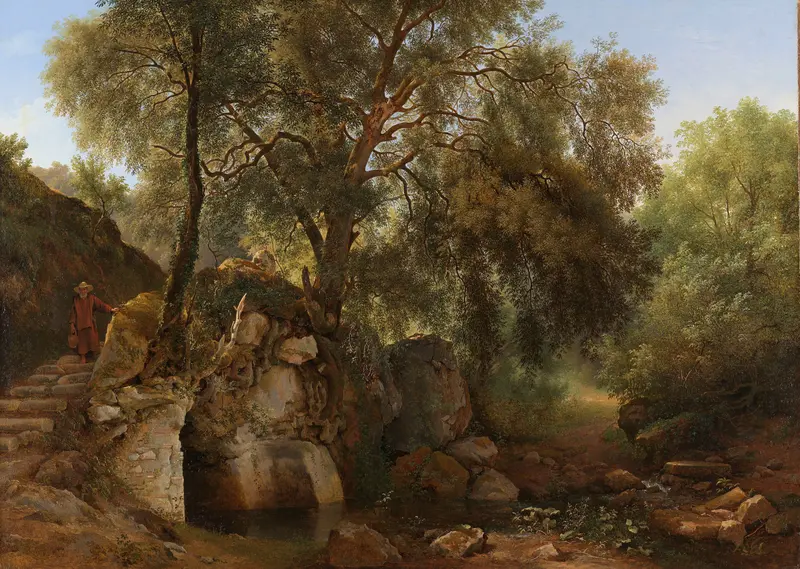
View in the Park of the Villa Chigi at Ariccia
Abraham Teerlink
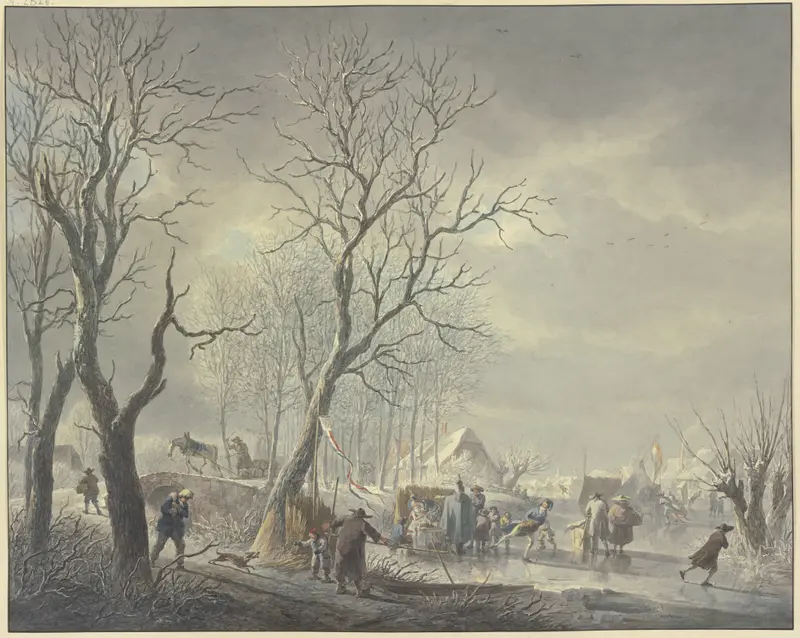
Winterlandschaft, Schlittschuhläufer bei Zelten auf dem Kanal, ein Husar umarmt ein Getränke haltendes Mädchen
Abraham Teerlink
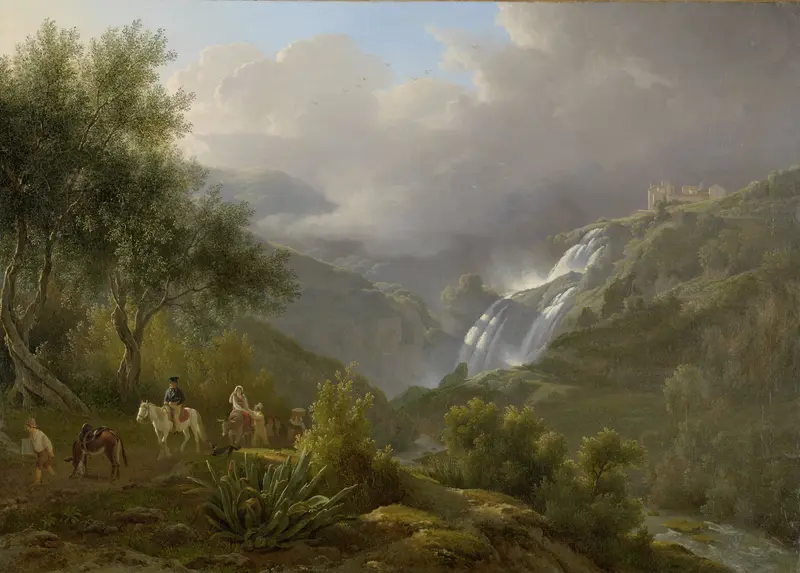
The Cascades at Tivoli, with a Storm Approaching
Abraham Teerlink
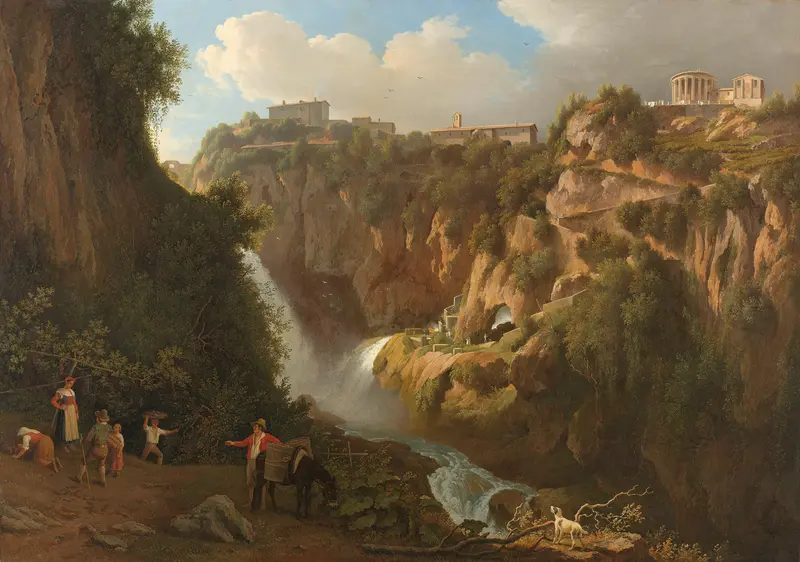
The Waterfall at Tivoli
Abraham Teerlink
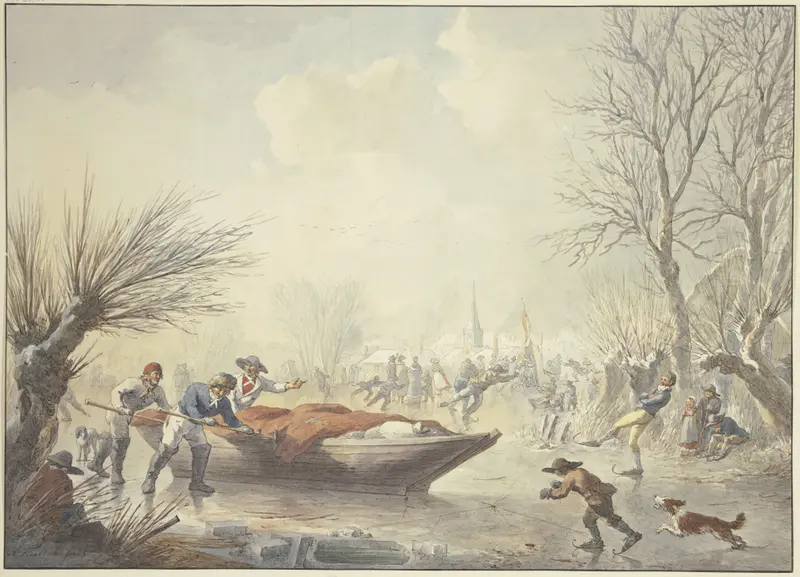
Winterlandschaft, auf dem Eis schieben drei Männer ein Boot dem Land zu, rechts ein Schlittschuhläufer, den ein Hund verfolgt
Abraham Teerlink
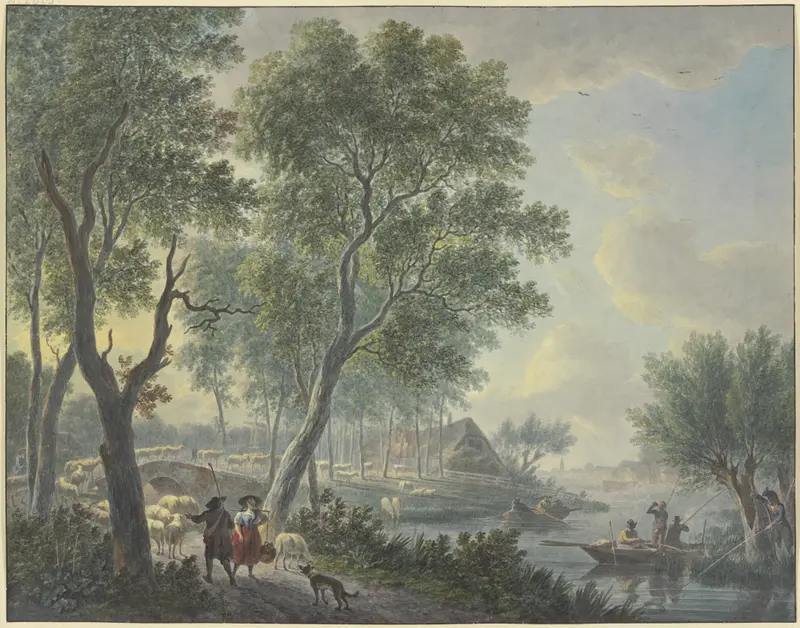
Links begegnet ein Schafhirte einem Milchmädchen, rechts in einem Kahn drei Fischer, und einer in Uniform hinter einem Weidenbaum
Abraham Teerlink
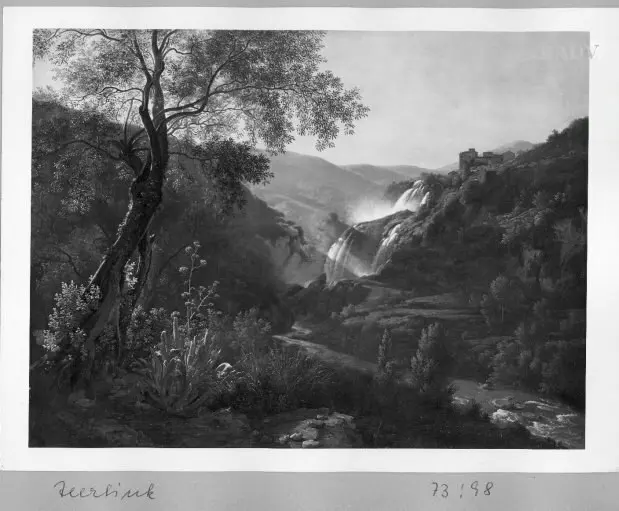
Landscape in Tivoli
Abraham Teerlink
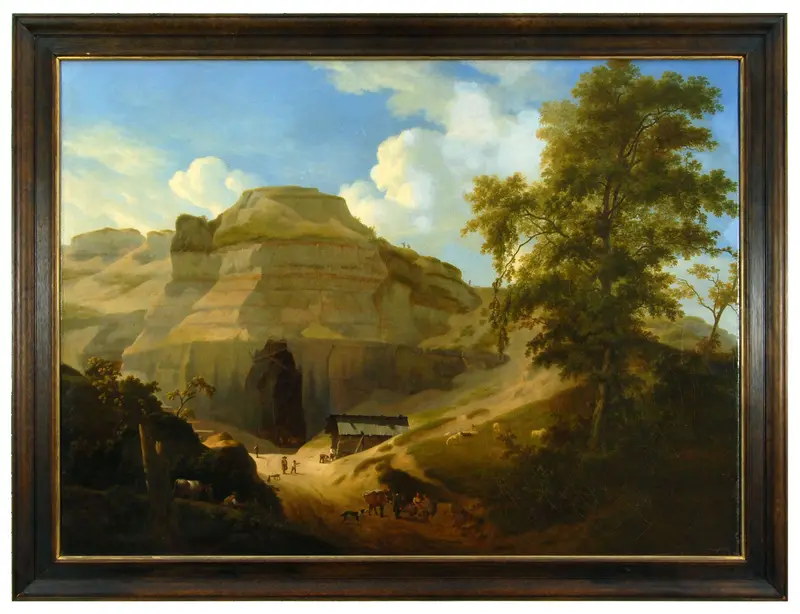
View of a stone quarry in Bellevillé
Abraham Teerlink
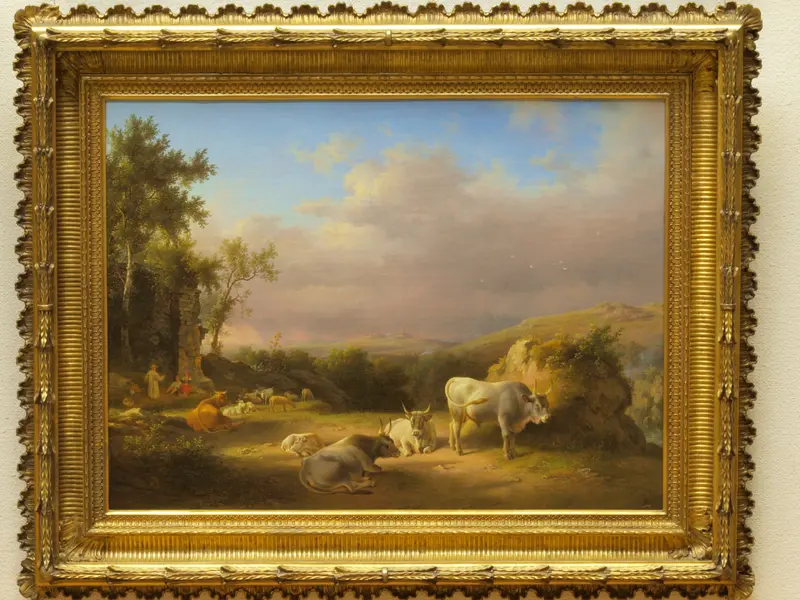
Landscape with cattle in the Campagna
Abraham Teerlink
More Landscape Art

The Starry Night
Vincent van Gogh

View of Delft
Johannes Vermeer

Water Lilies
Claude Monet

The Grand Canal, Venice, looking north-west from the Ca' Corner to the Ca' Contarini degli Scrigni, with the campanile of Santa Maria della Carità
Canaletto

Windsor Castle
Canaletto

The Grand Canal looking North-East from the Palazzo Dolfin-Manin to the Rialto Bridge
Canaletto