
View of Lake Coniston, Lancashire — History & Facts
Can beauty exist without sorrow? In Francis Towne’s View of Lake Coniston, Lancashire, we are invited to explore this poignant question, set against the backdrop of nature's splendor, veiled in the shadows of an ever-evolving world. Look to the foreground where the tranquil lake mirrors the soft hues of the sky, its surface disturbed only by the gentle ripples of a breeze. The verdant hills surrounding the water rise majestically, their deep greens contrasting with the pastel blues and whites above. The artist employs delicate brushwork to conjure a sense of serenity, drawing the eye toward the horizon where clouds linger, hinting at both promise and uncertainty.
This intricate interplay of light and shadow captures not just a landscape, but a moment suspended in time. Hidden within this idyllic scene lies an undercurrent of tension. The calm waters of the lake, while inviting, may also reflect the tumult of the late 18th century, a time marked by revolution and change. The lush landscape, so harmonious, contrasts with the political unrest brewing in Britain and beyond, suggesting that beauty often exists alongside turmoil.
Each brushstroke seems to whisper of the fragility of peace, as if the artist is beckoning us to recognize that joy and sorrow can coexist, intertwined within the natural world. Towne painted this masterpiece in 1786, during a period of significant upheaval in Europe, just as the flames of the French Revolution began to flicker. Living in England, he was part of a wider artistic movement that sought to capture the sublime beauty of the natural landscape, a stark contrast to the societal changes shaping the era. This work reflects not only his skills as a landscape painter but also the complexities of the world around him.
More Artworks by Francis Towne
Browse all →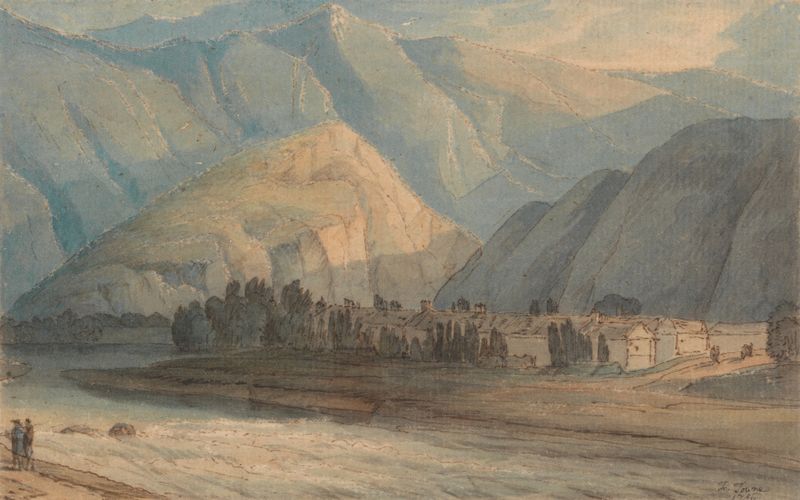
The Grange at the Head of Keswick Lake
Francis Towne

Vauxhall Stairs, from Millbank, July 5, 1797
Francis Towne

View in Borrowdale of Eagle Crag and Rosthwaite
Francis Towne

View of Lake Como with Monte Leoni
Francis Towne
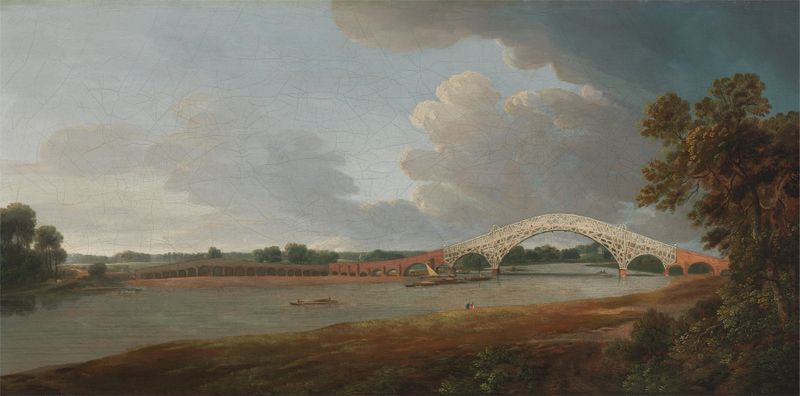
Old Walton Bridge
Francis Towne
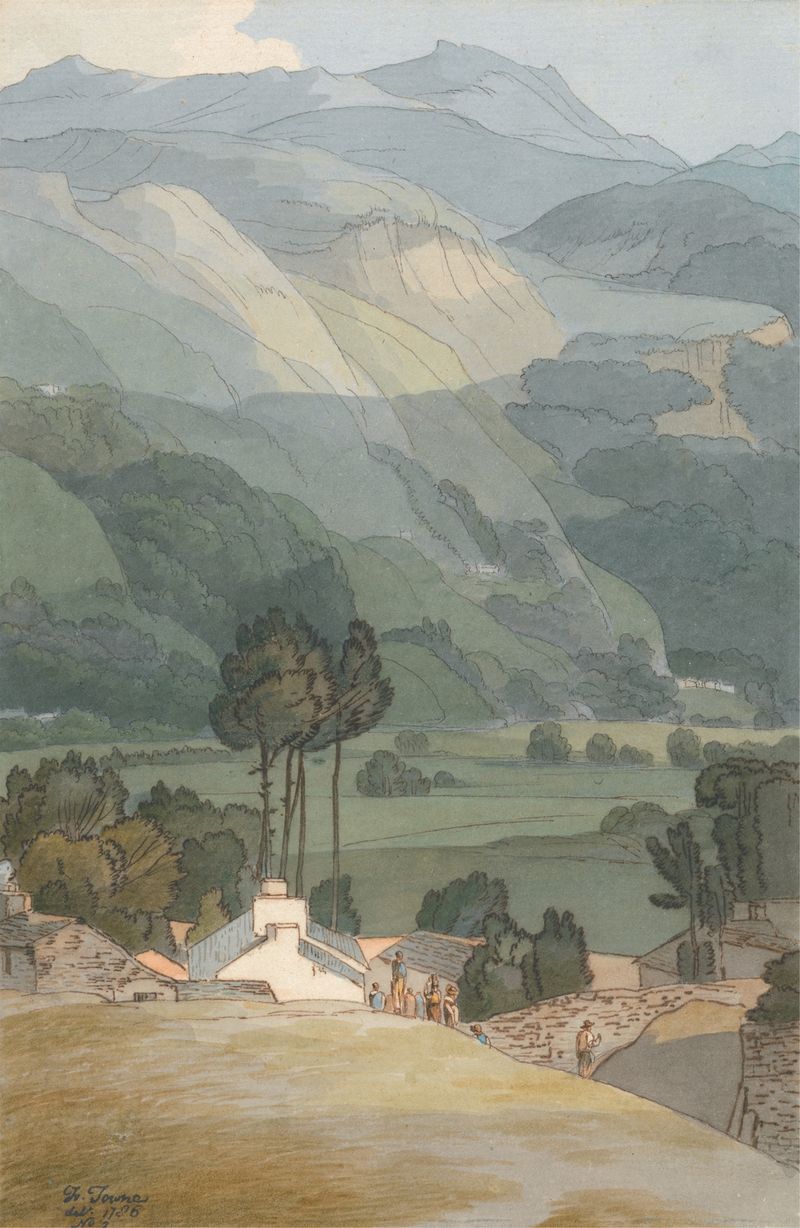
Ambleside
Francis Towne
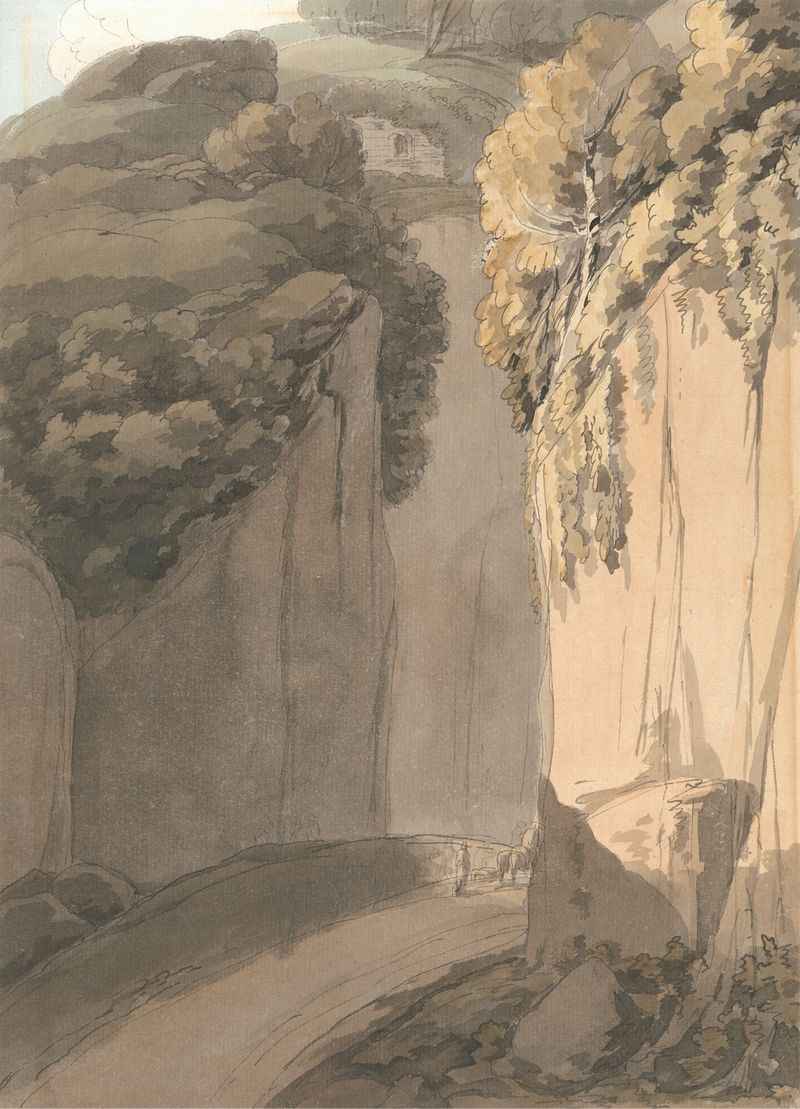
Entrance to the Grotto at Posilippo, Naples
Francis Towne

The Claudian Aquaduct, Rome
Francis Towne

A View Near the Arco Scuro, Looking Towards the Villa Medici, Rome
Francis Towne

View of the Rhydaer
Francis Towne





