
View of Neuss — History & Facts
Within the stillness of View of Neuss, desire unfurls like a whispered secret, urging viewers to lean closer and engage with the landscape's quiet allure. Look to the right at the brilliant sunlit clouds that seem to dance above the tranquil waters of the Rhine. Notice how the soft hues of blue and green create a harmonious backdrop, while the delicate brushstrokes convey a sense of movement throughout the scene. The composition draws the eye towards the charming town of Neuss in the distance, where spires rise against the sky, inviting exploration and contemplation. Yet, beneath the serene surface lies a tension between the idyllic setting and the human longing for connection and belonging.
The riverside, dotted with figures, hints at bustling life juxtaposed against nature's calm beauty, suggesting a desire for simplicity in a world of complexity. Each element, from the quaint architecture to the shimmering reflections on the water, embodies an unspoken yearning, capturing the essence of the human experience. Andreas Achenbach painted View of Neuss in 1865 while residing in Dusseldorf, a flourishing center for Romanticism in the German art scene. This era was marked by a growing emphasis on emotional depth and the sublime beauty of nature.
As Achenbach sought to convey the harmony between humanity and the natural world, his work resonated with a collective desire for connection in an increasingly industrialized society.
More Artworks by Andreas Achenbach
Browse all →
Abendstimmung an der griechischen Küste
Andreas Achenbach

Fischerboote bei stürmischer See
Andreas Achenbach

Segelschiffe an einer stürmischen Küste
Andreas Achenbach
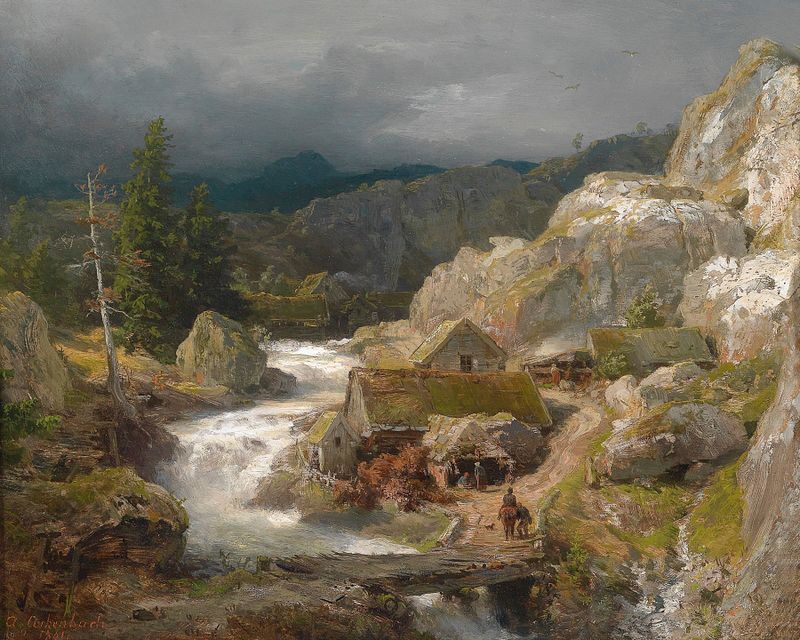
Mühle am Gebirgsbach
Andreas Achenbach

Stürmische Brandung an der Mole
Andreas Achenbach

Küstenlandschaft mit Fischern und Segelschiffen in der Ferne
Andreas Achenbach
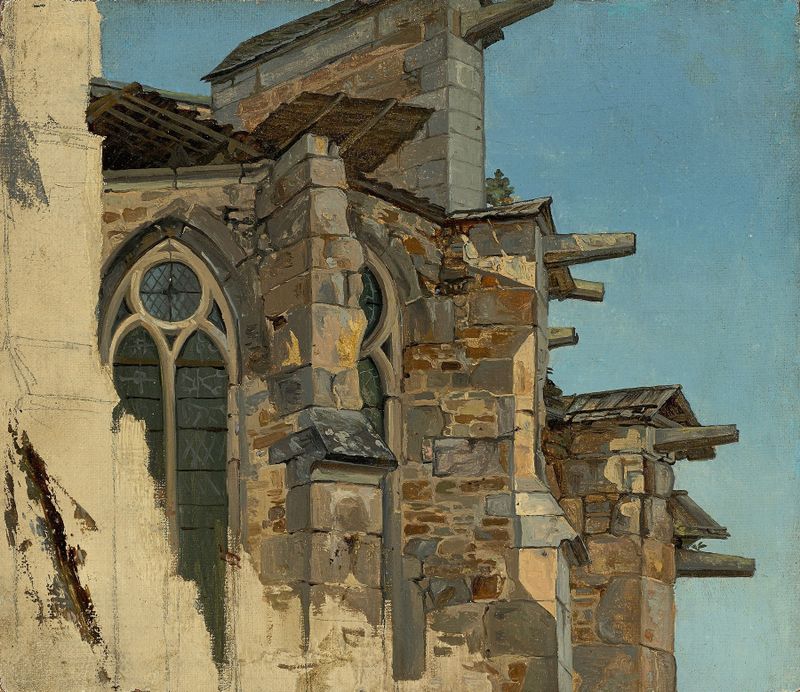
Der Altenberger Dom
Andreas Achenbach
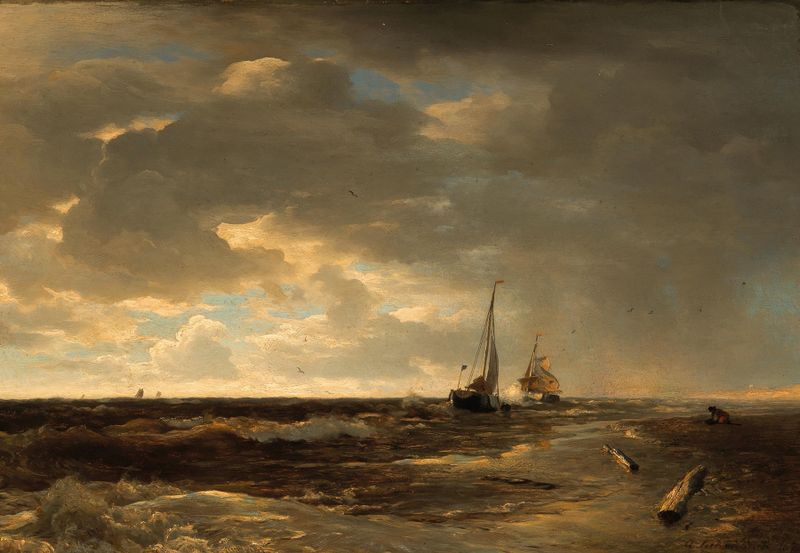
Fishing Boats on a Choppy Sea
Andreas Achenbach

Storm at Sea off the Norwegian Coast
Andreas Achenbach
At the Baltic coast
Andreas Achenbach





