
View of Paris seen from the Place Dauphine — History & Facts
Could beauty survive in a century of chaos? In the midst of political unrest and societal upheaval, the ethereal charm of this view offers a poignant reflection of innocence preserved. Look to the left at the delicate arches of the buildings, their soft pastels harmonizing in a serene palette that seems untouched by time. The gentle sweep of the river reflects a tranquil sky, inviting the viewer’s gaze to linger on the interplay of light and shadow, masterfully applied with glimmers of sunlight dancing on the water's surface. Wouwerman’s meticulous attention to detail, from the textured cobblestones to the wispy clouds, creates a space that feels both inviting and elusive, as if granting a momentary escape from reality. Delve deeper, and you’ll find contradictions lurking beneath the surface.
The idyllic scene, with its leisurely figures and serene waterway, juxtaposes the underlying tension of the period—an era marked by turmoil. The innocence portrayed by the passersby belies the chaos of the world outside their bubble, suggesting a fragile peace that can be shattered. Subtle hints of movement and the soft touches of nature evoke an emotional resonance that speaks to the fleeting nature of beauty in a tumultuous landscape. Philips Wouwerman painted this work during the mid-17th century, a time of significant political and social change in Europe.
Living in the Netherlands, he was influenced by the rise of landscape painting as a genre, navigating the transition from the Baroque to the more intimate styles that would come to define Dutch art. This piece was a reflection of both personal and collective aspirations for harmony amidst the challenges of his time.
More Artworks by Philips Wouwerman
Browse all →
Halt of Cavaliers at an Inn
Philips Wouwerman

Halt of Travellers
Philips Wouwerman

Travelers Awaiting a Ferry
Philips Wouwerman
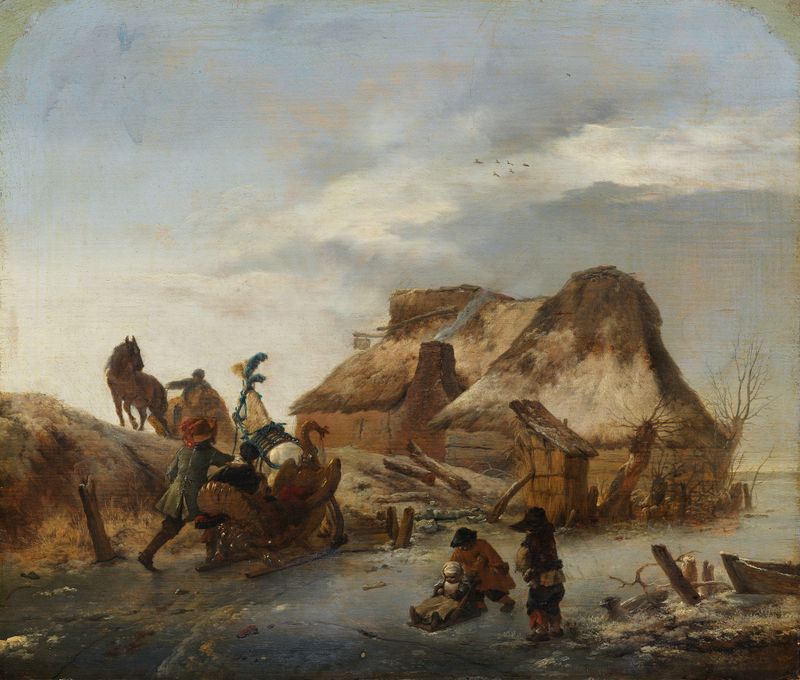
A Nobleman’s Sleigh on the Ice
Philips Wouwerman
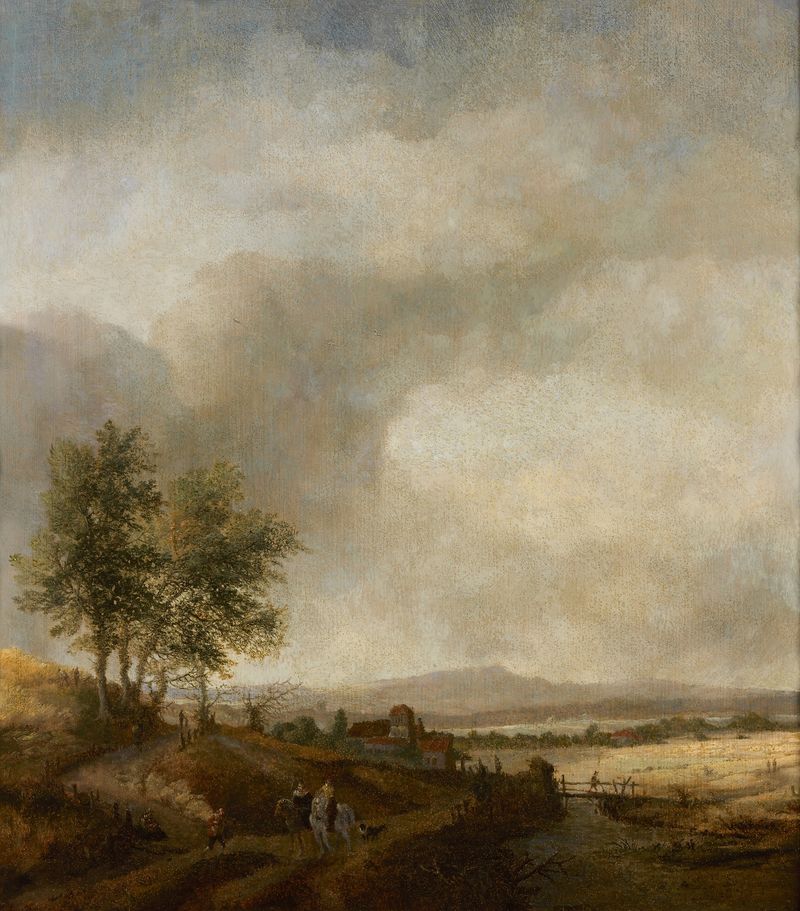
Landschap met ruiters
Philips Wouwerman
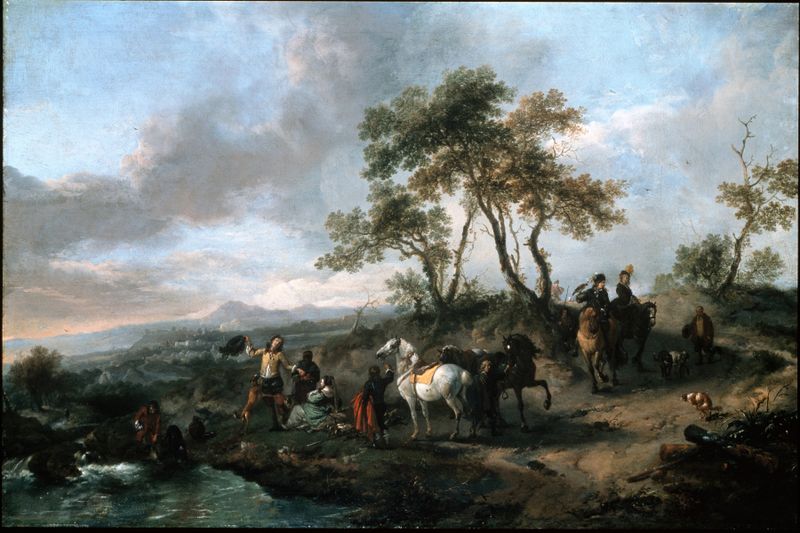
Halt of a Hunting Party
Philips Wouwerman
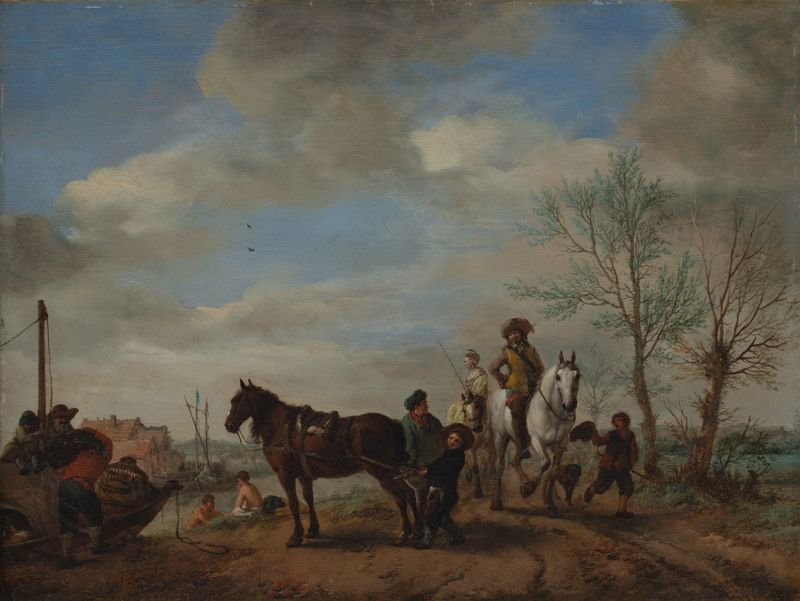
A Man and a Woman on Horseback
Philips Wouwerman
Horsepond on a River
Philips Wouwerman
The Falcon Hunt
Philips Wouwerman

Riders at a Blacksmith’s
Philips Wouwerman





