
View of Pendragon Castle by Moonlight — History & Facts
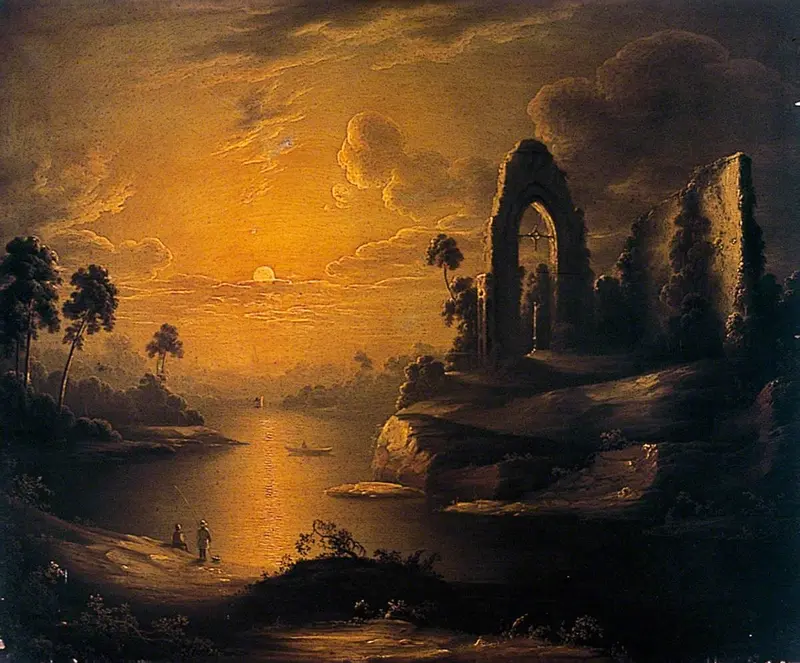
A single, unwavering moon commands the scene, its cold light pouring over the broken towers of Pendragon Castle and the winding river below. The eye is drawn first to the stark silhouette of the ruin, its jagged forms softened by creeping ivy and the gentle haze of night. Pether’s moon is not just a source of illumination but a silent actor, casting long shadows and glimmering on the water’s surface, guiding the viewer from the crumbling fortress to the tiny figures in a boat—two people adrift between the past and the present.
Every detail is chosen for its effect: the heavy clouds gathering at the edges, the gnarled tree anchoring the right foreground, the distant towers just visible in the silvery gloom. This is not a tranquil night, but one charged with the memory of vanished grandeur and the quiet persistence of nature. Works like this, painted by Abraham Pether, belong to a moment in British art when the night sky became a stage for drama and introspection. Pether, sometimes called “Moonlight Pether,” was known for his fascination with lunar effects, and his landscapes often blur the line between the real and the imagined.
Such paintings were prized by collectors eager for scenes that stirred the emotions and conjured the wildness of Britain’s past—Pendragon Castle itself long associated with Arthurian legend and the romance of ruins. The date and medium of this work remain uncertain, and history has kept few traces of its early life, but it now finds a home in the Art UK collection. Let your eyes adjust to the darkness, and the painting will reveal new secrets with every glance.
More Artworks by Abraham Pether

Sunset over a rural landscape
Abraham Pether
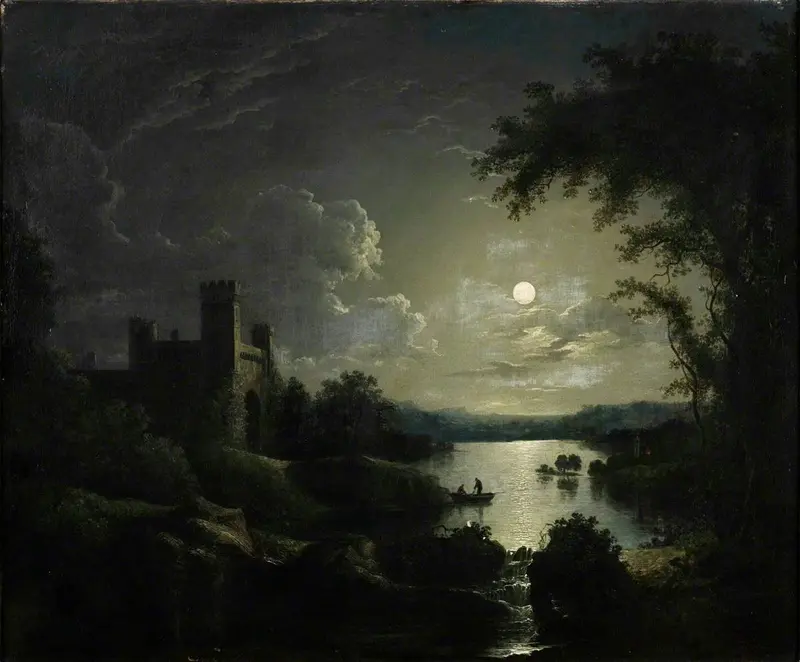
A Castle and Lake by Moonlight
Abraham Pether
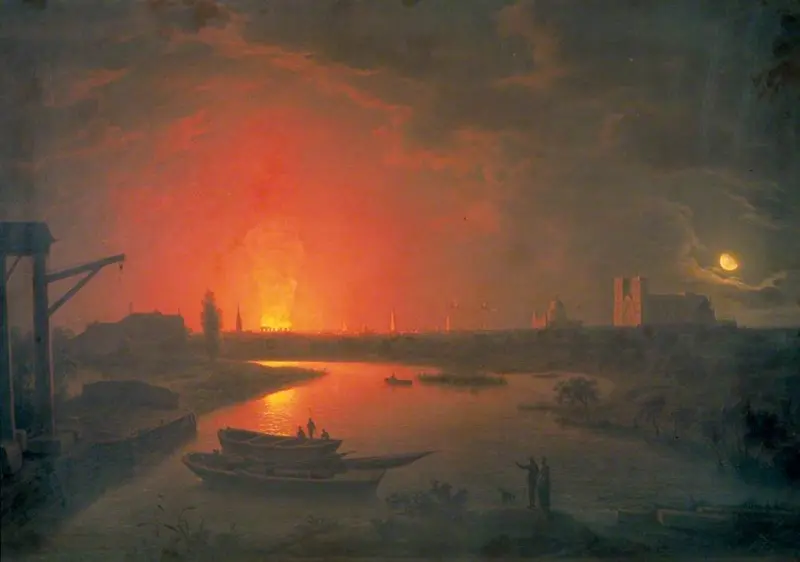
Old Drury Lane Theatre on Fire, London, 24 February
Abraham Pether
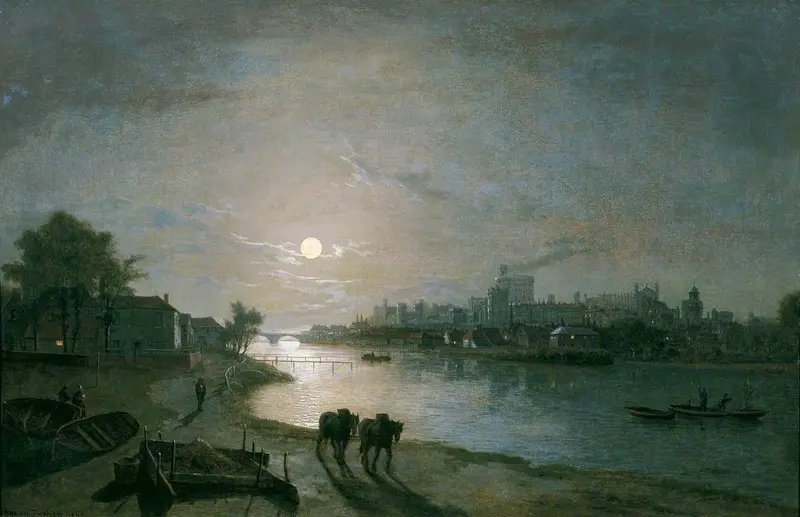
Windsor Castle by Moonlight
Abraham Pether
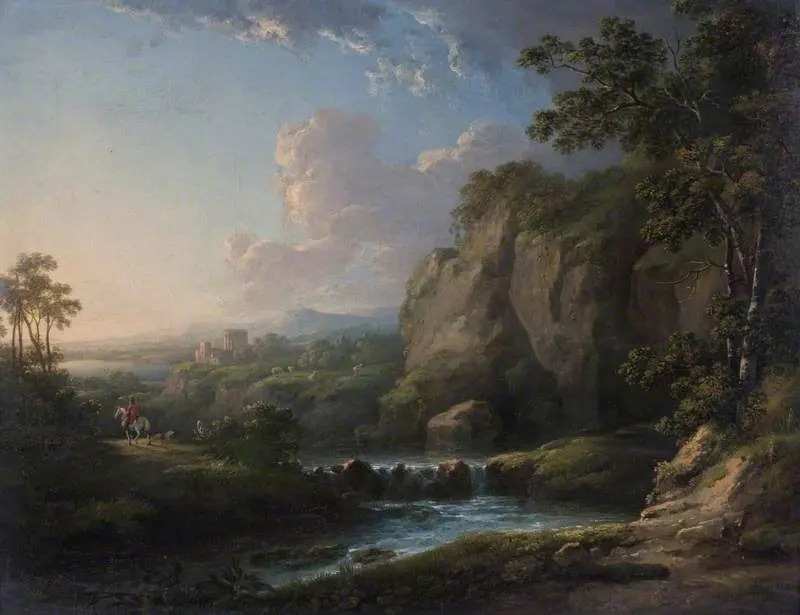
Wooded Landscape
Abraham Pether
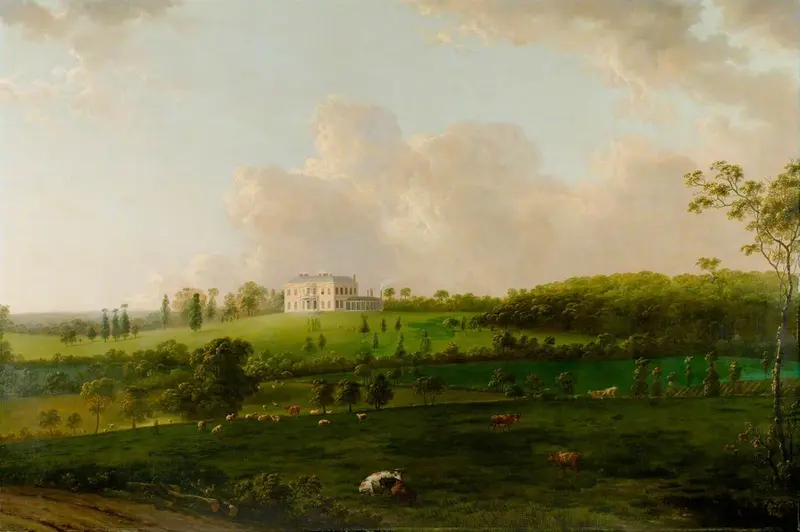
Claybury Hall, Essex
Abraham Pether
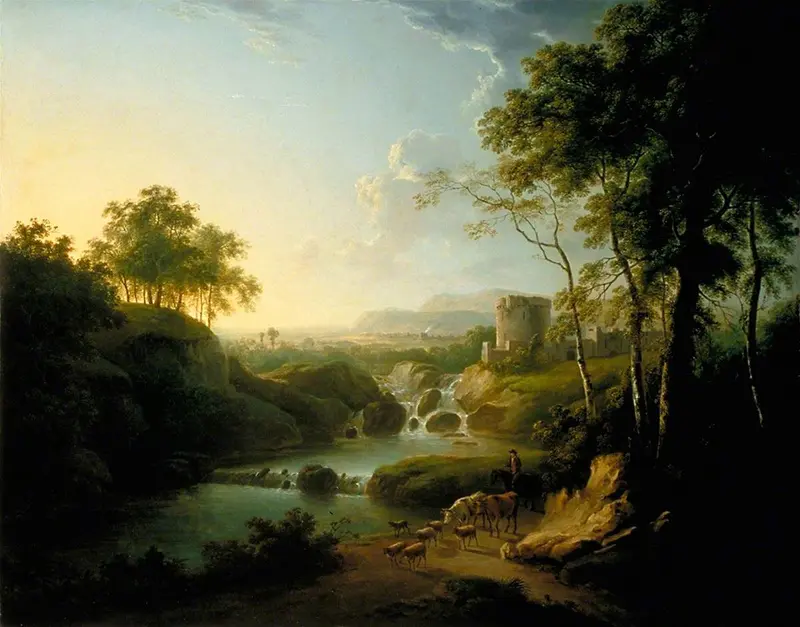
Landscape
Abraham Pether
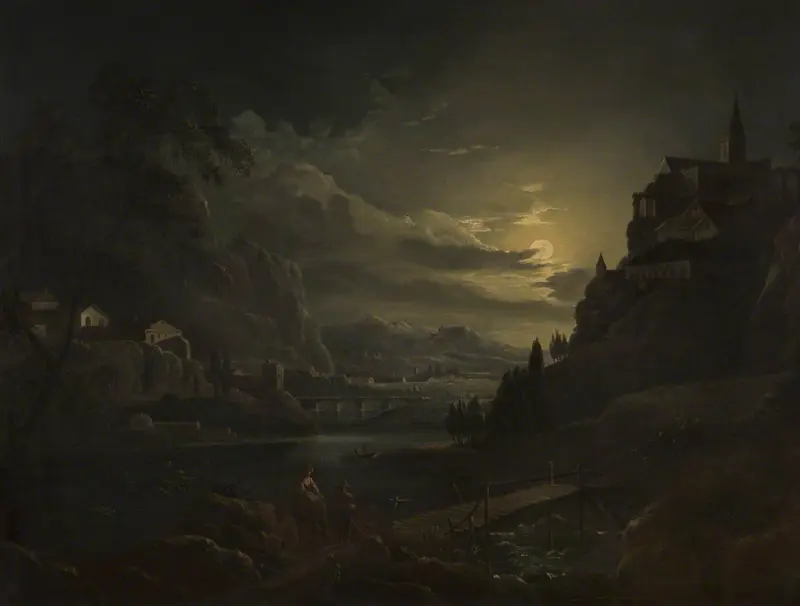
Classical Landscape by Moonlight
Abraham Pether
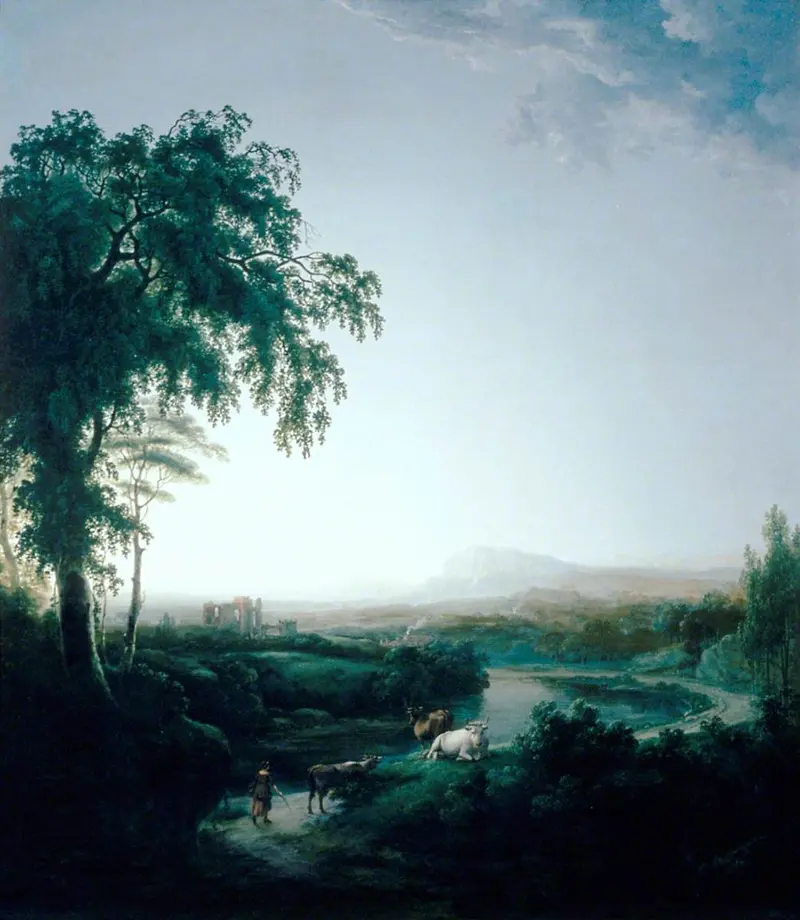
Landscape with River and Cows at Dusk
Abraham Pether
Moonlit Landscape with Lake and Ruined Abbey
Abraham Pether
More Landscape Art

The Starry Night
Vincent van Gogh

View of Delft
Johannes Vermeer

Water Lilies
Claude Monet

The Grand Canal, Venice, looking north-west from the Ca' Corner to the Ca' Contarini degli Scrigni, with the campanile of Santa Maria della Carità
Canaletto

Windsor Castle
Canaletto

The Grand Canal looking North-East from the Palazzo Dolfin-Manin to the Rialto Bridge
Canaletto