
View of Rouen — History & Facts
In the stillness of a moment, faith finds a home in the brushstrokes of a master, capturing not just a vista but a promise of what is to come. Look to the left at the soft hues of the sky, where delicate shades of blue blend seamlessly into the warm embrace of the setting sun. Pissarro’s use of pointillism creates a vibrancy, with tiny dabs of color that evoke the lively atmosphere of Rouen. The buildings in the distance emerge from a haze of light, gently defined by subtle contrasts, inviting the viewer to become part of this serene landscape. Yet, amid the tranquil beauty, there is a tension between the peace of the scene and the bustling life it contains.
The juxtaposition of light and shadow suggests transience, as if each moment is fleeting and precious. Small details—a sailboat gliding softly across the water and the glimmers of light on its surface—speak to a deeper narrative, whispering of dreams and aspirations grounded in the ordinary rhythm of life. In 1885, while painting View of Rouen, Pissarro was navigating both personal and professional transitions. Living in France, he was deeply influenced by the Impressionist movement, striving to capture the essence of modern life.
This period marked a shift in his approach to color and light, mirroring a world awakening to new possibilities, as he sought to portray not just what lay before him, but the very faith that comes from observation and connection.
More Artworks by Camille Pissarro
Browse all →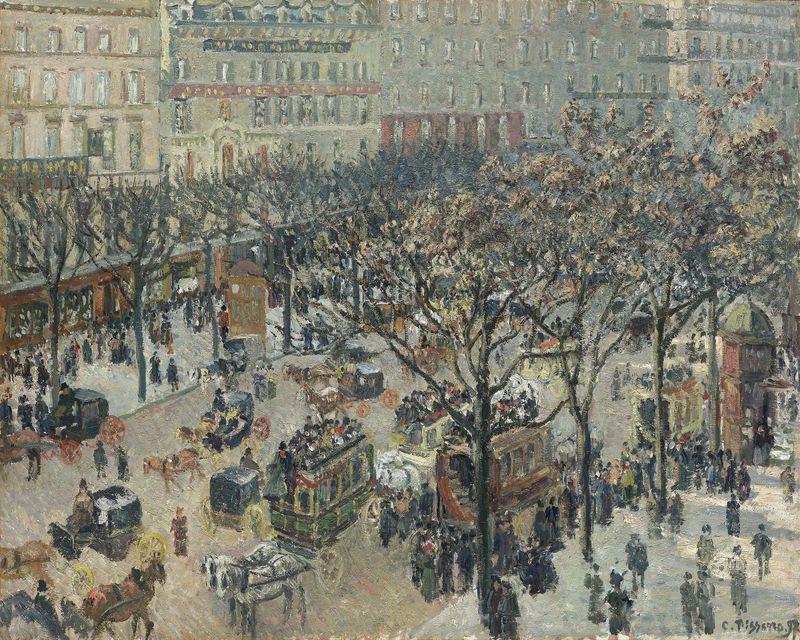
Boulevard des Italiens,Morning_Sunlight
Camille Pissarro
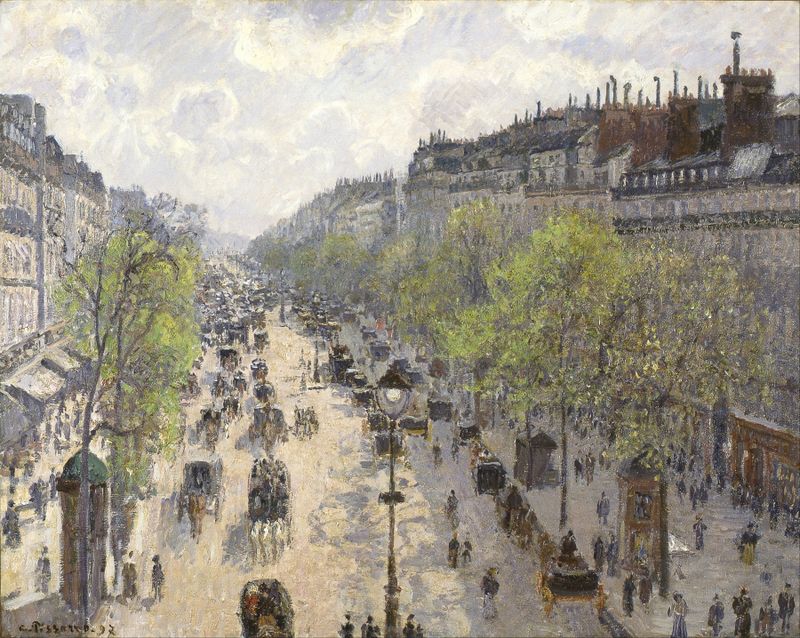
Boulevard Montmartre, Spring
Camille Pissarro
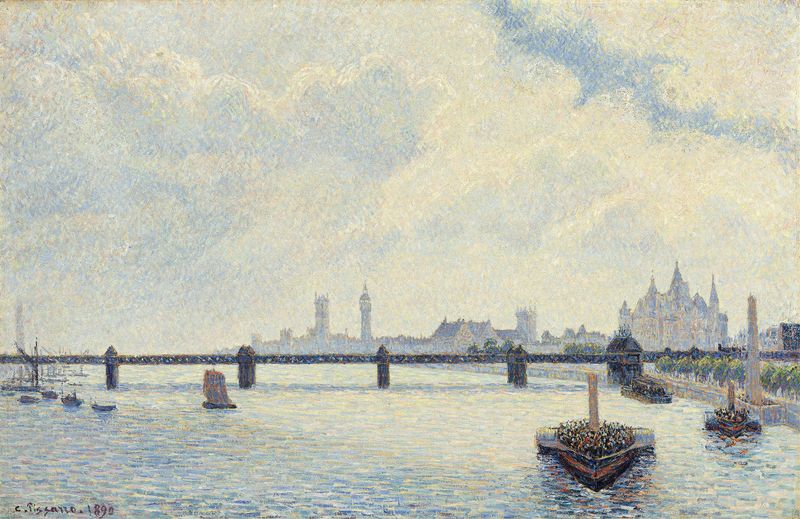
Charing Cross Bridge,London
Camille Pissarro
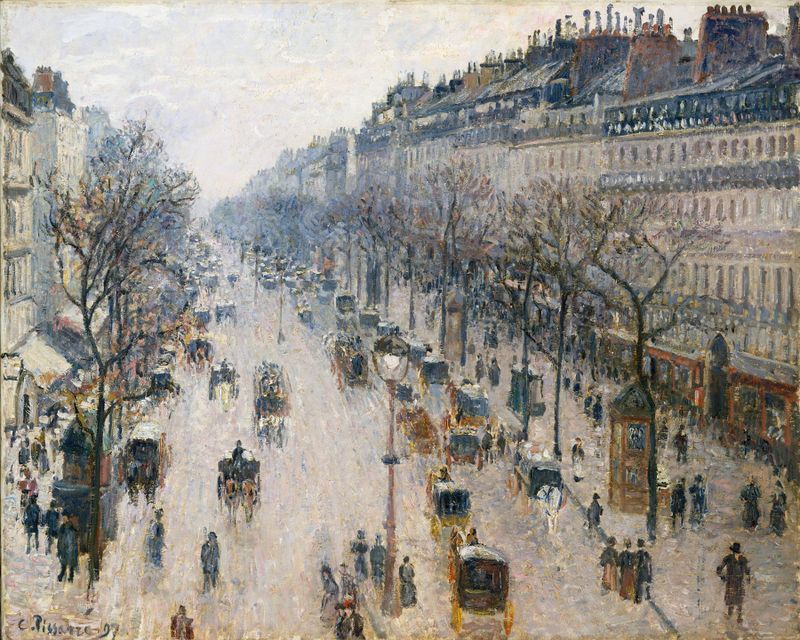
The Boulevard Montmartre on a Winter Morning
Camille Pissarro
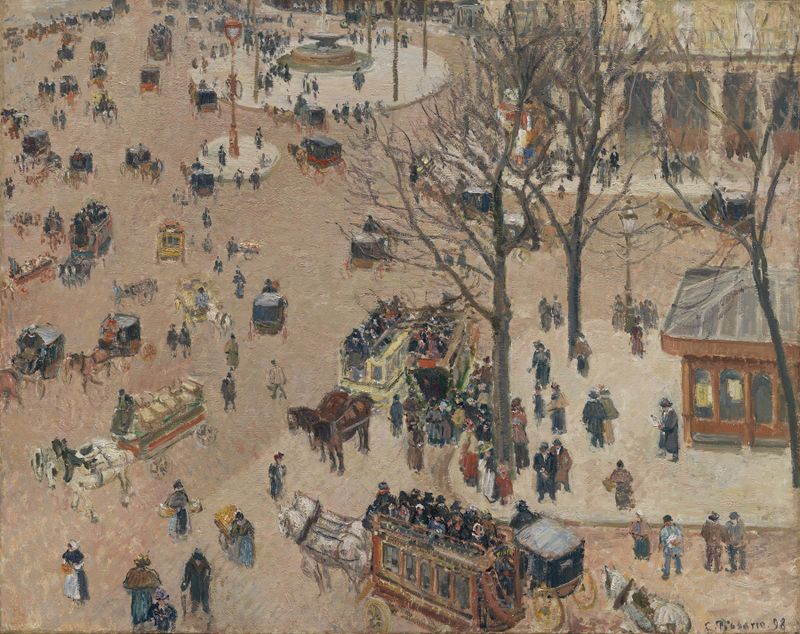
La Place du Théâtre Français
Camille Pissarro

Rue Saint-Lazare, Paris
Camille Pissarro
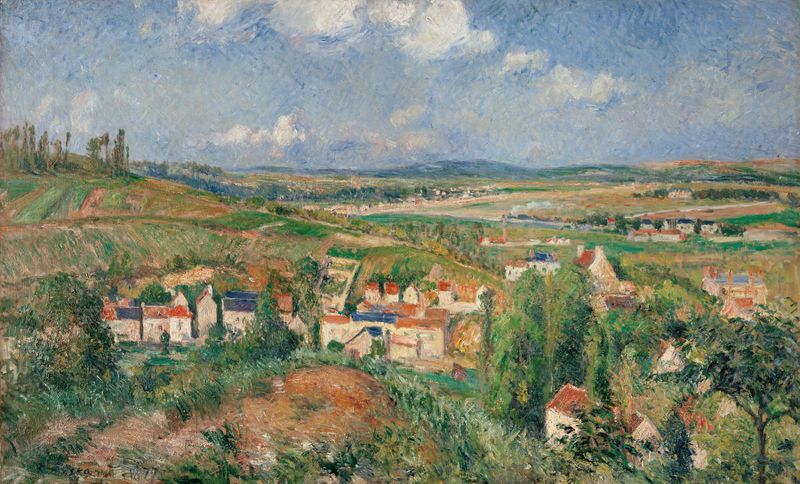
L’hermitage En Été, Pontoise
Camille Pissarro

Place du Theatre Francais,Fog Effect
Camille Pissarro
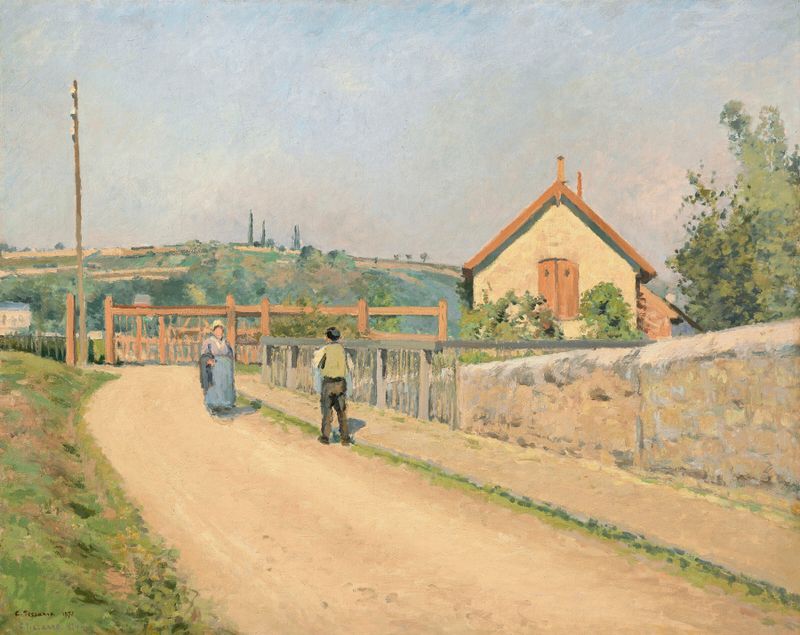
La barrière du chemin de fer, aux Pâtis près Pontoise
Camille Pissarro
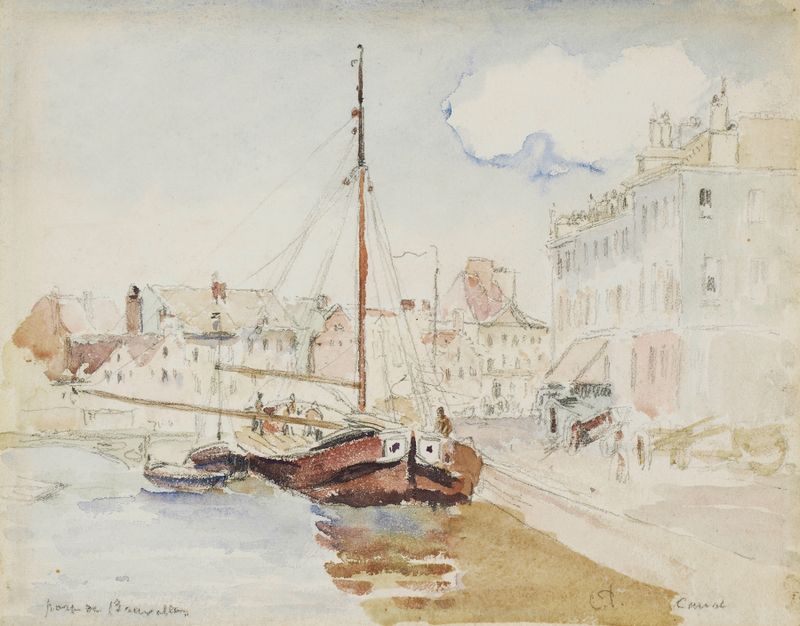
Port de Bruxelles
Camille Pissarro





