
View of the Kościuszko Mound in Krakow from the Window in the Artist’s Studio — History & Facts
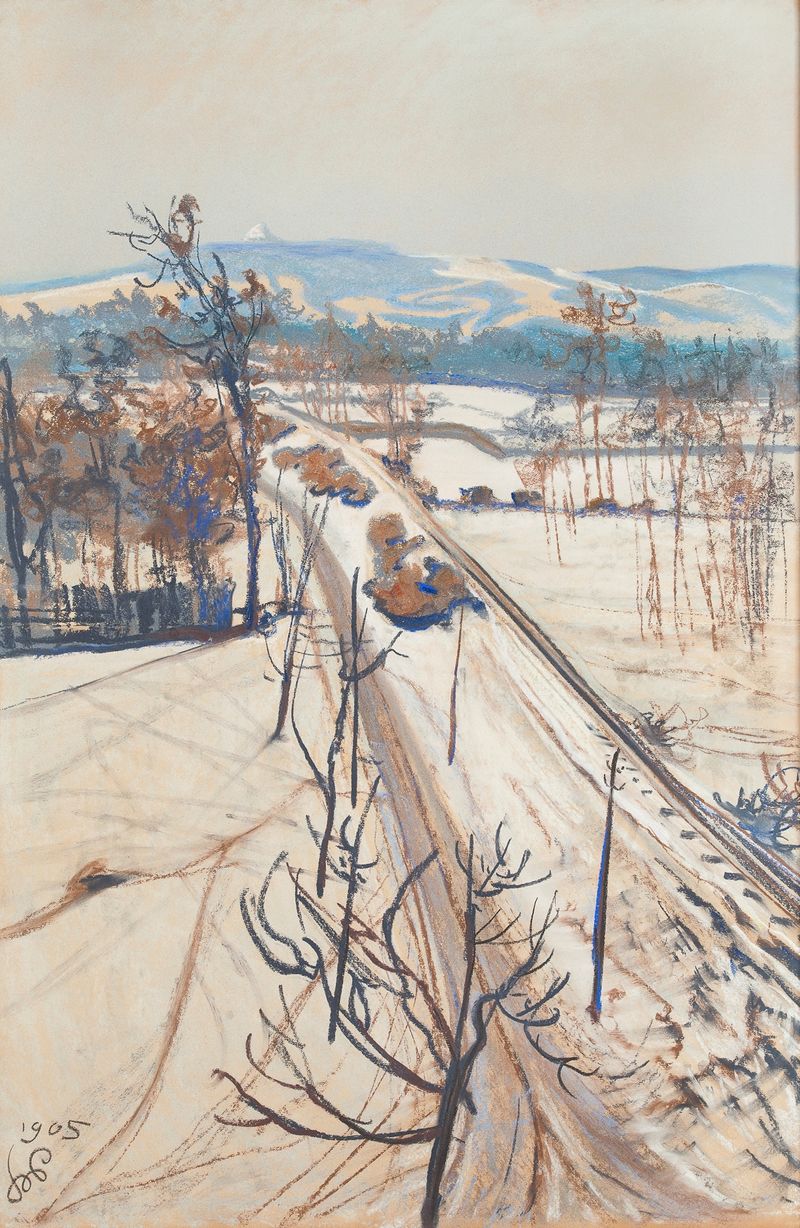
When did color learn to lie? In the heart of a window frame, a world unfolds, imbued with the weight of longing and loss. Here, the landscape is painted not just in hues, but in the depth of the artist's grief, suggesting that beauty can betray as much as it reveals. Look to the left, where the lush greens of the trees create a vivid contrast against the muted browns of the earth. The mound, a significant landmark, stands regally in the center, its contours gently softened by the artist's brush.
Notice how the light, filtered through the soft atmosphere, bathes the scene in a melancholic glow, emphasizing the sky's fading blues and the earth's somber tones. Each stroke seems laden with emotion, conveying not just the physical space but the artist’s internal landscape. Beneath the serene beauty lies a sense of profound absence, echoing a relationship with place that is deeply personal. The mound symbolizes not just a geographical feature, but a collective memory of struggle and resilience.
The contrasting colors—earth tones against vibrant greens—speak to the duality of life and death, joy and sorrow, encapsulating the bittersweet essence of human experience. Through this lens, we glimpse the dichotomy of loss; the mound stands testament to historical significance while simultaneously reflecting the artist's own heartache. In 1904, Wyspiański created this piece while navigating a tumultuous period in his life, marked by personal losses and artistic introspection. Living in Krakow, he was deeply connected to Polish identity and the struggles of his people.
This artwork emerged as he grappled with the complexities of memory, heritage, and the ephemeral nature of beauty in a world fraught with turmoil.
More Artworks by Stanisław Wyspiański
Browse all →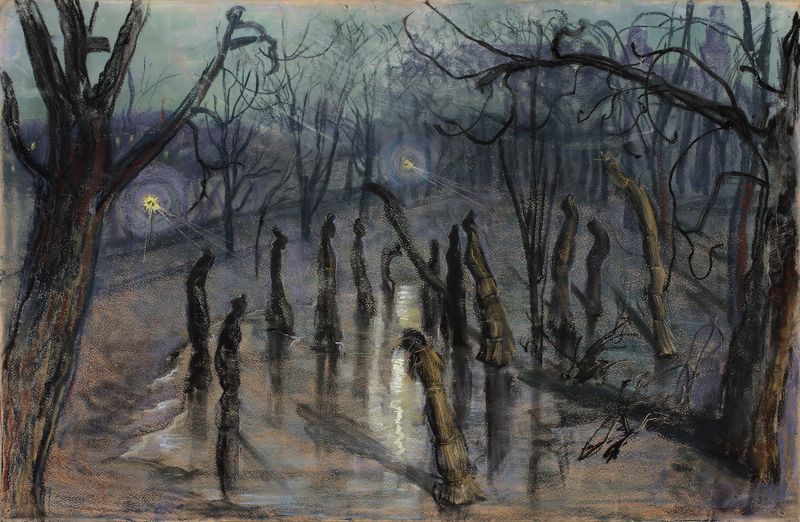
Chochoły (Straw Men Dancing in the Planty)
Stanisław Wyspiański
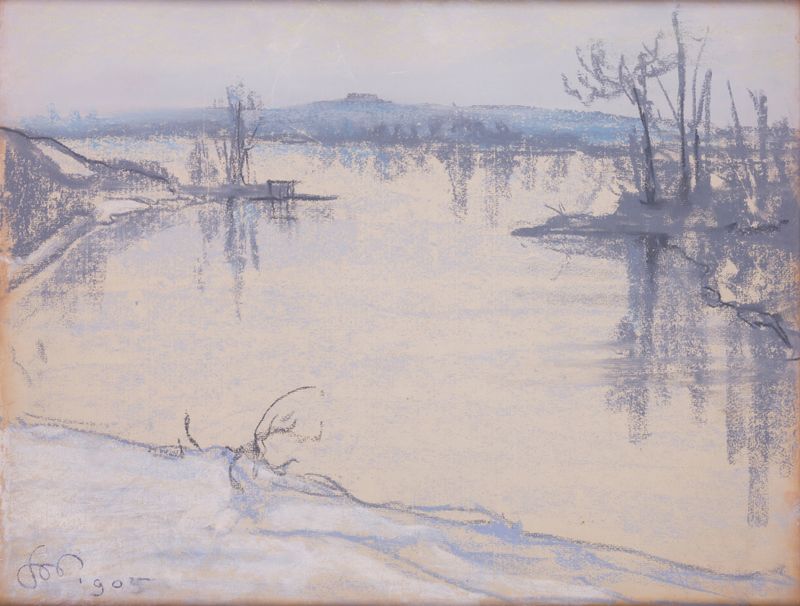
Wisła pod Krakowem
Stanisław Wyspiański
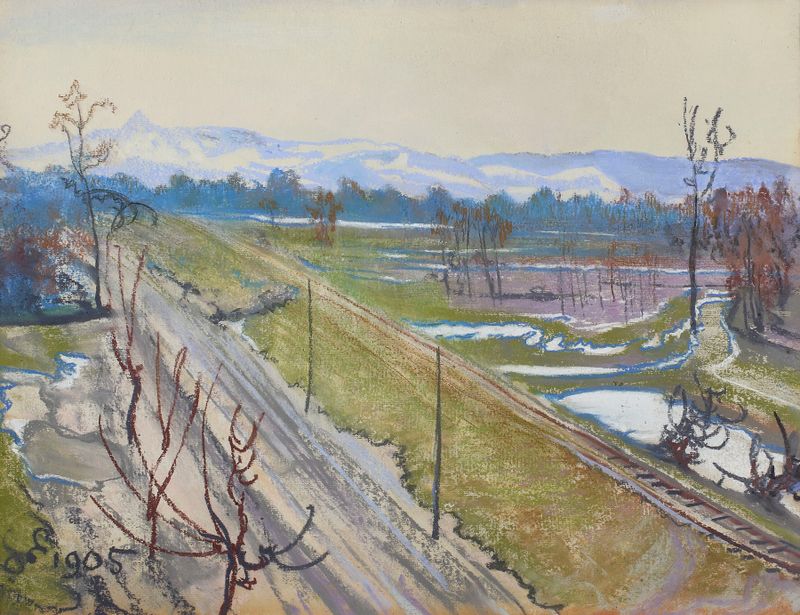
View from the window of the artist’s studio of Kościuszko Mound
Stanisław Wyspiański
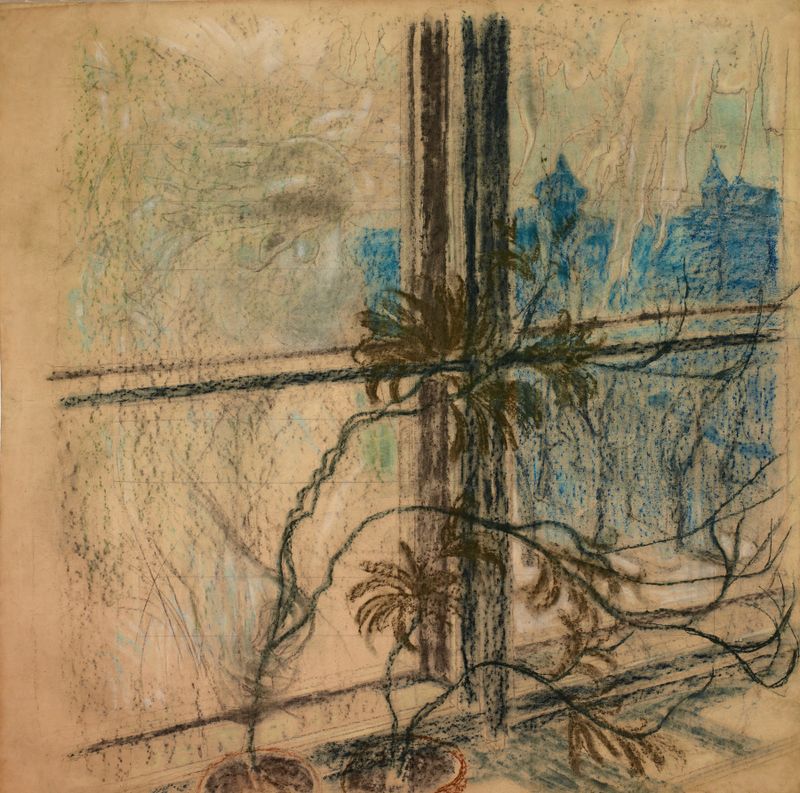
Widok z okna na mury miejskie Krakowa
Stanisław Wyspiański
Widok na Kopiec Kościuszki. Szary dzień
Stanisław Wyspiański

View of the Wawel Castle
Stanisław Wyspiański

The Barbican and the Floriańska Street – View from Zacisze Street
Stanisław Wyspiański
View from the window of the artist’s studio of Kościuszko Mound
Stanisław Wyspiański
Widok z okna na Kopiec Kościuszki w Krakowie. Szary dzień
Stanisław Wyspiański
Farm in Konary
Stanisław Wyspiański





