
View of the Witte Poort, Leiden — History & Facts
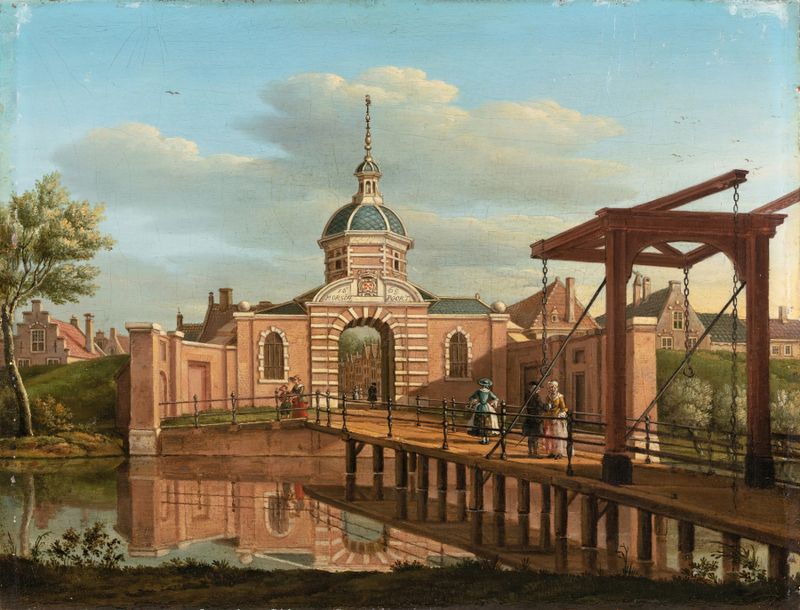
Could beauty survive in a century of chaos? This question lingers in the air as we gaze upon the serene landscape captured in a moment of crystalline clarity. Look to the left at the Witte Poort, its creamy façade bathed in the golden hues of a setting sun. The delicate strokes reveal a mastery of light, where the interplay of shadow and illumination accentuates every architectural detail. Notice how the canal reflects the tranquil sky, creating a sense of symmetry that draws the eye toward the horizon, inviting contemplation and calm. Yet beneath this placid surface lies a contrast of tension and stillness.
The figures walking along the bank, seemingly lost in thought, embody the quiet turmoil of an age teetering on the brink of revolution. The lively brushstrokes of the trees suggest a vibrancy that belies the encroaching darkness of societal change, hinting at the conflicts that simmered just beyond this picturesque scene. The painting becomes a revelation of duality: the beauty of the moment juxtaposed against the uncertainty of the times. In 1773, the artist was residing in Leiden, a city known for its academic and artistic legacy.
During this period, he was influenced by the Neoclassical movement, yet he maintained a unique approach that emphasized the harmonious blend of nature and architecture. As Europe was shifting towards the tumultuous tides of revolution and enlightenment, his work stands as a testament to the enduring power of art to capture and reflect beauty amidst chaos.
More Artworks by Paulus Constantijn la Fargue
Browse all →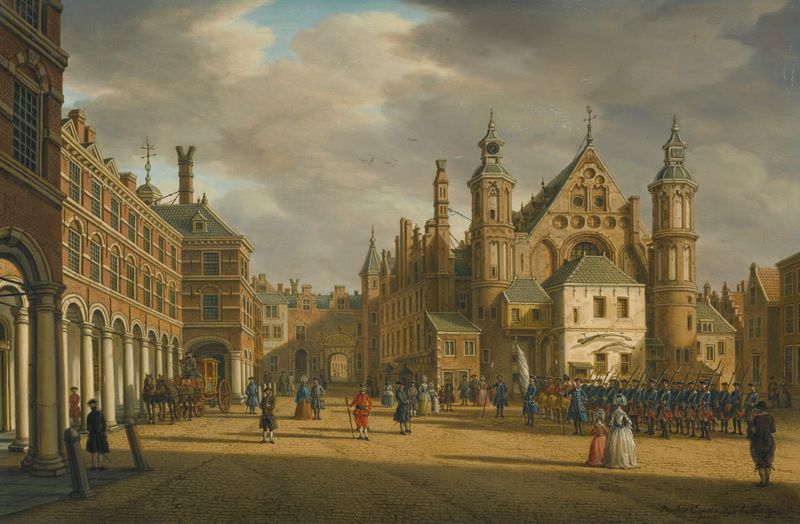
The Hague, A View Of The Binnenhof Looking North With The Ridderzaal
Paulus Constantijn la Fargue
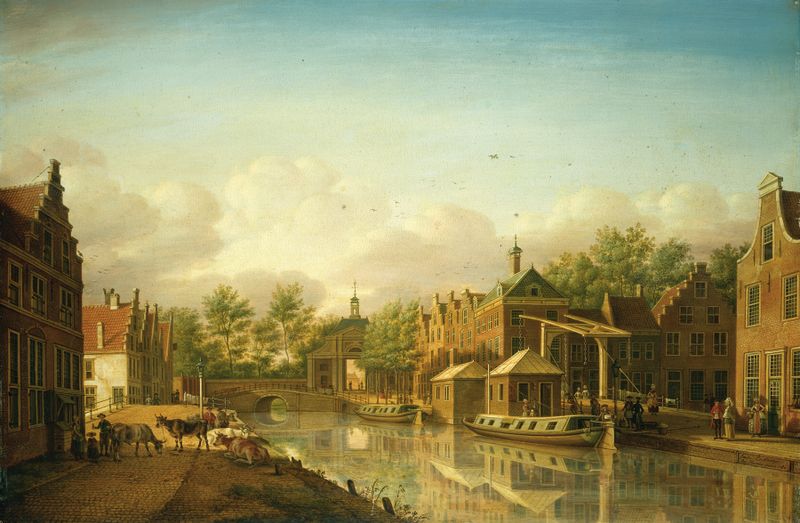
The Haarlem Gate in Leyden as Seen From the City
Paulus Constantijn la Fargue

A View Of Marepoort, Leiden
Paulus Constantijn la Fargue
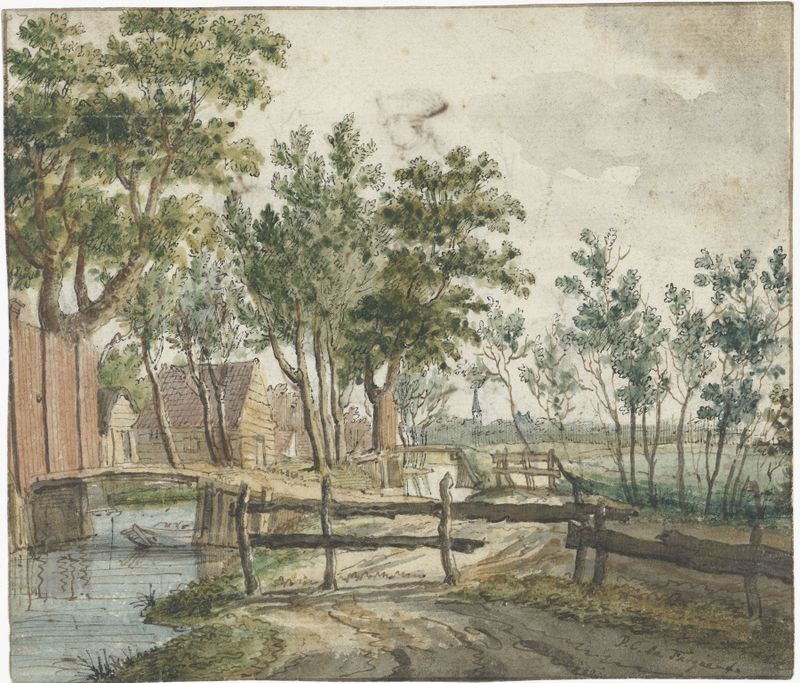
Landelijk vaart bij Voorburg
Paulus Constantijn la Fargue
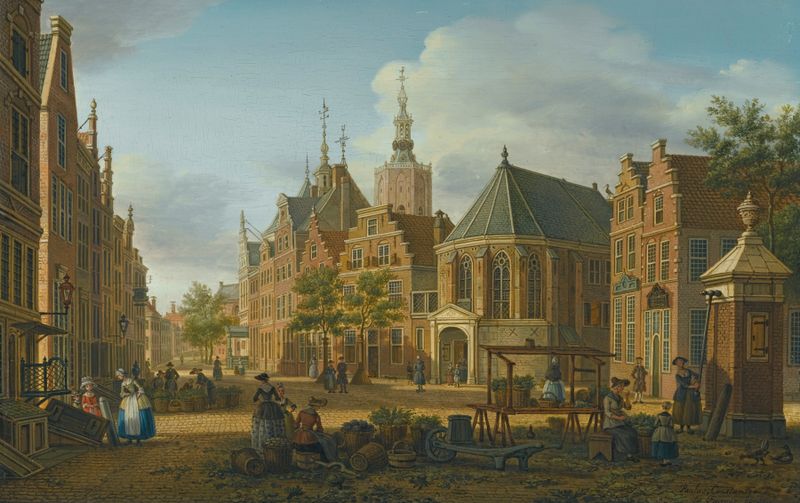
The Hague, A View Of The Groenmarkt Near The Westeinde Looking West
Paulus Constantijn la Fargue
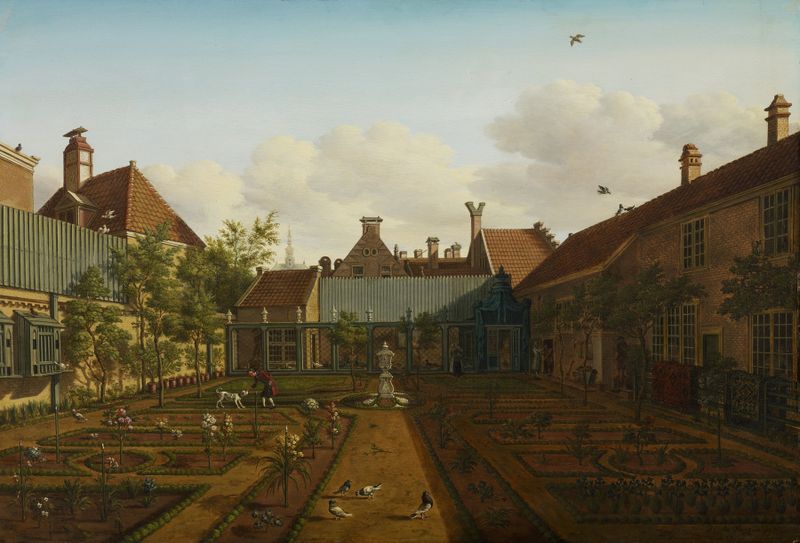
View of a Town House Garden in The Hague
Paulus Constantijn la Fargue
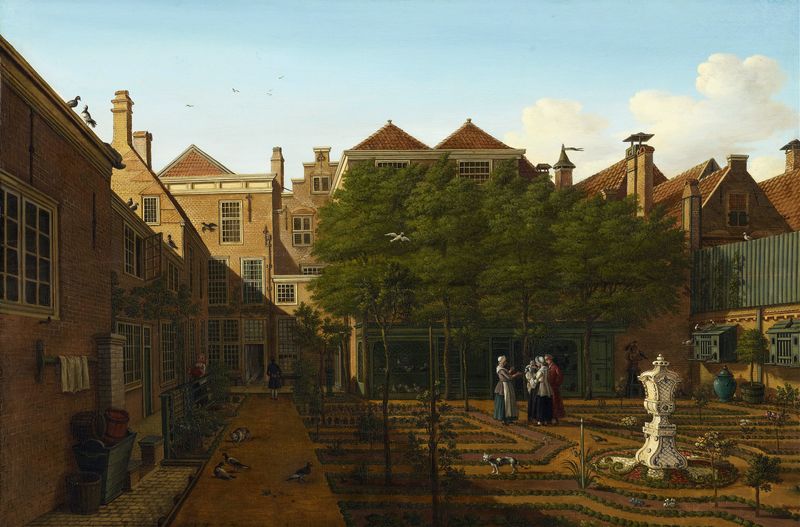
View of a Town House Garden in The Hague
Paulus Constantijn la Fargue
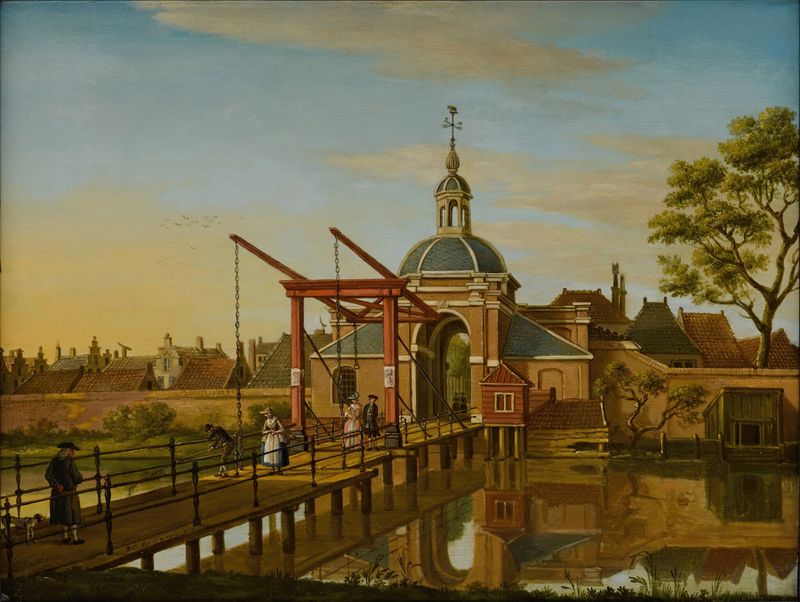
Leiden, a view of Koepoort, seen from the road to Zoeterwoude
Paulus Constantijn la Fargue
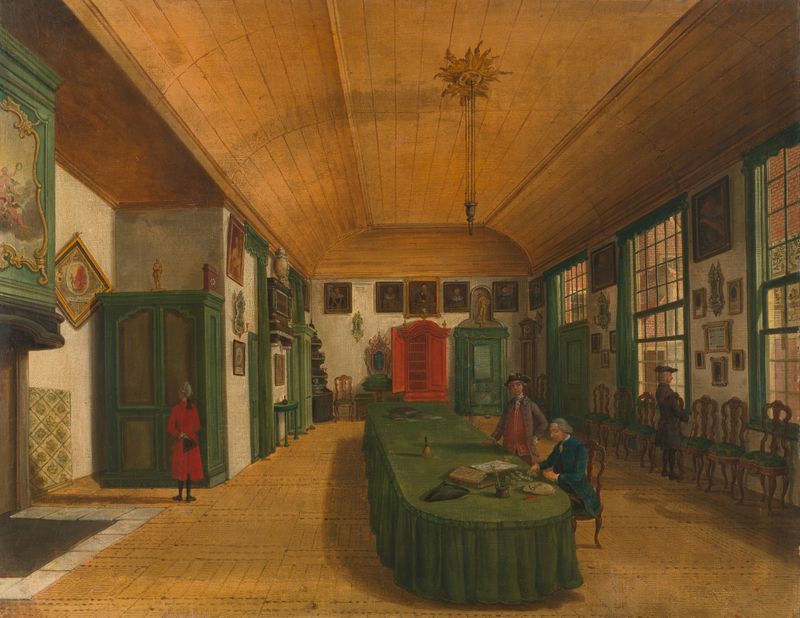
The Hall of the Artistic Society 'Kunst wordt door Arbeid verkregen' (Art is Acquired through Labor) in Leiden
Paulus Constantijn la Fargue
A View Of Morspoort, Leiden
Paulus Constantijn la Fargue
More Architecture Art
Browse all →
The statue of Liberty
Frédéric Auguste Bartholdi

View of Houses in Delft, Known as ‘The Little Street’
Johannes Vermeer

View of Houses in Delft, Known as ‘The Little Street’
Johannes Vermeer

The Cathedral in Rouen. The portal, Grey Weather
Claude Monet

The yellow house
Vincent van Gogh

The Church in Auvers-sur-Oise, View from the Chevet
Vincent van Gogh