
View of Thebes — History & Facts
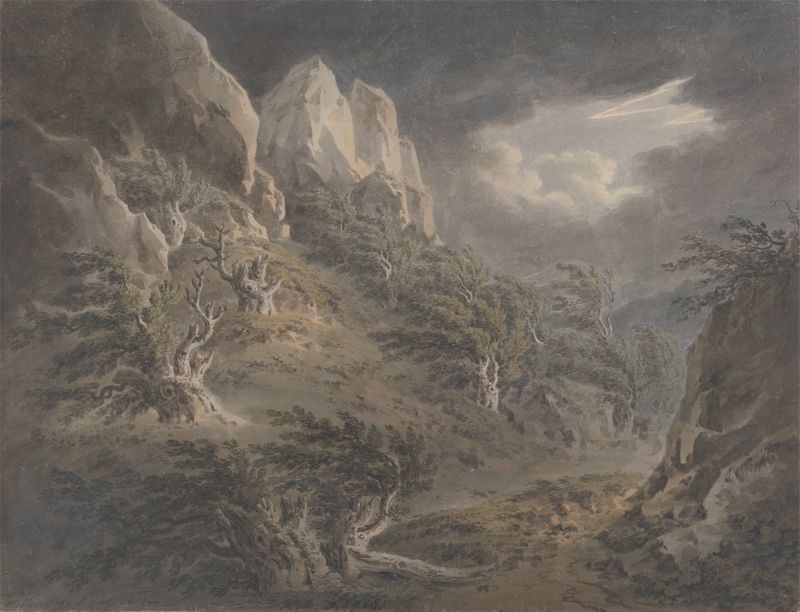
Did the painter know this moment would outlive them? In View of Thebes, a delicate balance between nature and civilization unfolds, inviting contemplation of permanence in an ever-changing world. Look to the left at the striking silhouette of ancient ruins, set against a vast sky that seems to cradle them. The soft blues and golden hues create an ethereal atmosphere, while the careful interplay of light and shadow reveals the remnants of a once-great civilization. Notice how the brushstrokes capture not just the landscape but an emotional resonance, evoking both nostalgia and reverence for the past. In this composition, the juxtaposition of the crumbling structures and the vibrant life surrounding them speaks to the transience of human achievement.
Each stone tells a story, while the distant mountains loom, timeless and indifferent. The harmony of colors suggests not only physical balance but also emotional equilibrium, as if the painter sought to find solace in the ruins amidst the chaos of history. Hugh William Williams created this artwork during a period of deep engagement with Romanticism, likely in the early 19th century. While traveling through Europe, he was captivated by the allure of classical antiquity and the sublime landscapes that inspired many artists of his time.
As Europe grappled with the consequences of industrialization and change, he found a moment of stillness in the fragments of the past, allowing viewers to ponder their own place within the continuum of time.
More Artworks by Hugh William Williams
Browse all →
Near Stirling, Scotland
Hugh William Williams

The Erechtheum, Athens
Hugh William Williams
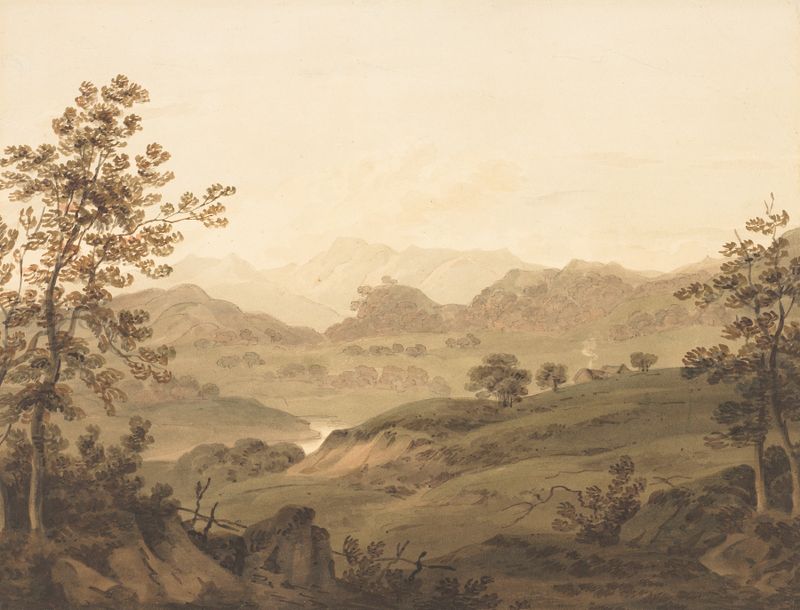
Landscape, North Wales
Hugh William Williams
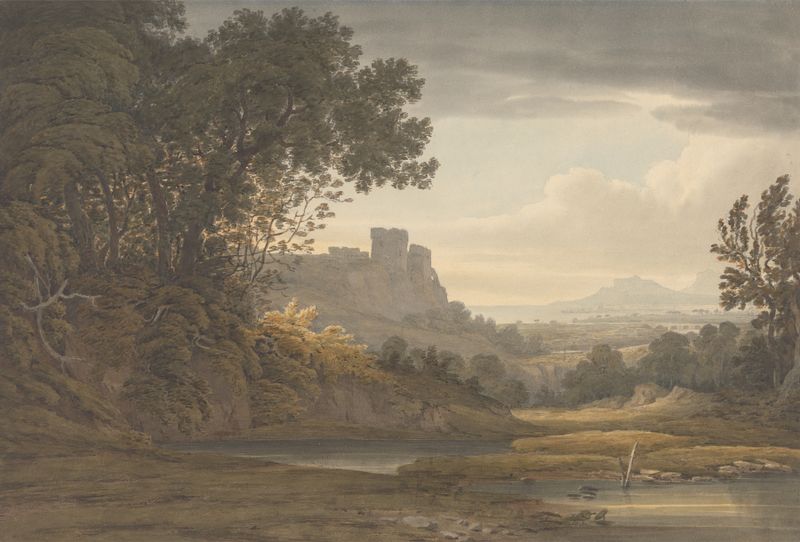
Castle in a Landscape
Hugh William Williams
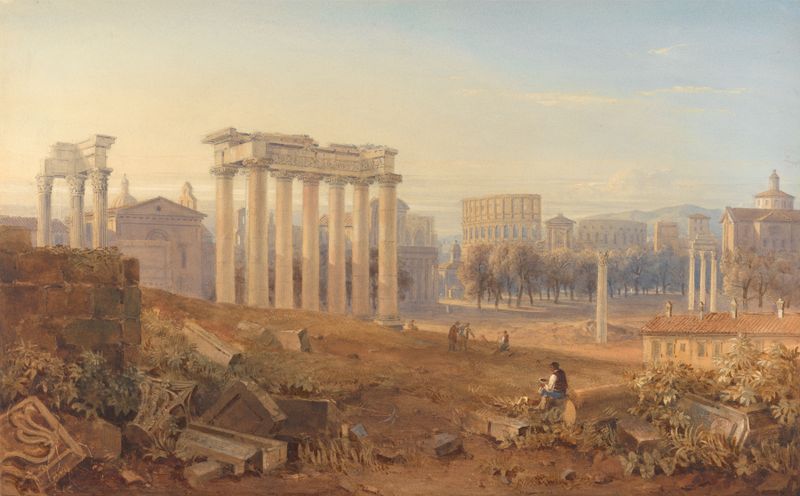
View of the Forum in Rome
Hugh William Williams
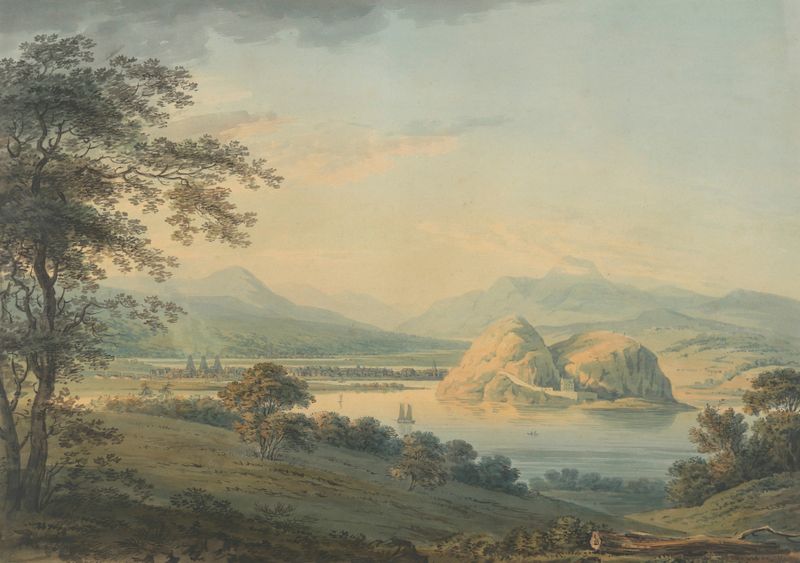
View of the town and castle of Dumbarton
Hugh William Williams
Birnam Wood
Hugh William Williams





