
Village et charrette — History & Facts
Where does light end, and longing begin? In the quietude of a village, the interplay of light and shadow reflects the delicate balance between existence and yearning. Look to the center of the canvas, where the charrette stands resolute against a backdrop of muted earth tones. The soft, diffused light captures the rustic texture of the cart’s wooden surface, inviting you to trace the contours of its weathered planks. Notice how the artist employs subtle strokes to suggest the surrounding landscape, creating a serene atmosphere that envelops the viewer.
The palette, a harmony of browns and greens, evokes a sense of nostalgia, while the gentle play of light hints at the passage of time. In this composition, the juxtaposition of vibrant light and somber shadow embodies an emotional tension. The charrette serves as a metaphor for the passage of life, eliciting reflections on journeys taken and those yet to come. The villagers, though absent, linger in the mind, their stories intertwined with the cart, suggesting both presence and absence.
Here lies a meditation on balance—the yearning for connection amid the solitude of rural existence. Painted in 1914, this work emerged during a transformative period for Steinlen, who was deeply entrenched in the social issues of Paris. It reflects his engagement with everyday life and the changing dynamics of early 20th-century France, right before the turmoil of World War I. At this moment, the artist sought to capture the essence of simplicity and the poignancy of the mundane, solidifying his legacy as a chronicler of the human experience.
More Artworks by Théophile Alexandre Steinlen
Browse all →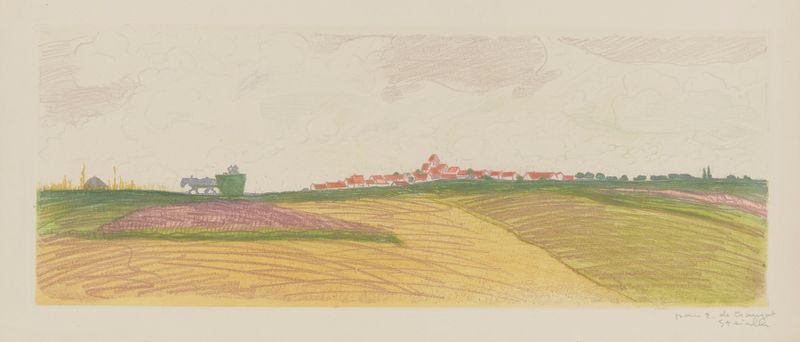
Village et charrette
Théophile Alexandre Steinlen
Vue de Belmont, près de Lausanne
Théophile Alexandre Steinlen
Vue de Belmont, près de Lausanne
Théophile Alexandre Steinlen
La maison à l’entrée du village
Théophile Alexandre Steinlen
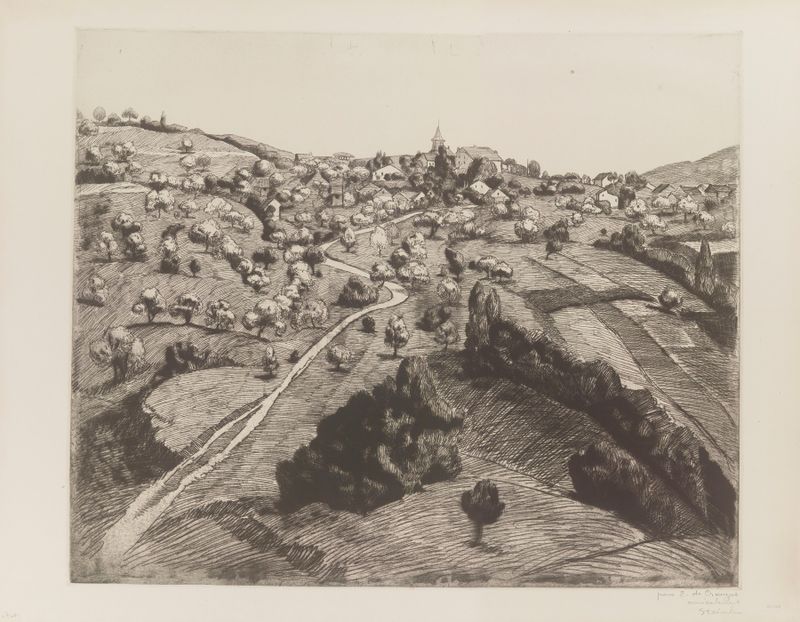
Vue de Belmont, près de Lausanne
Théophile Alexandre Steinlen
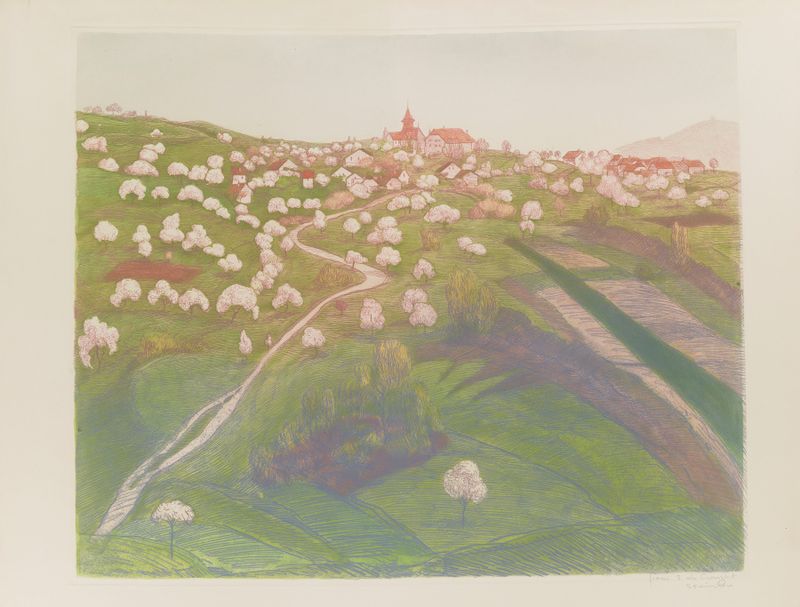
Vue de Belmont, près de Lausanne, n° 2
Théophile Alexandre Steinlen





