
Village et charrette — History & Facts
Could beauty survive in a century of chaos? In Village et charrette, the delicate interplay of light and shadow invites contemplation of creation amidst disarray. The canvas encapsulates a serene pastoral moment, where life unfolds quietly against the backdrop of looming uncertainty. Look to the left at the sturdy horse, its powerful frame contrasting gently with the soft hues of the surrounding landscape. Notice how the vibrant greens and earth tones blend harmoniously, encapsulating the essence of rural vitality.
The brushstrokes are both confident and fluid, creating a rhythmic movement that echoes the fleeting nature of life. The cart, grounded in the foreground, serves as a reminder of labor and community, brought to life by the artist's deft hand. Beneath the surface of this idyllic scene lies a tension between peace and impending turmoil. The simple, everyday activities of villagers evoke a sense of nostalgia, while the ghostly specter of conflict looms over the horizon.
Steinlen captures not just the beauty of rural existence, but the fragility of that existence, hinting at the disruption that the coming world war would bring to these pastoral lives. The contrasts within the painting speak of resilience, urging viewers to reflect on what will endure in times of crisis. In 1914, when this work was created, the world stood on the brink of monumental change. Steinlen was living in Paris, where the art scene was vibrant yet overshadowed by the growing tensions leading to World War I.
His focus on everyday life, the humble beauty of villages, and the intimate connections between people reveal his desire to celebrate the simple joys that would soon be threatened by the chaos of the era.
More Artworks by Théophile Alexandre Steinlen
Browse all →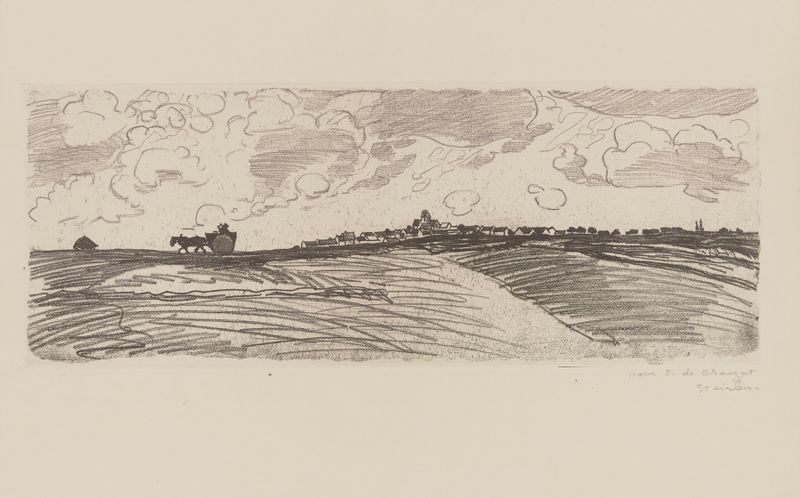
Village et charrette
Théophile Alexandre Steinlen
Vue de Belmont, près de Lausanne
Théophile Alexandre Steinlen
Vue de Belmont, près de Lausanne
Théophile Alexandre Steinlen
La maison à l’entrée du village
Théophile Alexandre Steinlen
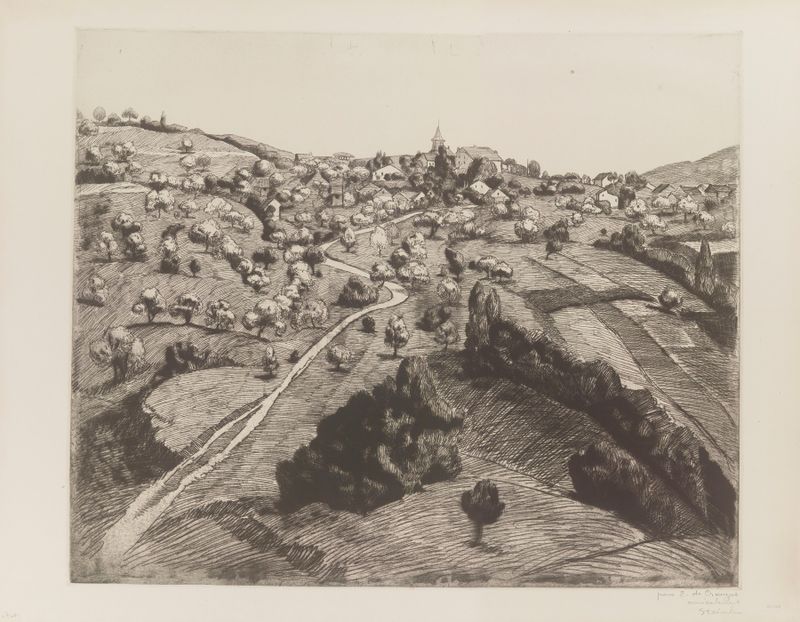
Vue de Belmont, près de Lausanne
Théophile Alexandre Steinlen
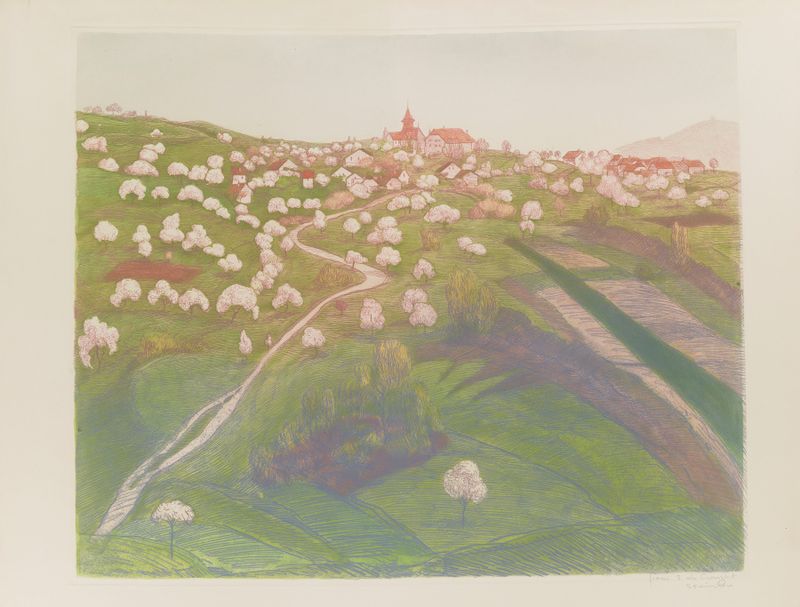
Vue de Belmont, près de Lausanne, n° 2
Théophile Alexandre Steinlen





