
Vue de Belmont, près de Lausanne — History & Facts
What if beauty was never meant to be finished? In Vue de Belmont, près de Lausanne, the viewer is invited into a moment of divine stillness, where landscape meets heaven in a soft embrace. Look to the foreground, where delicate strokes shape the rolling hills, their lush greens bathed in a gentle sunlight that dances across the canvas. Notice how the pale blues of the sky melt into the horizon, contrasting beautifully with the vibrant flora below. The artist employs an impressionistic technique, layering colors that create a palpable sense of depth, while the brushwork suggests movement, capturing a fleeting moment that feels both intimate and expansive. Within the serene landscape lies an emotional undercurrent, a contrast between the stillness of nature and the chaos of human existence.
The quiet solitude depicted invites reflection on the divine presence in the mundane, urging viewers to contemplate the sacredness of our surroundings. Each detail, from the softly curving hills to the distant silhouettes of trees, speaks of an interconnectedness that transcends the visual — a reminder that beauty, in its essence, is always a work in progress. Steinlen created this piece in 1913 while living in Switzerland, amidst a world on the brink of great change. As post-impressionism was evolving, he found solace in the landscapes surrounding Lausanne, capturing the tranquil essence of his environment against the backdrop of a turbulent era.
This painting reflects not just his mastery of light and color but also his quest for a deeper understanding of beauty in a world that often feels incomplete.
More Artworks by Théophile Alexandre Steinlen
Browse all →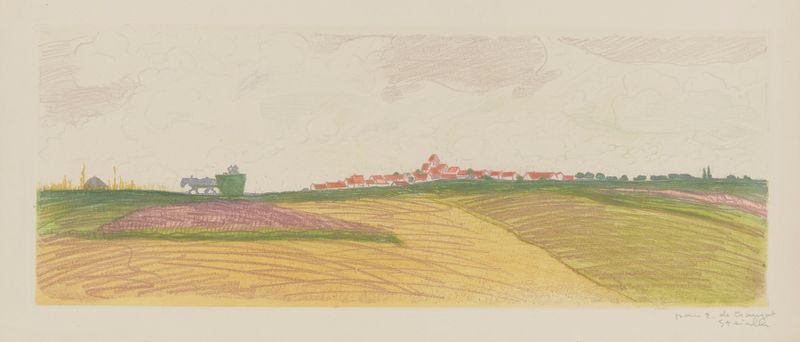
Village et charrette
Théophile Alexandre Steinlen
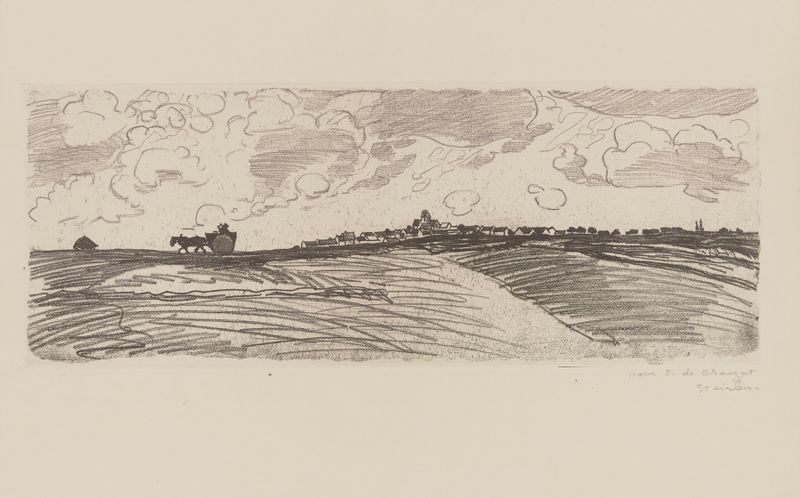
Village et charrette
Théophile Alexandre Steinlen
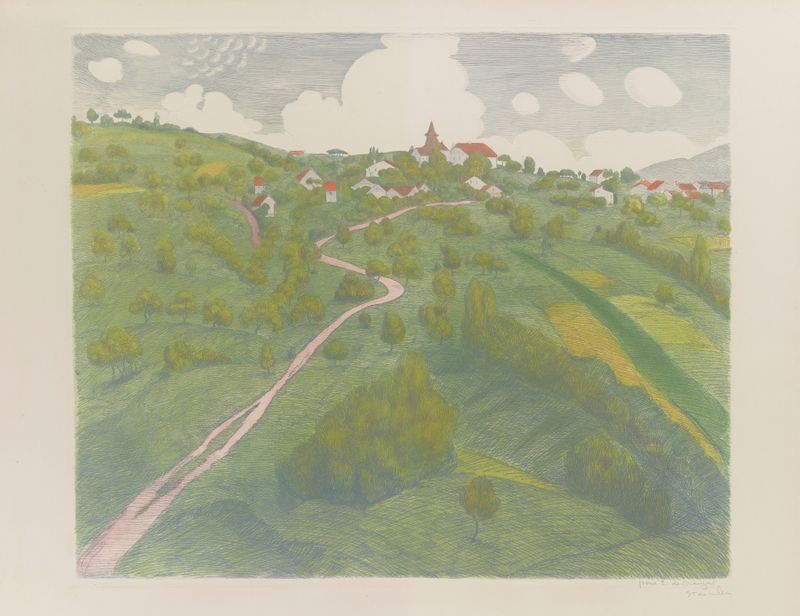
Vue de Belmont, près de Lausanne
Théophile Alexandre Steinlen
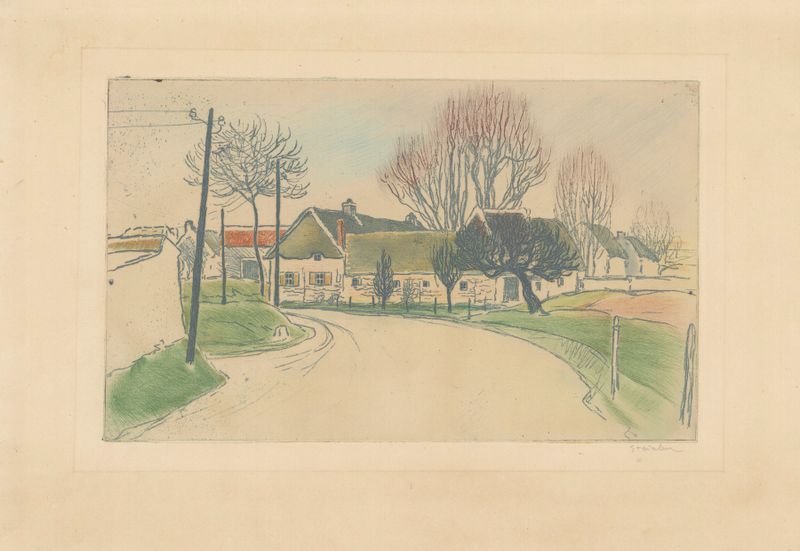
La maison à l’entrée du village
Théophile Alexandre Steinlen
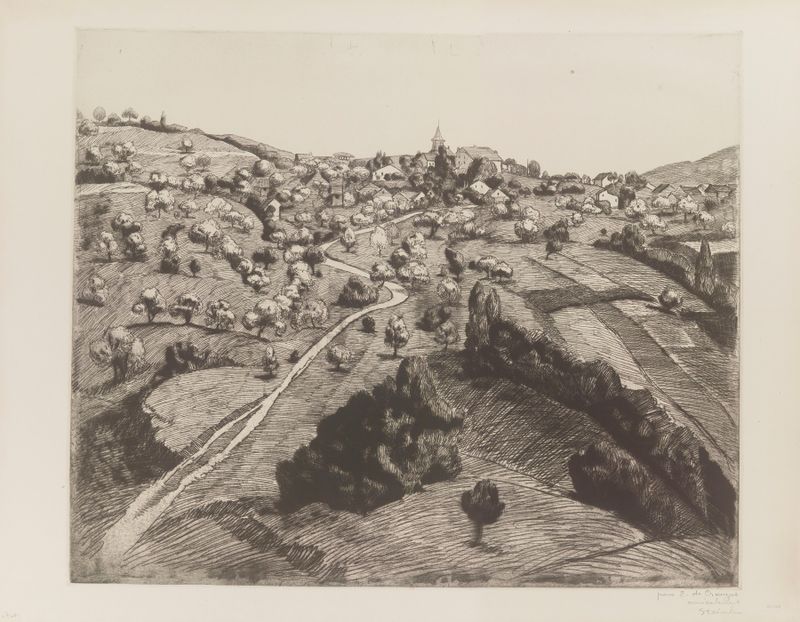
Vue de Belmont, près de Lausanne
Théophile Alexandre Steinlen
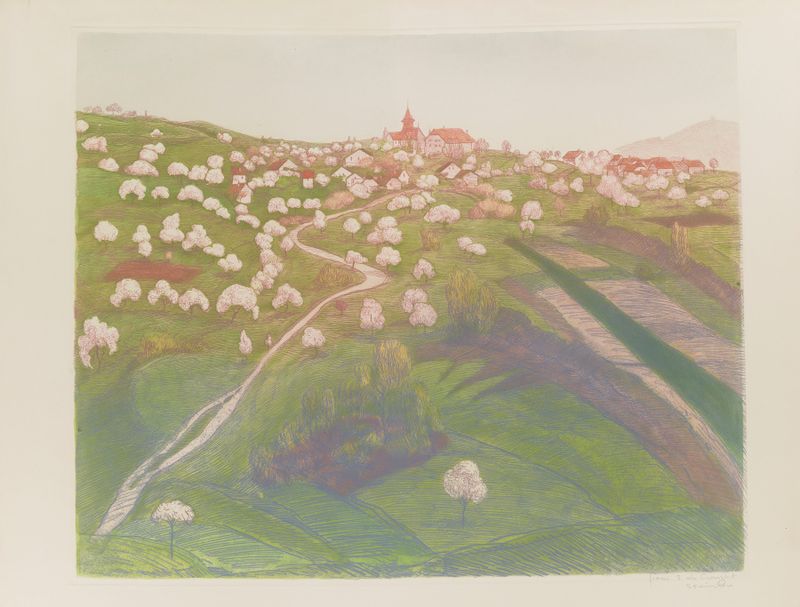
Vue de Belmont, près de Lausanne, n° 2
Théophile Alexandre Steinlen





