
Vue de Belmont, près de Lausanne — History & Facts
What if silence could speak through light? In Théophile Alexandre Steinlen's Vue de Belmont, près de Lausanne, the stillness of a tranquil landscape resonates with an undercurrent of revolutionary fervor, hinting at change beneath the surface of calm. Look to the left, where the rolling hills stretch toward a distant horizon, bathed in a soft, golden glow. Notice how the light falls upon the verdant fields, illuminating delicate brush strokes that capture the very essence of nature's peace. The composition draws the viewer in, with a winding path leading the eye through the scene, inviting contemplation.
The subtle palette of greens and earth tones evokes a sense of harmony, yet there is a tension in the air, as if the landscape holds its breath, anticipating what lies ahead. Beneath the serene surface, hidden meanings emerge. The contrast between the idyllic setting and the burgeoning societal changes of the early 20th century hints at a world poised on the brink of transformation. The stillness of the scene juxtaposes the growing unrest, suggesting that even in moments of beauty, the specter of revolution looms.
The careful rendering of light and shadow reflects not just the physical landscape, but the emotional landscape of a population yearning for change. In 1913, Steinlen painted this work during a time of great social upheaval in Europe, where the art world was beginning to embrace modernism. Living in Paris, he was influenced by the shifting cultural currents and the burgeoning movements that sought to challenge the status quo. His work often reflected the struggles of the working class, and Vue de Belmont serves as a reminder that tranquility can exist alongside the call for revolution.
More Artworks by Théophile Alexandre Steinlen
Browse all →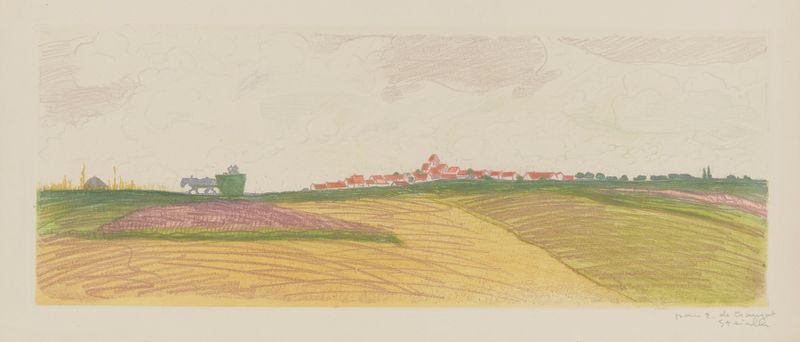
Village et charrette
Théophile Alexandre Steinlen
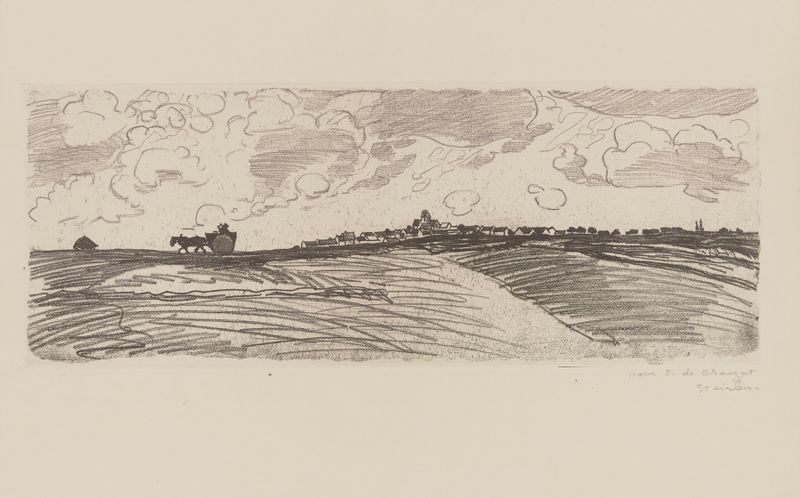
Village et charrette
Théophile Alexandre Steinlen
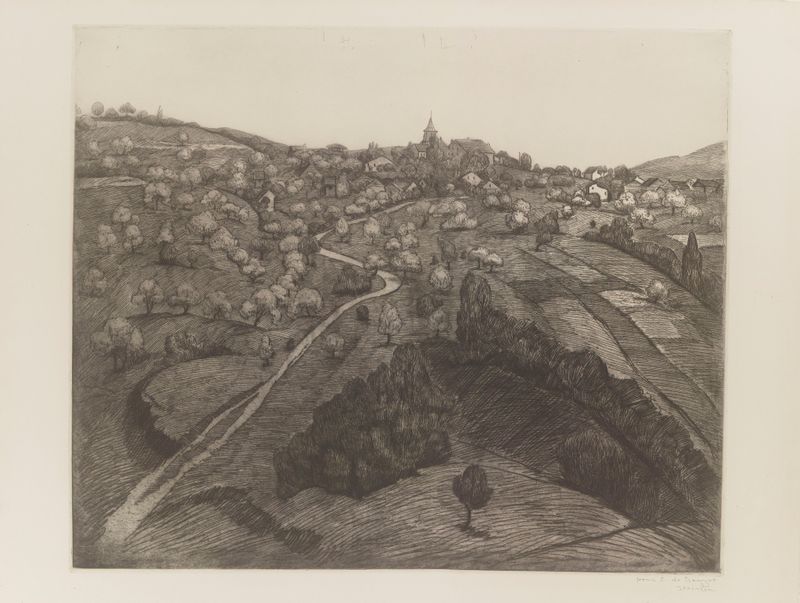
Vue de Belmont, près de Lausanne
Théophile Alexandre Steinlen
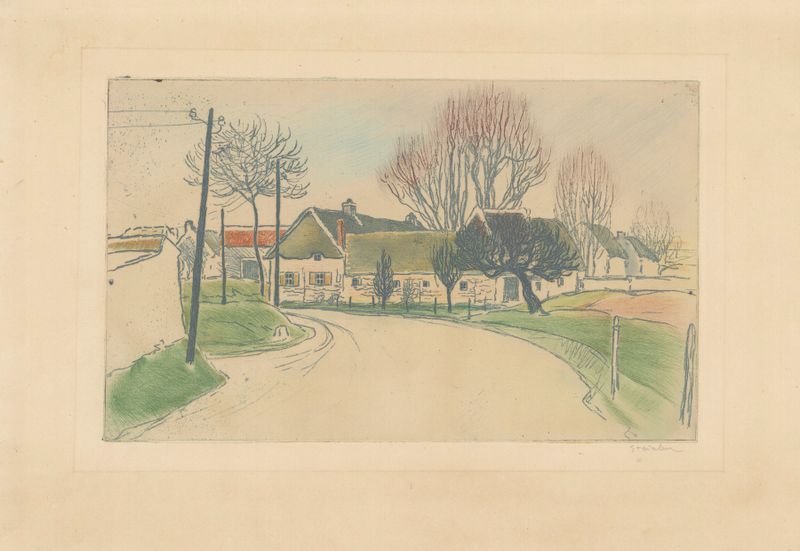
La maison à l’entrée du village
Théophile Alexandre Steinlen
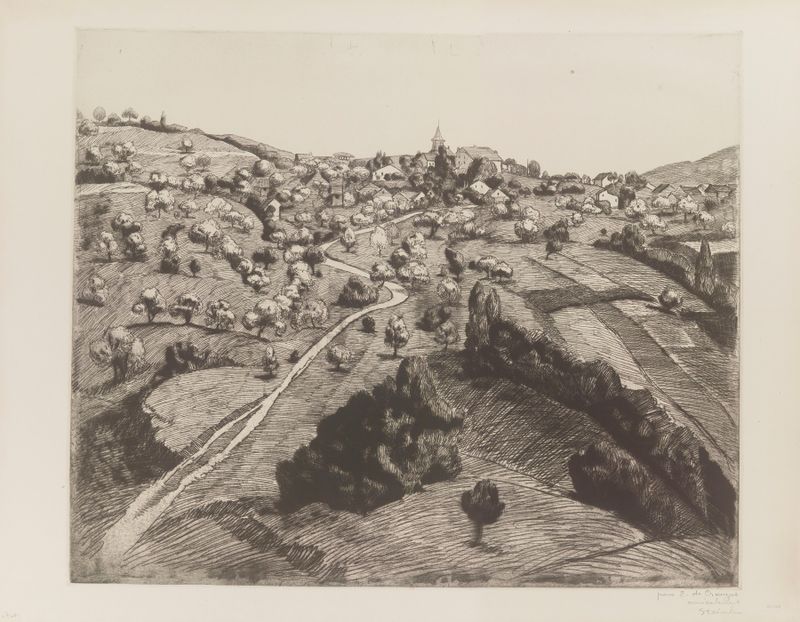
Vue de Belmont, près de Lausanne
Théophile Alexandre Steinlen
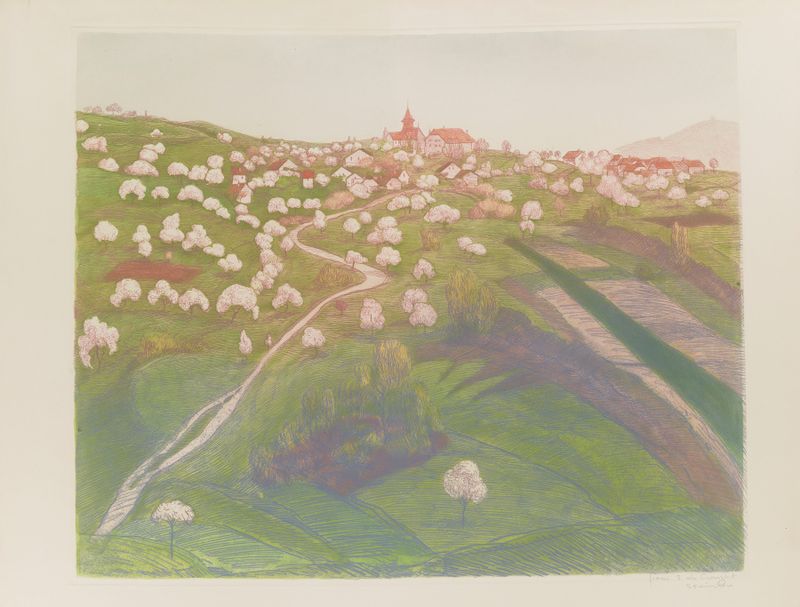
Vue de Belmont, près de Lausanne, n° 2
Théophile Alexandre Steinlen





