
Village of Stonethwaite and Eagle Cragg, Borrowdale — History & Facts
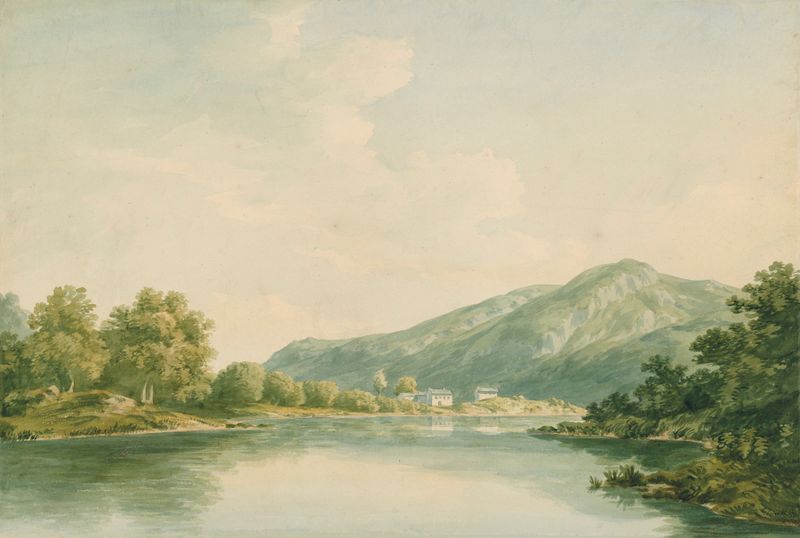
In the quiet whispers of nature, a hidden madness brews — an unsettling beauty that invites introspection and reflection. Look to the foreground where lush greenery bursts forth, an exuberance that contrasts sharply with the looming crags in the background. Notice how the artist captures the light, dappling it through the leaves, as if nature itself breathes life into the landscape. The delicate brushwork reveals textures that draw your eye, inviting you to explore the vibrant palette of greens, browns, and soft blues that harmonize the scene. Yet beneath this idyllic surface lies a tension.
The rugged crags of Eagle Cragg loom ominously, hinting at nature’s ferocity. There’s a juxtaposition between the serene village nestled in the valley and the wild, untamed mountains that guard it. The seemingly tranquil scene harbors an underlying chaos, a reminder that beauty often dances on the edge of madness, teetering between peace and turmoil. John Warwick Smith painted this evocative landscape during the late 18th century, a time when the Romantic movement was gaining momentum in England.
This was a period marked by a growing appreciation for the sublime in nature, as artists sought to express their emotional responses to the world around them. Smith, influenced by his travels through England, captured the essence of this landscape with a delicate balance of beauty and underlying tumult, reflecting both his own artistic journey and the broader shifts in the art world.
More Artworks by John Warwick Smith
Browse all →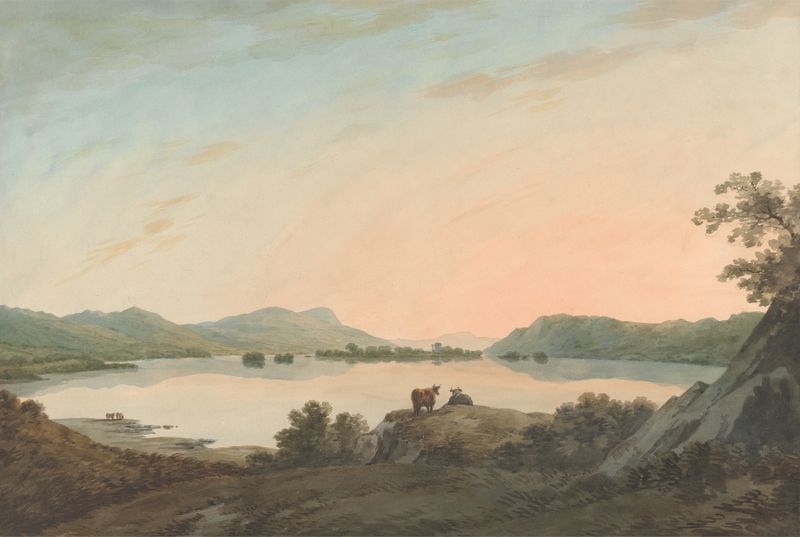
Lake Windermere from Calgarth with Belle Isle
John Warwick Smith
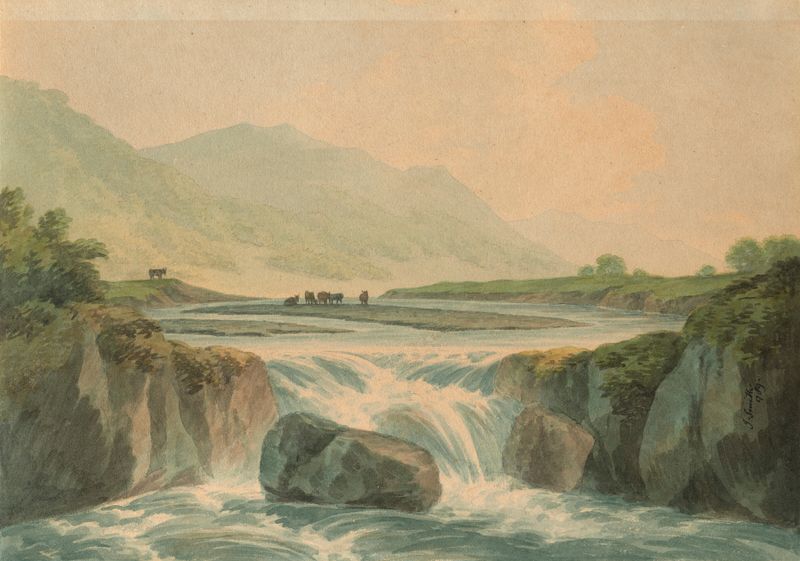
A waterfall on the River Rheidol, with cattle in the distance, North Wales
John Warwick Smith
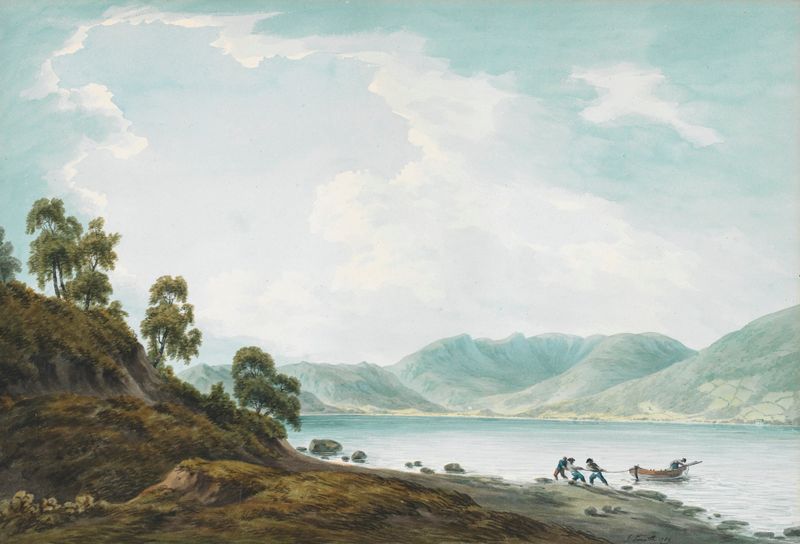
Head of Windermere from Belle Grange Farm
John Warwick Smith
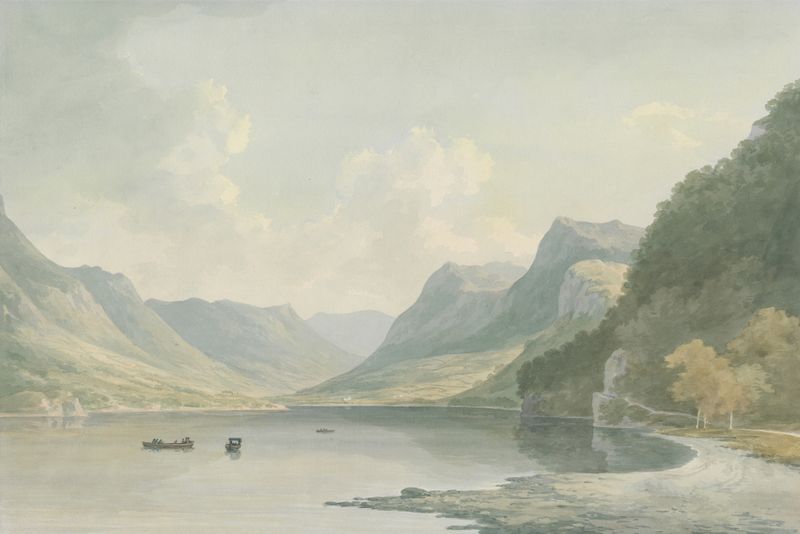
Ullswater, Looking toward Patterdale
John Warwick Smith
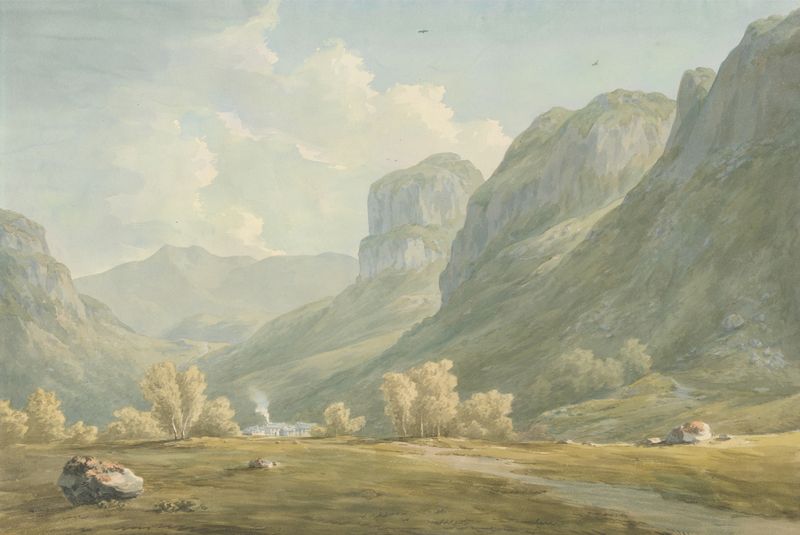
Village of Stonethwaite and Eagle Cragg, Borrowdale
John Warwick Smith
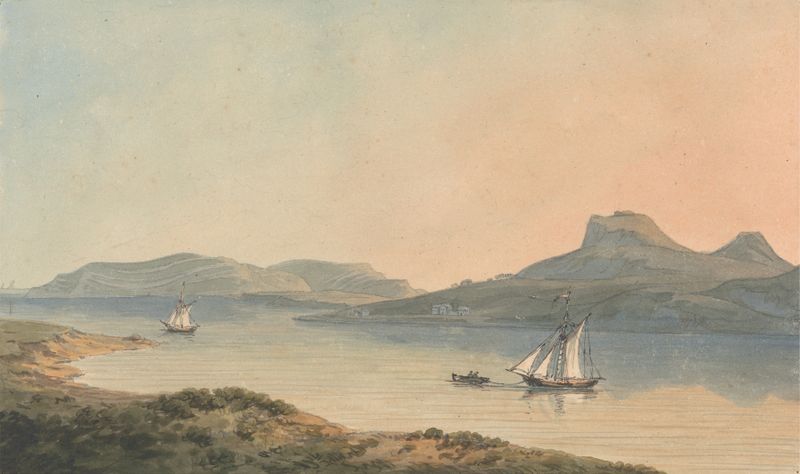
View of the Early Castle of Diganwy
John Warwick Smith
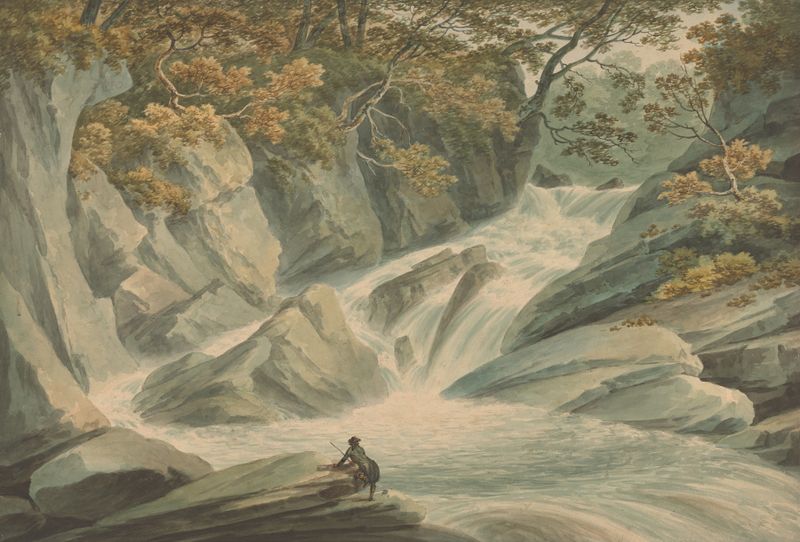
Hafod; Upper Part of Cascade
John Warwick Smith
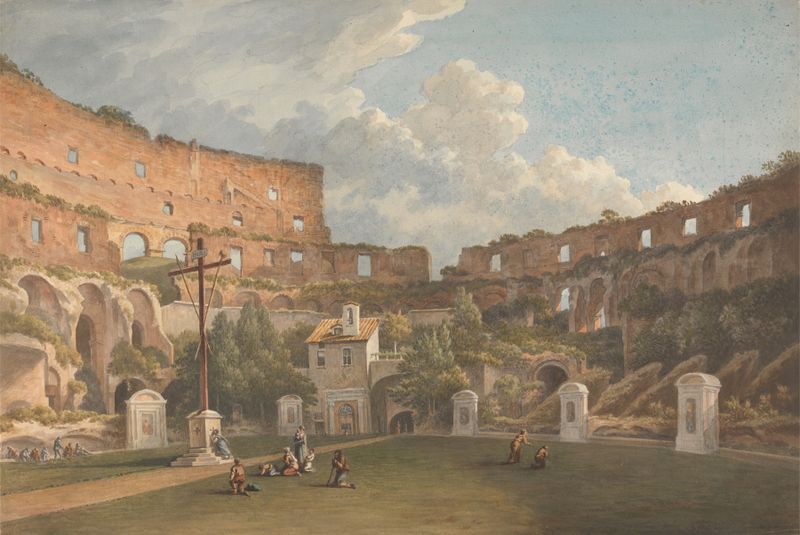
An Interior View of the Colosseum, Rome
John Warwick Smith
The lower end of Lake Windermere
John Warwick Smith
In the Bay of Salerno, near Vietri
John Warwick Smith





