
Village of Stonethwaite and Eagle Cragg, Borrowdale — History & Facts
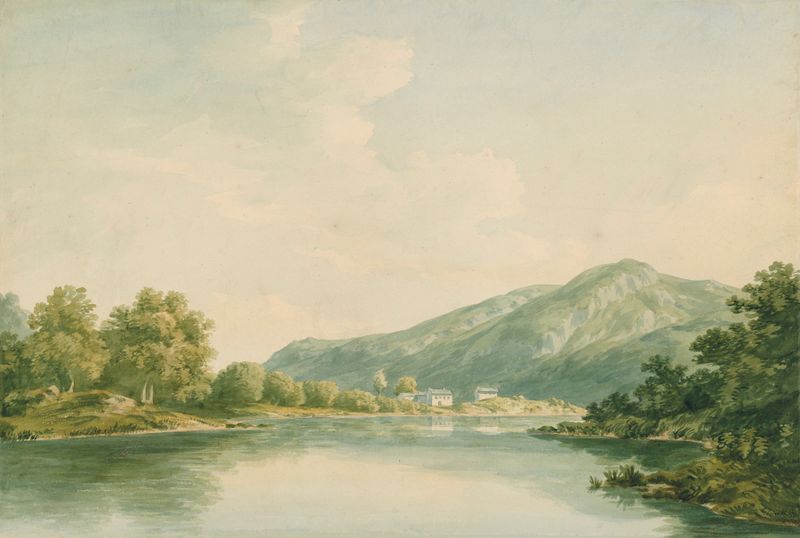
Who listens when art speaks of silence? In John Warwick Smith's Village of Stonethwaite and Eagle Cragg, Borrowdale, the stillness resonates profoundly, unveiling a landscape that whispers its secrets to those who dare to observe. Look to the left, where soft greens and browns of the valley cradle the quaint village nestled below the towering crags. Notice how the sunlight filters through the clouds, illuminating the serene rooftops while casting long shadows that dance over the rugged terrain. The gentle curves of the hills draw the eye upward, inviting exploration of the crisp blue sky, painted with ethereal wisps of white that seem to stretch infinitely. As you linger, you begin to feel the tension between nature's grandeur and human fragility—the houses appear almost swallowed by the surrounding landscape, emphasizing humanity's smallness in the face of such awe-inspiring beauty.
The contrast of vibrant foliage against the somber, rocky outcrops speaks of resilience, while the tranquil water reflects a world both calm and tumultuous, suggesting the duality of existence. Each brushstroke captures a moment of contemplation, an embrace of solitude amidst nature's overwhelming presence. In 1792, when this work was created, Warwick Smith was deeply influenced by the Romantic movement, celebrating the sublime qualities of landscapes. Living in England during a time of social and political change, he sought to capture the untamed beauty of the British countryside.
His exploration of light, texture, and composition in Village of Stonethwaite and Eagle Cragg was a testament to the emerging appreciation for nature, signaling a shift in artistic focus toward the emotional and spiritual connection between humanity and the natural world.
More Artworks by John Warwick Smith
Browse all →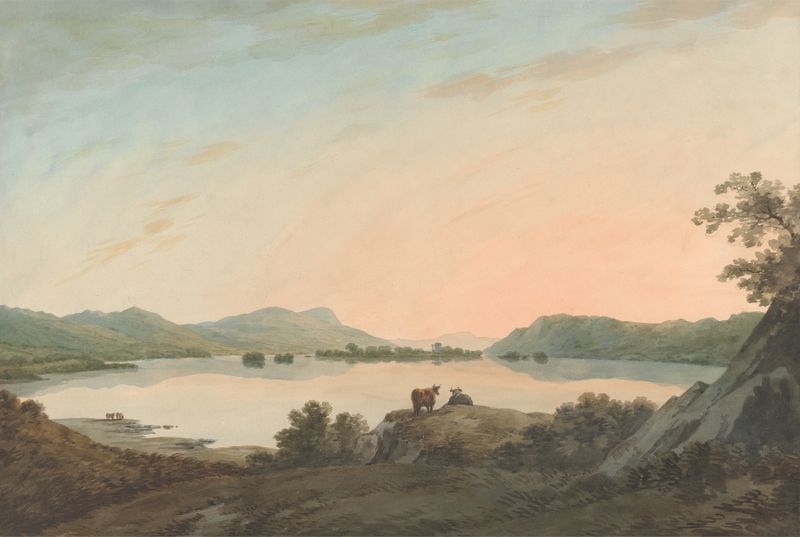
Lake Windermere from Calgarth with Belle Isle
John Warwick Smith
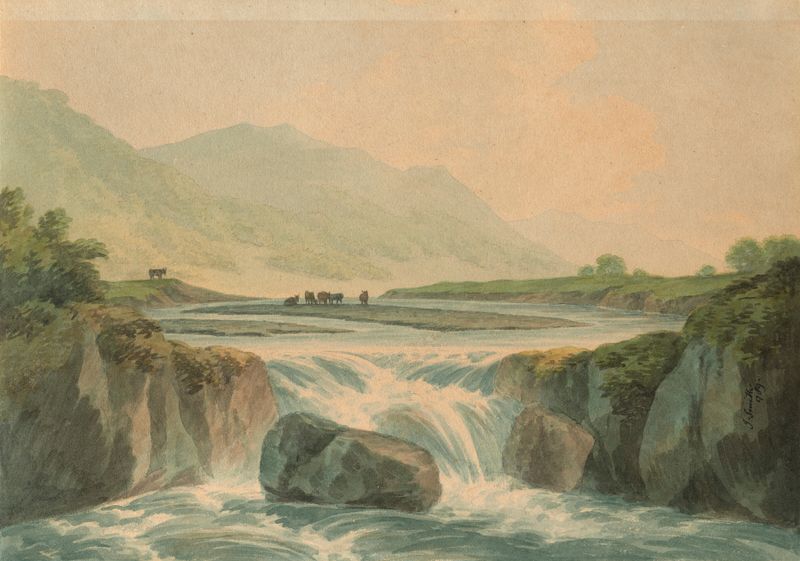
A waterfall on the River Rheidol, with cattle in the distance, North Wales
John Warwick Smith
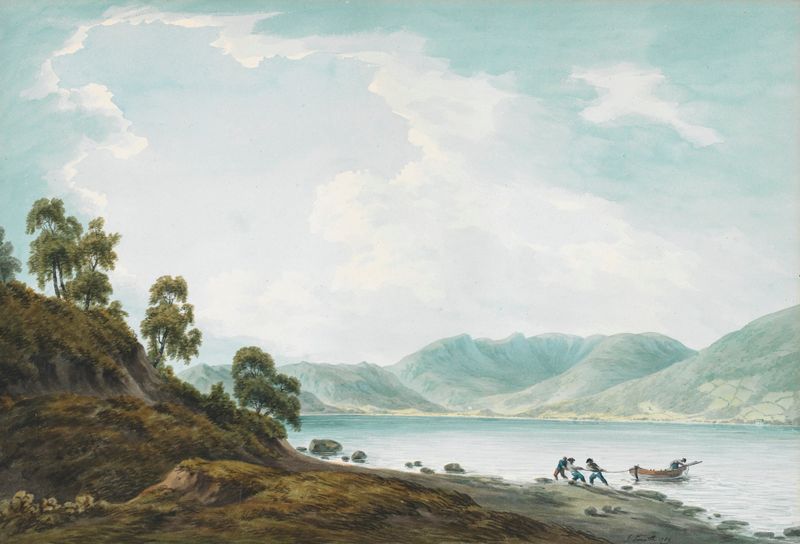
Head of Windermere from Belle Grange Farm
John Warwick Smith
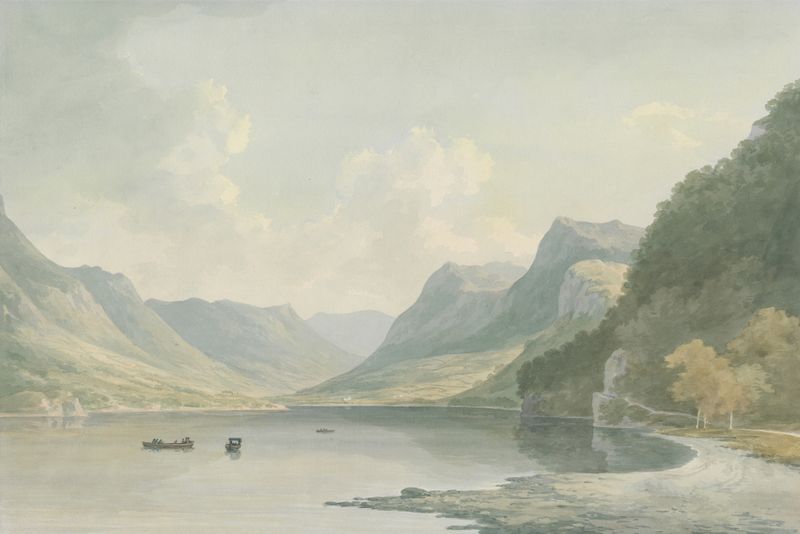
Ullswater, Looking toward Patterdale
John Warwick Smith
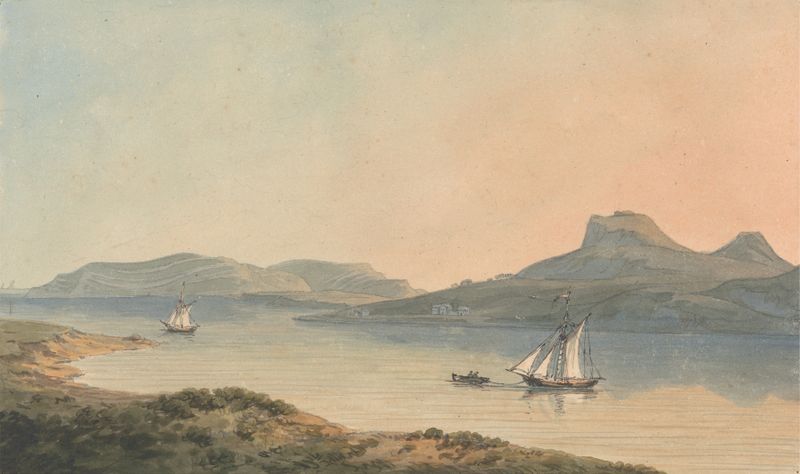
View of the Early Castle of Diganwy
John Warwick Smith
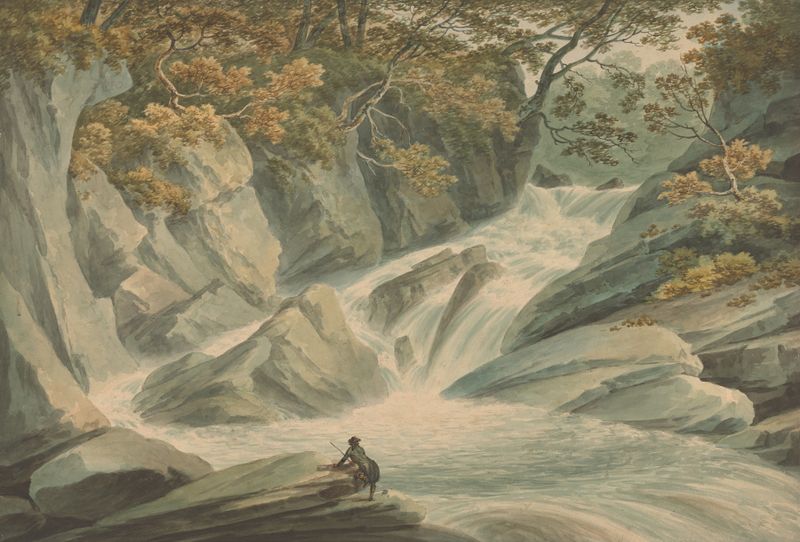
Hafod; Upper Part of Cascade
John Warwick Smith
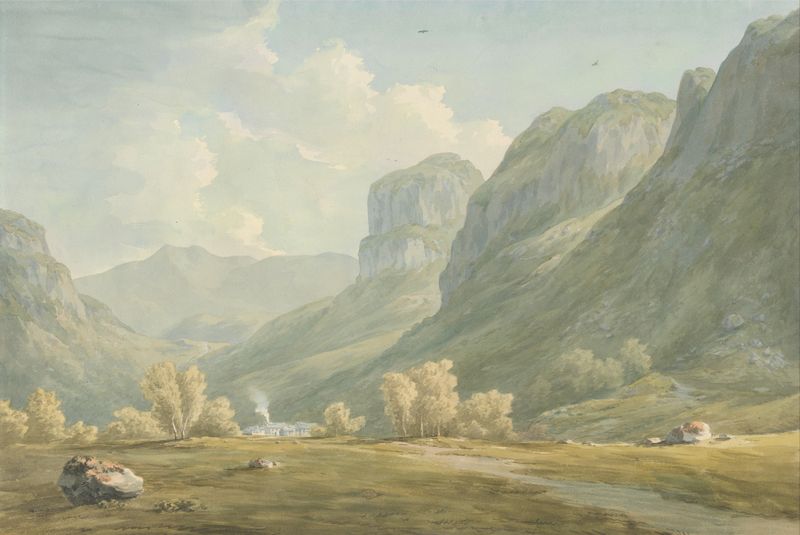
Village of Stonethwaite and Eagle Cragg, Borrowdale
John Warwick Smith
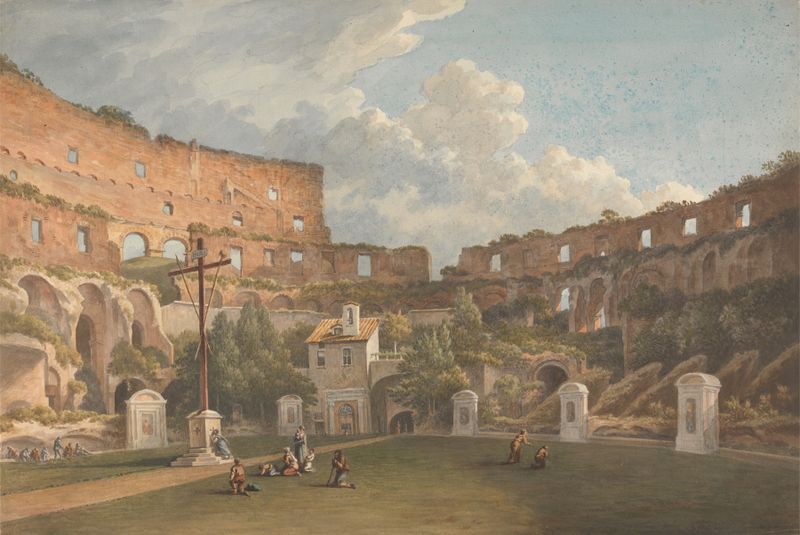
An Interior View of the Colosseum, Rome
John Warwick Smith
The lower end of Lake Windermere
John Warwick Smith
In the Bay of Salerno, near Vietri
John Warwick Smith





