
Vorstadt VII — History & Facts
Where does light end, and longing begin? In the stillness of Vorstadt VII, a palpable tension hangs in the air, capturing the essence of fear that often accompanies the unknown. Look to the center of the canvas, where shadows play a dance of their own against the muted backdrop. The stark outlines of crumbling architecture—both haunting and familiar—invite you to explore the deeper recesses of the scene. Notice how the light falls upon the weathered surfaces, creating a chiaroscuro effect that heightens the sense of isolation.
The restrained palette, with its desaturated hues of gray and brown, evokes a feeling of melancholy, drawing the viewer into a world suspended between despair and hope. Delve deeper into the small details—perhaps a solitary figure shrouded in darkness, or the distant glow of a flickering window, hinting at life beyond the starkness. Each element resonates with emotional weight, reflecting the artist’s commentary on urban alienation and the fragility of human connection. The composition speaks to contrasts: the solidity of the structures against the ephemeral nature of light, the fear of stagnation amid the relentless advance of time and change. Created in 1926 while the artist resided in Vienna, this work emerged during a period marked by significant societal shifts and artistic exploration.
Post-World War I Europe was grappling with existential uncertainty and a reconsideration of traditional values, which greatly influenced the avant-garde movements of the time. In this context, the painting captures not only a moment in architectural decay but also the haunting echoes of a society in flux.
More Artworks by Karl Wiener
Browse all →
Österreich
Karl Wiener

Der Turm
Karl Wiener

Ohne Titel (Häuser mit Holzscheune)
Karl Wiener

Kopfstudie, aus; ‘Profile’, 10 Blätter, Graz XV
Karl Wiener

Steinberg
Karl Wiener
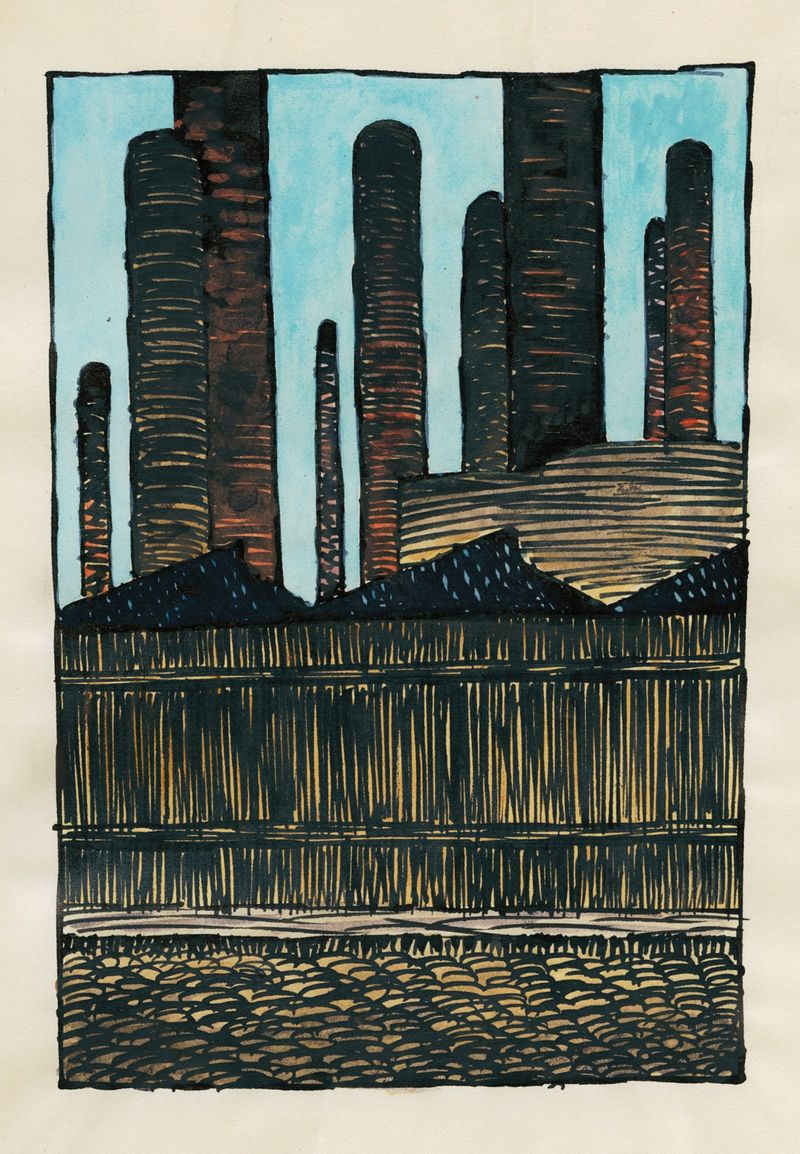
Kopfstudie, aus; ‘Profile’, 10 Blätter, Graz XIV
Karl Wiener

Ohne Titel (Bauernhaus mit Vorgarten)
Karl Wiener
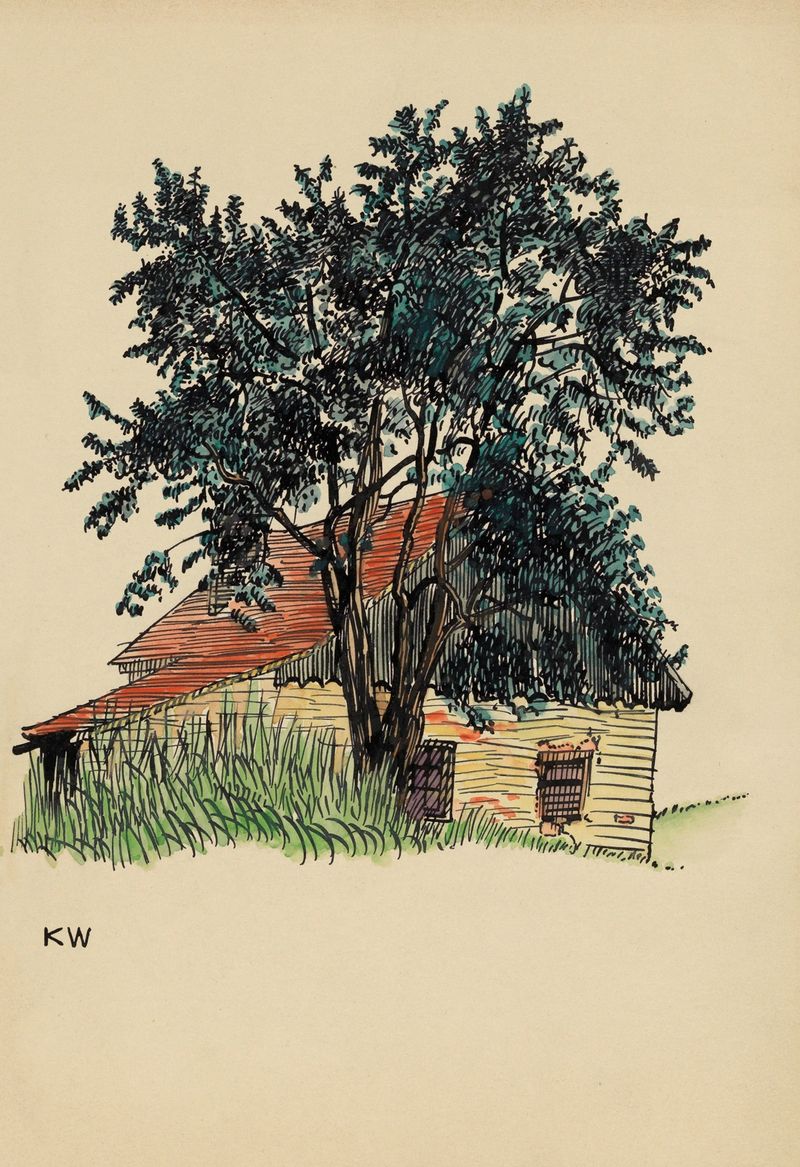
Ohne Titel (Bauernhaus)
Karl Wiener
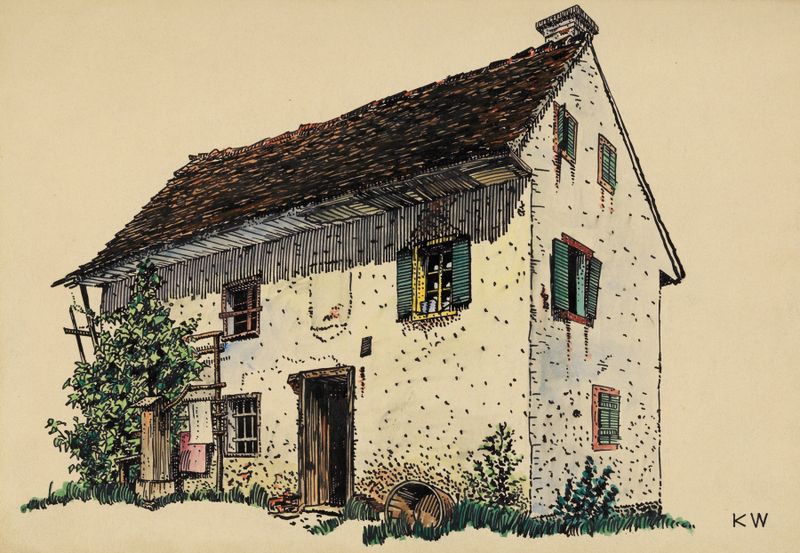
Ohne Titel (Bauernhaus)
Karl Wiener
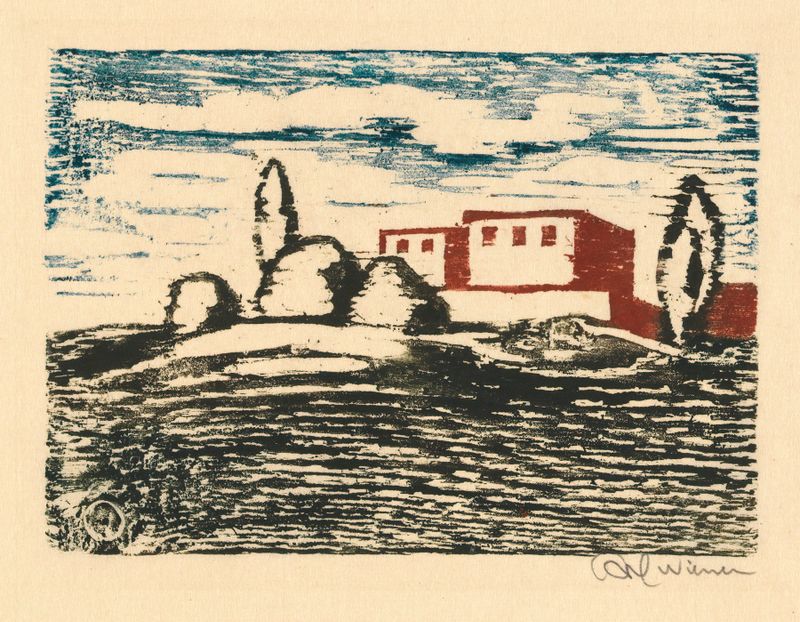
Ohne Titel (Haus in Landschaft)
Karl Wiener
More Architecture Art
Browse all →
The statue of Liberty
Frédéric Auguste Bartholdi

View of Houses in Delft, Known as ‘The Little Street’
Johannes Vermeer

View of Houses in Delft, Known as ‘The Little Street’
Johannes Vermeer

The Cathedral in Rouen. The portal, Grey Weather
Claude Monet

The yellow house
Vincent van Gogh

The Church in Auvers-sur-Oise, View from the Chevet
Vincent van Gogh