
Vrouw staand aan de rand van de afgrond en raaf — History & Facts
Could a single brushstroke hold eternity? In Caspar David Friedrich's Vrouw staand aan de rand van de afgrond en raaf, movement takes on a spiritual dimension, evoking the interplay between the human soul and the vastness of nature. Look to the left where the figure of a woman stands poised at the precipice, her dark silhouette stark against the expansive landscape. Her flowing dress, caught in an unseen breeze, seems to ripple with an energy that transcends the canvas. Notice how the ravens, sharp and watchful, contrast with the gentle hues of the sky, hinting at impending change.
The careful layering of oil paints creates an atmospheric depth, where the soft clouds echo the woman's uncertainty, framing her in a world both beautiful and foreboding. Delve deeper into the emotional tensions within this piece. The woman's stance embodies a paradox of vulnerability and strength, teetering on the edge of both existence and oblivion. The raven, often a harbinger of fate, serves as a reminder of mortality, amplifying the isolation of the solitary figure.
Meanwhile, the vast landscape extends infinitely, suggesting the boundless possibilities beyond her immediate fears, challenging the viewer to consider what lies beyond the abyss. Friedrich painted this work between 1801 and 1803, a period of burgeoning Romanticism in Germany. At this time, he grappled with personal loss and the philosophical questions surrounding nature, spirituality, and the human condition. Emerging from a backdrop of societal upheaval, his art straddled the line between introspection and the sublime, reflecting both his inner turmoil and a broader cultural shift towards reverence for the natural world.
More Artworks by Caspar David Friedrich
Browse all →
Wanderer above the Sea of Fog
Caspar David Friedrich
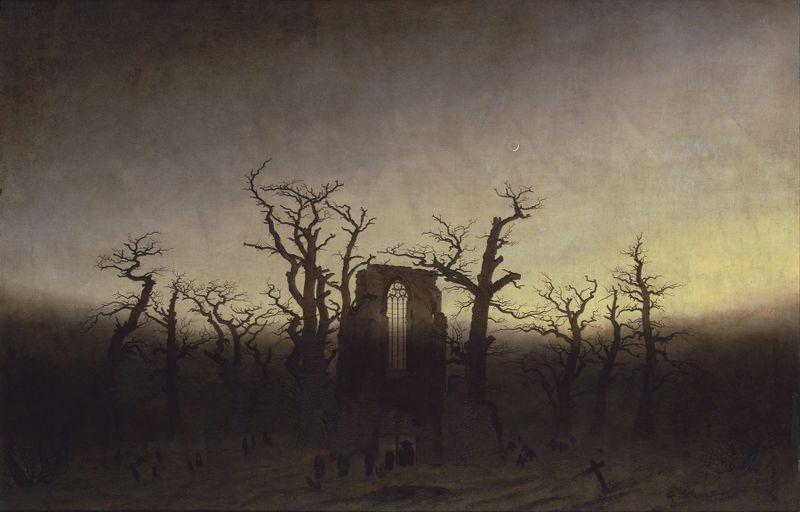
The Abbey in the Oakwood
Caspar David Friedrich
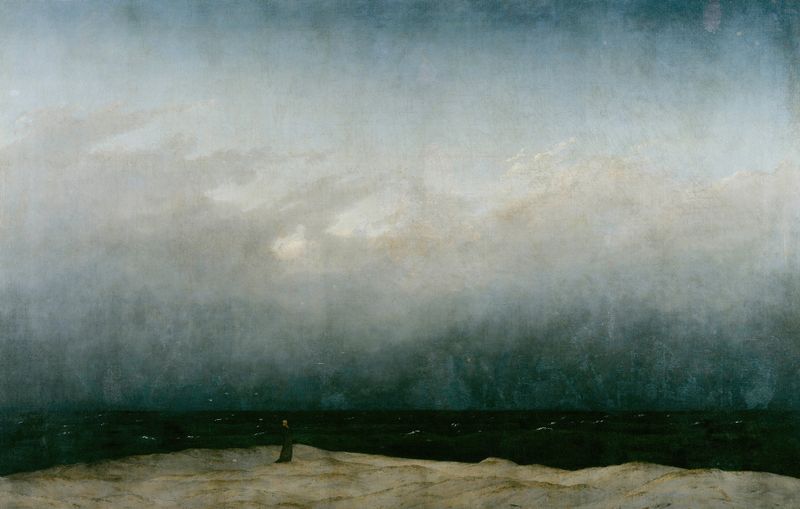
The Monk by the Sea
Caspar David Friedrich
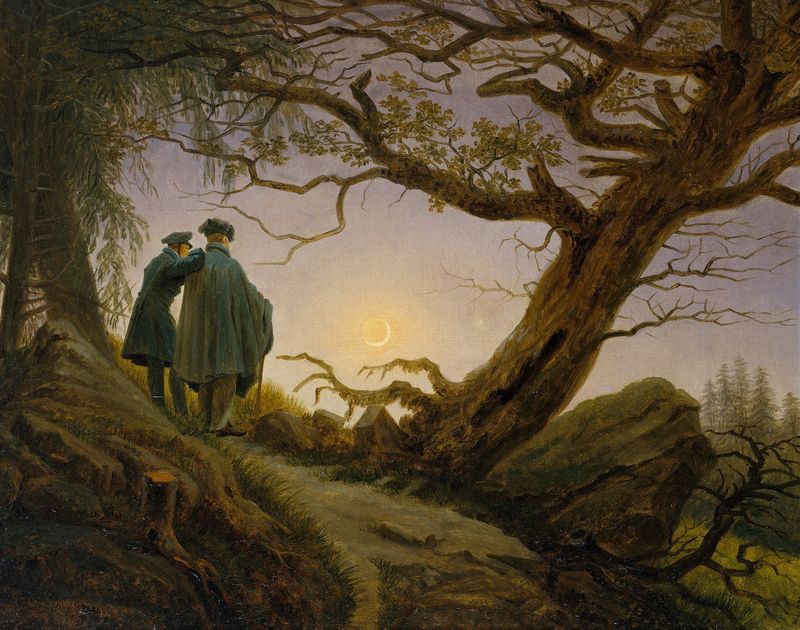
Two Men Contemplating the Moon
Caspar David Friedrich
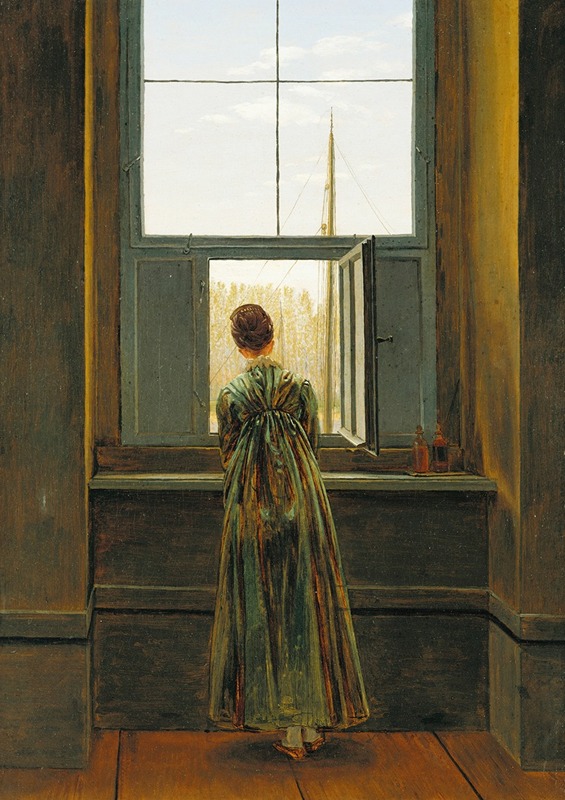
Woman at a Window
Caspar David Friedrich
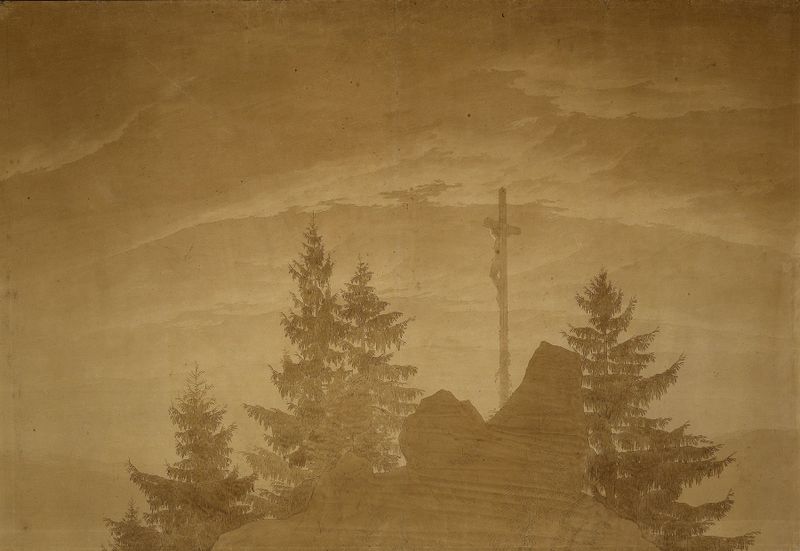
Cross in the Mountains
Caspar David Friedrich
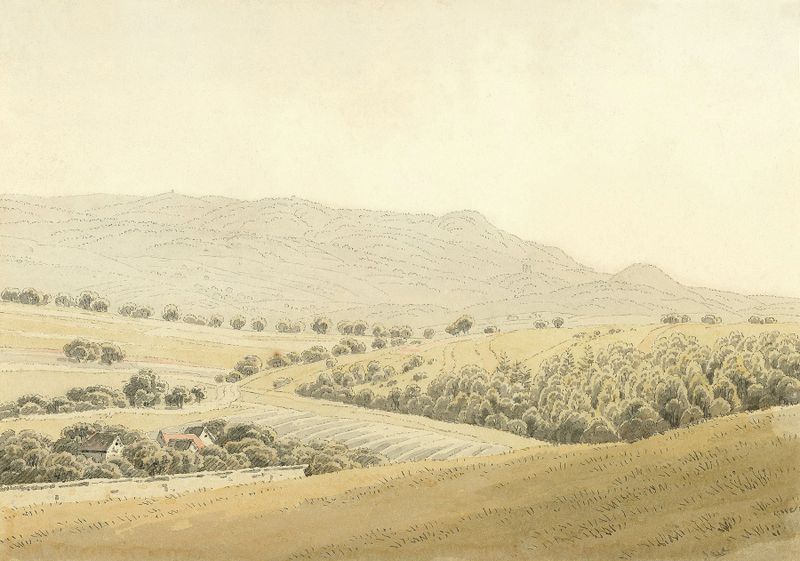
Mittelgebirgslandschaft
Caspar David Friedrich
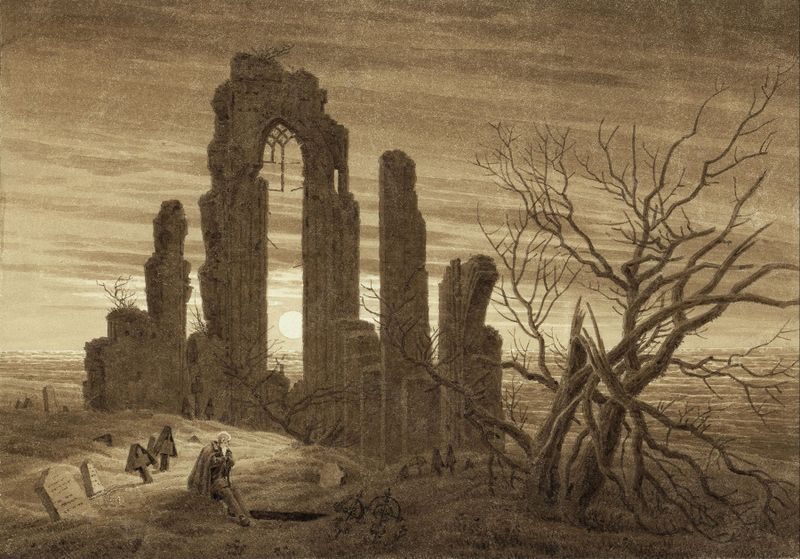
Winter – Night – Old Age and Death (from the times of day and ages of man cycle of 1803)
Caspar David Friedrich
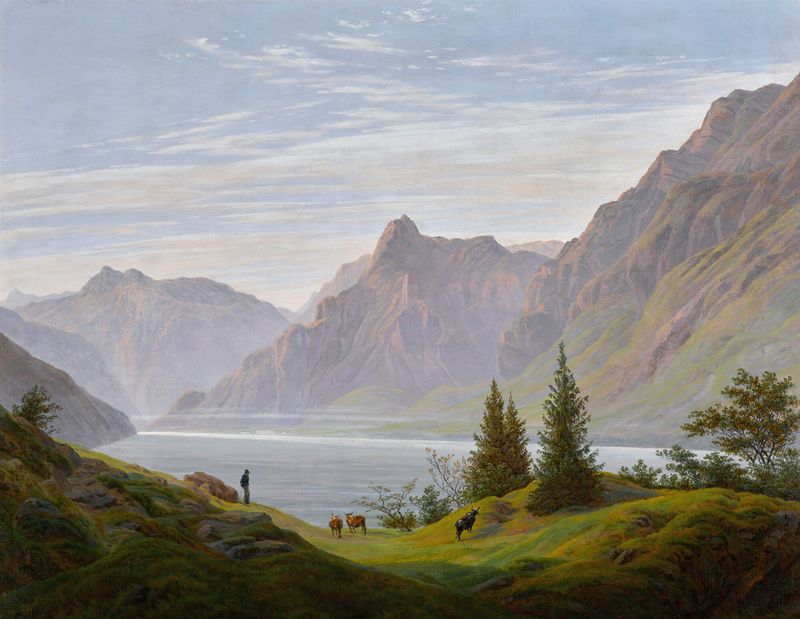
Landschaft mit gebirgsee, morgen
Caspar David Friedrich
Northern Sea in the Moonlight
Caspar David Friedrich





