
Vue de la Bièvre, ruelle des Gobelins (effet de neige) — History & Facts
What secret hides in the quiet of the canvas? In the heart of a snowy landscape, a tranquil moment invites contemplation and curiosity, revealing the delicate interplay between nature and urban life. Focus on the foreground where the textured strokes of white and gray blanket the cobblestones, creating a soft yet palpable silence. Notice how the light dances across the undisturbed snow, illuminating the scene with an ethereal glow that draws your eye toward the distant buildings. The subtle use of blue hues in the shadows of the rooftops adds depth, while the bare trees frame the view, their dark branches reaching out like fingers of nostalgia against the pale sky. Hidden within this serene winter scene lies a tension between solitude and the vibrancy of life.
The absence of human figures amplifies a sense of stillness, allowing nature's voice to echo in the silence. Yet, each brushstroke speaks of life just beyond the canvas, hinting at the warmth of homes nestled within the snowy landscape, and the stories they hold. The contrasting colors evoke a duality of peace and cold, inviting viewers to ponder the balance between the comforting embrace of familiarity and the starkness of winter. In 1900, while residing in France, the artist captured this landscape during a period of burgeoning artistic innovation.
Emerging from the Impressionist movement, he sought to blend realism with expressive brushwork, reflecting the changing dynamics of urban environments amidst the backdrop of nature. This piece stands as a testament to a time when the interplay between man and the elements was increasingly explored by artists, marking a significant moment in the evolution of modern art.
More Artworks by Germain Eugène Bonneton
Browse all →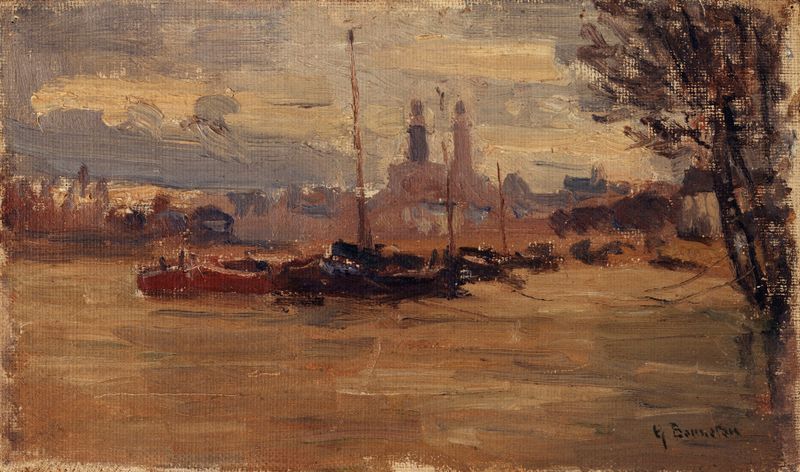
La Seine au pont des Invalides (inondations de 1910)
Germain Eugène Bonneton
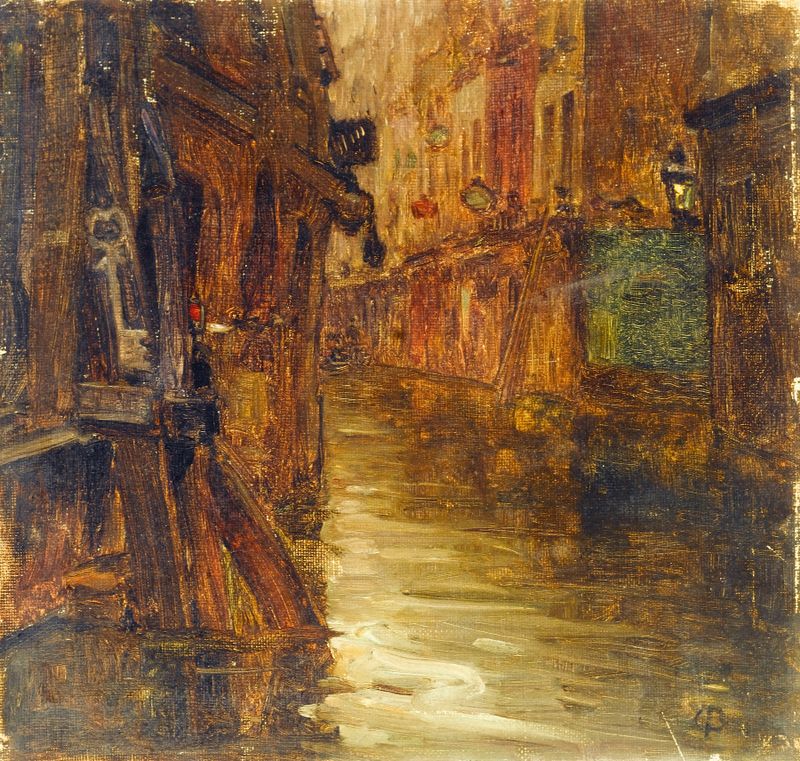
La rue de Bièvre, vue du boulevard Saint-Germain (inondations de 1910)
Germain Eugène Bonneton
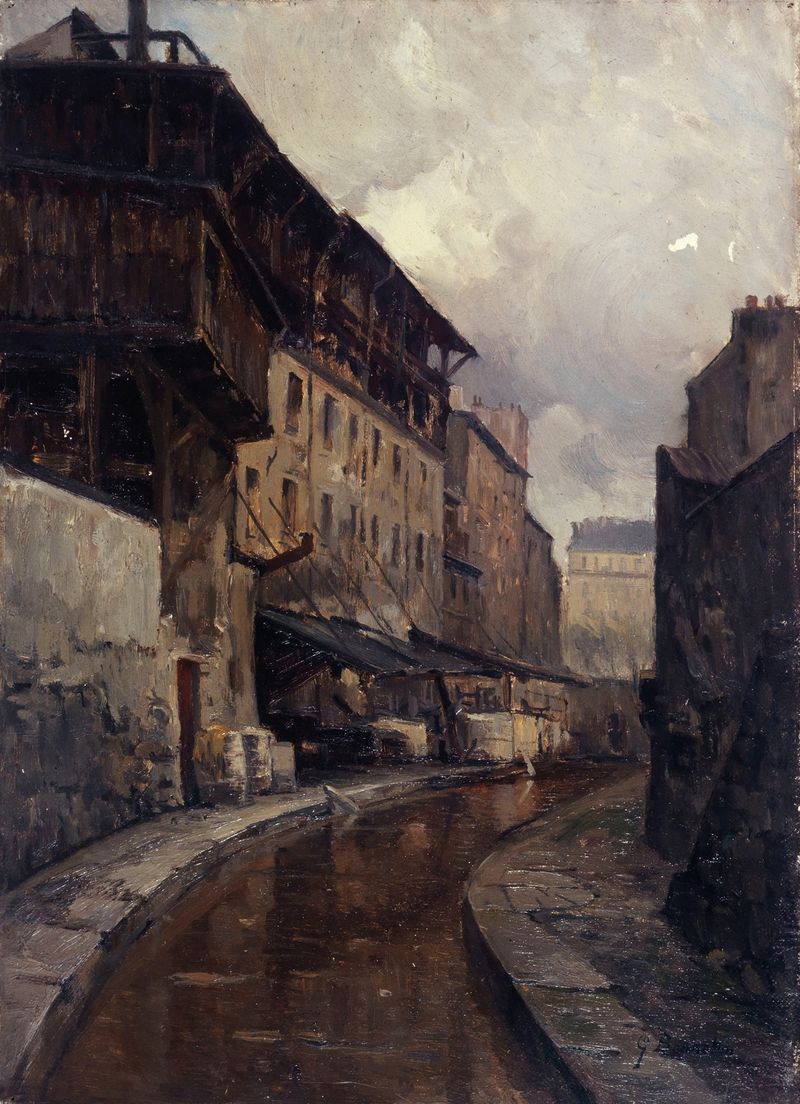
La Bièvre, rue de Valence
Germain Eugène Bonneton

La Bièvre, entre la rue Pascal et la rue Broca
Germain Eugène Bonneton

Entrée du passage Moret, rue des Cordelières
Germain Eugène Bonneton
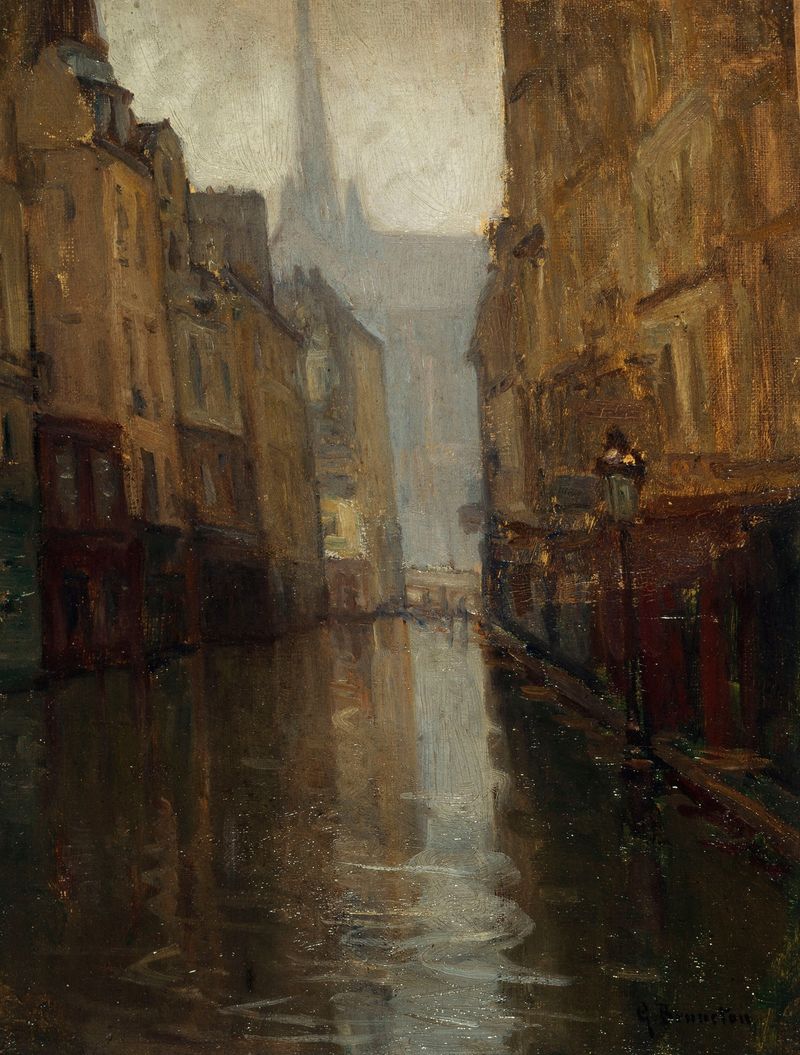
La rue du Haut-Pavé vers le quai de Montebello (inondations de 1910)
Germain Eugène Bonneton

La rue du Haut-Pavé vers la place Maubert (inondations de 1910)
Germain Eugène Bonneton
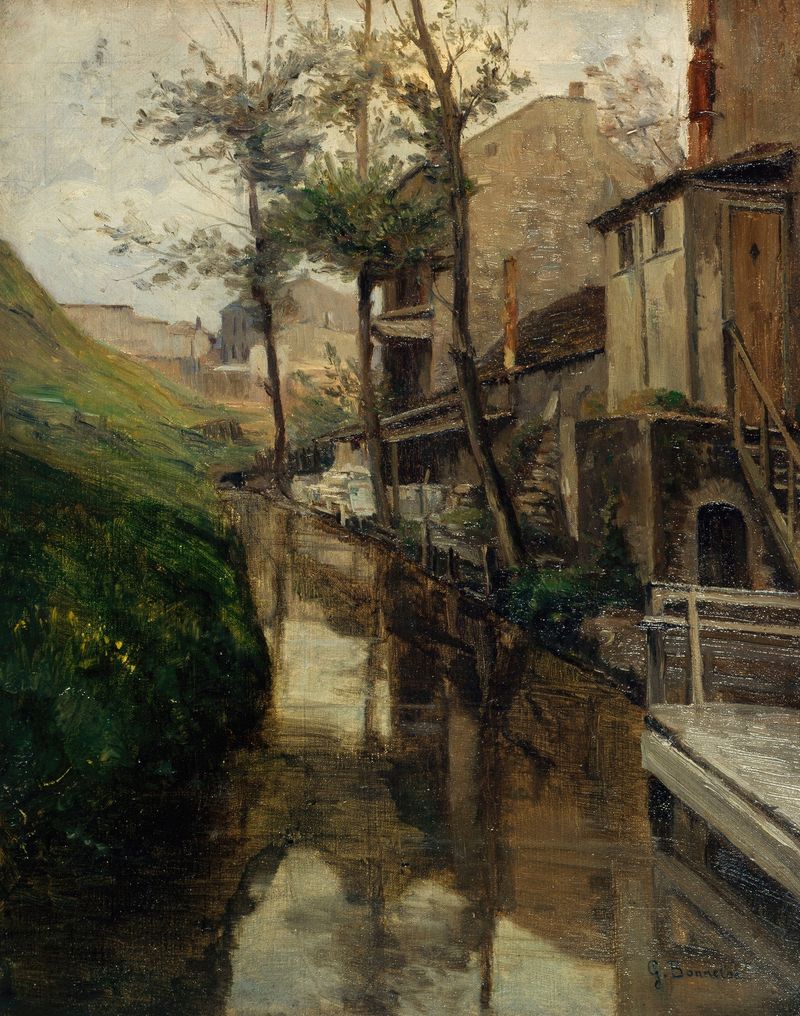
La Bièvre, rue Vulpian
Germain Eugène Bonneton
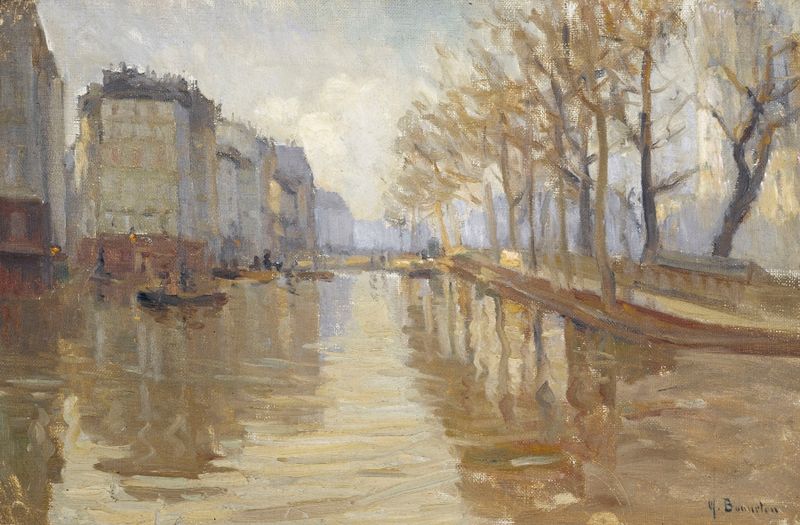
Le quai Montebello (inondations de 1910)
Germain Eugène Bonneton
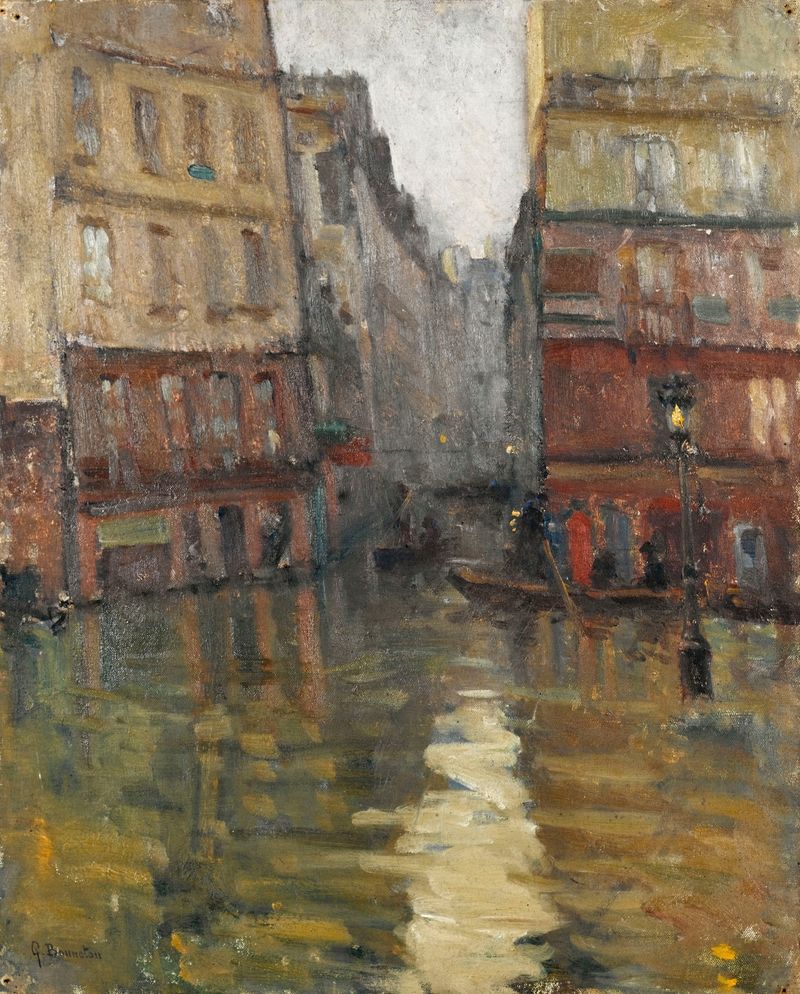
La rue Maître-Albert (inondations de 1910)
Germain Eugène Bonneton





