
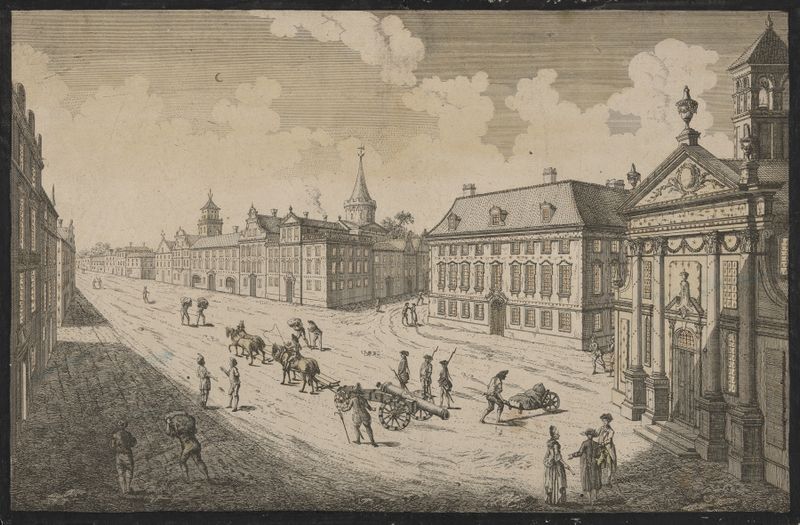
Vue de la Rue du Roi, vers la porte de la Campagne a Boston — History & Facts
In the stillness of an urban landscape, the tension of unseen violence hovers like a foreboding shadow. Each brushstroke holds a story, as if the streets themselves bear witness to whispered secrets and the weight of history. Look to the foreground where the cobblestones unfurl beneath the feet of figures moving to and fro. The muted palette of grays and earth tones anchors the scene, while flashes of brighter hues emerge in the pedestrians' garments, hinting at the vibrancy of everyday life.
Notice how the light, filtered through the trees lining the street, casts delicate patterns on the ground, juxtaposing tranquility with an underlying sense of disorder. The horizon looms in a hazy mist, reminding us that beyond this moment, uncertainty lingers. Delve deeper, and you may find contrasts that speak volumes: the juxtaposition of the serene street with the tension in the air suggests a community on the brink. The rigid lines of the architecture seem to close in on the figures, creating a claustrophobic atmosphere that invites contemplation on the fragility of human existence amidst urban life.
The subtle interplay between light and shadow evokes a sense of foreboding, challenging viewers to confront the violence of history that can erupt from the mundane. Habermann painted this work during a period marked by social and political upheaval in 18th-century Europe. Living in the changing landscape of Boston, he engaged with themes of urban life while grappling with the consequences of revolution and conflict. His focus on the everyday, expressed through scenes like this one, reflects a larger movement in art toward realism, capturing the complexities and tensions of the human experience.
More Artworks by Franz Xaver Habermann
Browse all →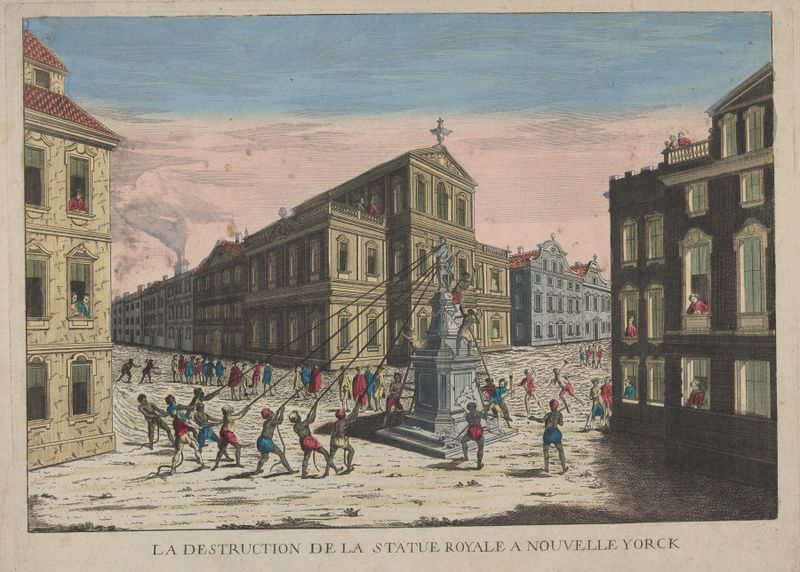
La destruction de la statue royale a Nouvelle Yorck
Franz Xaver Habermann
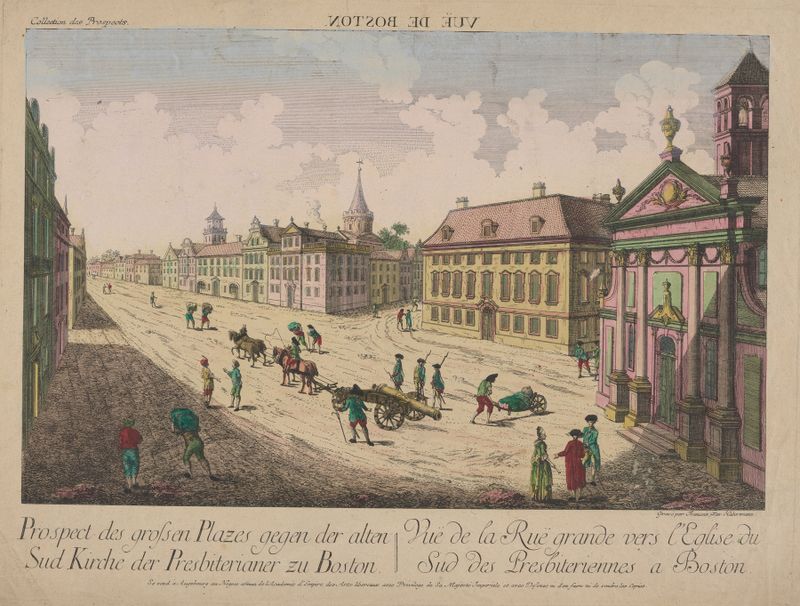
Vue de la Rue grande vers l’Englise du Sud des Presbiteriennes a Boston.
Franz Xaver Habermann
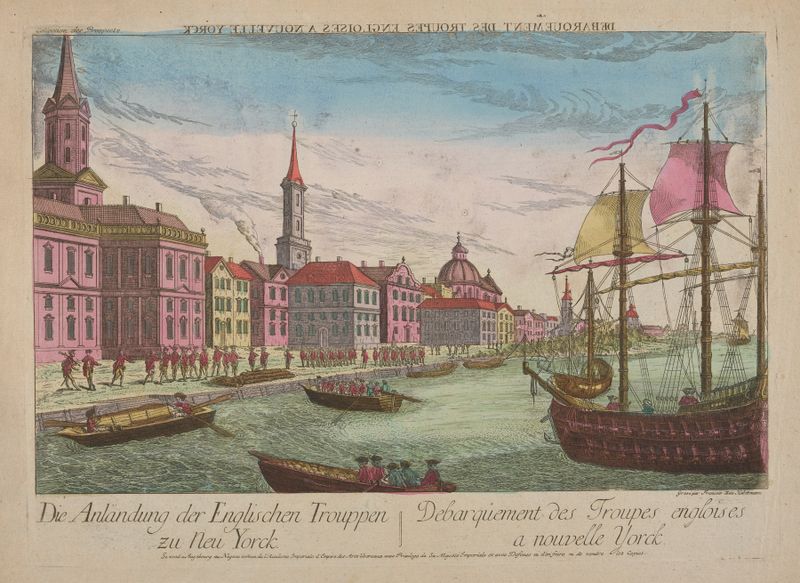
Debarquement des troupes Engloise a Nouvelle Yorck
Franz Xaver Habermann
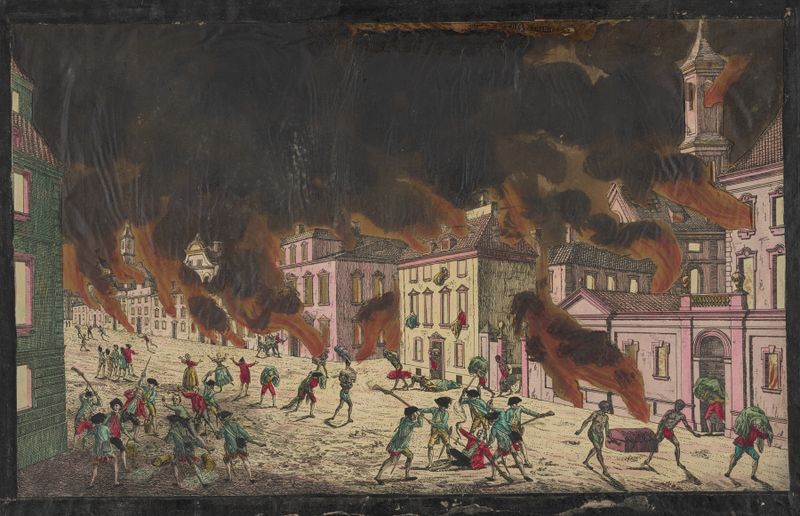
Vue de la Distruction de New York.
Franz Xaver Habermann
La grande rue a Boston
Franz Xaver Habermann
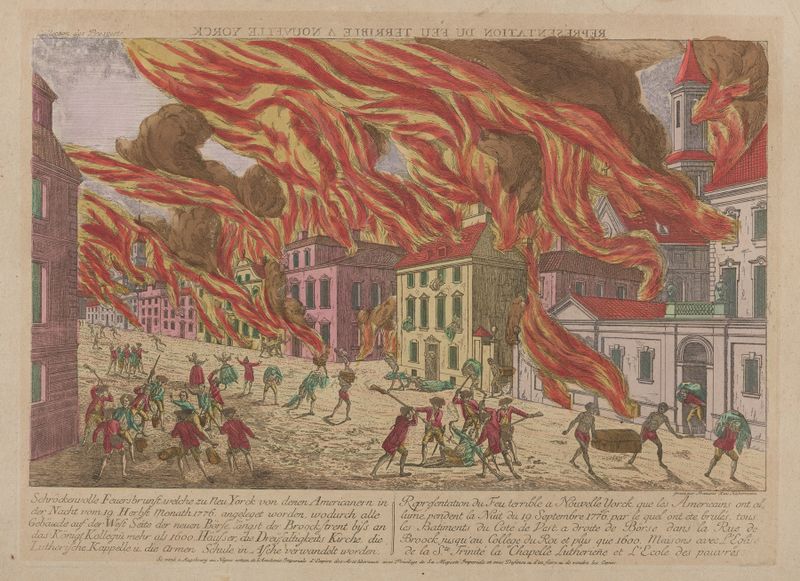
Representatin du fue terrible a Nouvelle Yorck
Franz Xaver Habermann





