
La destruction de la statue royale a Nouvelle Yorck — History & Facts
Where does light end, and longing begin? In the swirling chaos of emotions and actions, color emerges as both a healer and a harbinger of change. Focus first on the vibrant palette that sets the painting ablaze, drawing your gaze initially to the rich reds and muted yellows, which pulse like a heartbeat against the stark backdrop of a bluish-grey sky. Notice how the artist employs bold strokes to convey the raw energy of the crowd, a movement of humanity surging towards the monumental statue, its grandeur being toppled. The dynamic composition, with figures stretching across the canvas, illustrates the collective desperation and fervor, ensuring that your eye dances from one impassioned face to another. Delve deeper and you’ll uncover the contrasting emotions held in every gesture; some men are fierce, their faces twisted with determination, while others exhibit despair, hinting at the complexities of revolutionary fervor.
The statue, once a symbol of authority and tradition, now lies crumbling, its shadow almost a ghost amid the fervent uprising. This tension between destruction and liberation surges through the piece, encapsulating a moment where the past collides with an uncertain future, embodying both a loss and the birth of something new. Created in 1776, this artwork emerged at a pivotal moment in New York’s history, as the Revolutionary War was reshaping societal structures across America. Franz Xaver Habermann painted this scene amidst a burgeoning sentiment for independence, capturing not only an event but also the fervent spirit of a people on the brink of transformation.
As the world of art shifted towards new ideas and narratives, this piece stands as a poignant reflection of its time—an echo of change, embodied in color and conflict.
More Artworks by Franz Xaver Habermann
Browse all →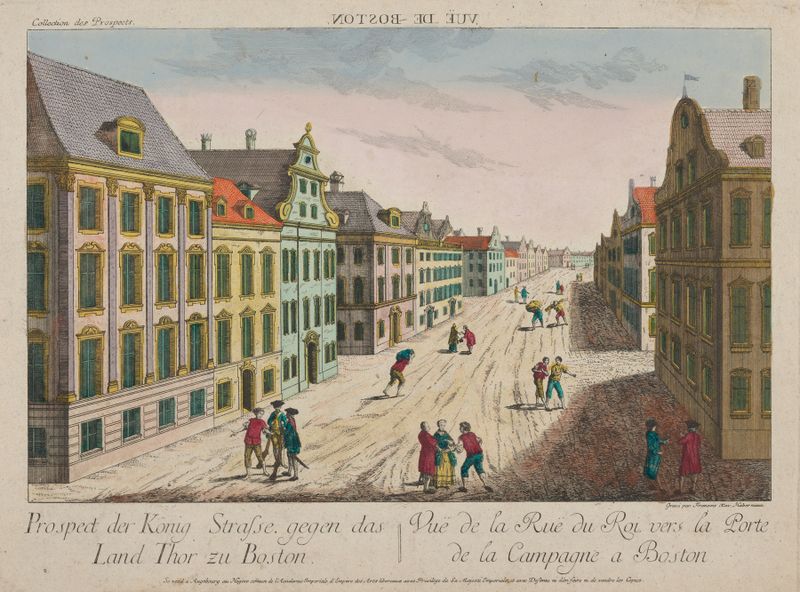
Vue de la Rue du Roi, vers la porte de la Campagne a Boston
Franz Xaver Habermann
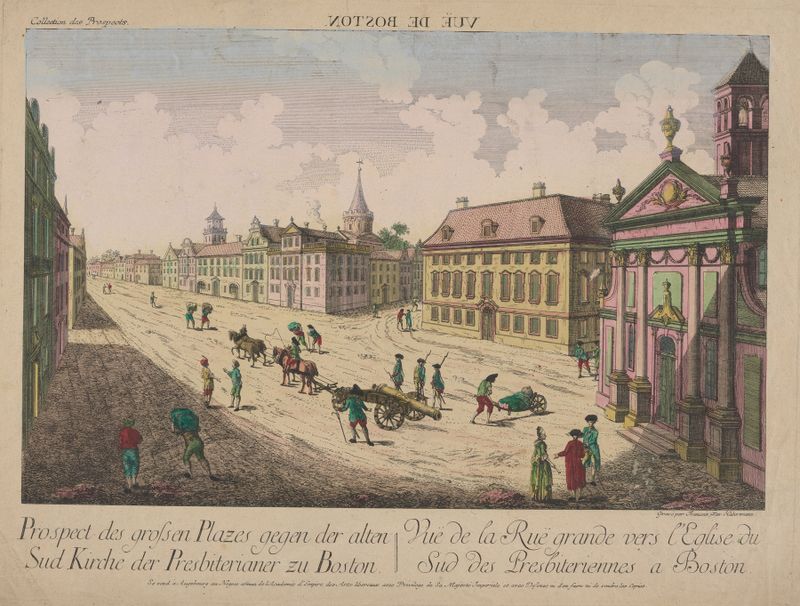
Vue de la Rue grande vers l’Englise du Sud des Presbiteriennes a Boston.
Franz Xaver Habermann
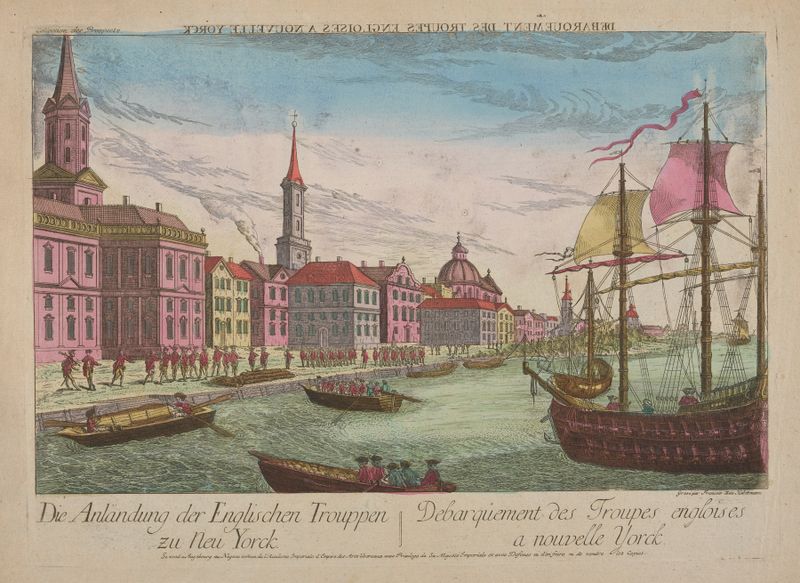
Debarquement des troupes Engloise a Nouvelle Yorck
Franz Xaver Habermann
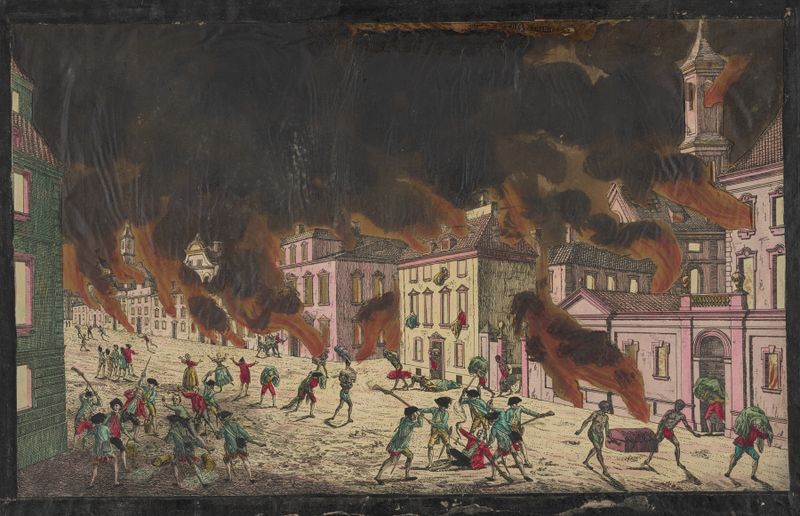
Vue de la Distruction de New York.
Franz Xaver Habermann
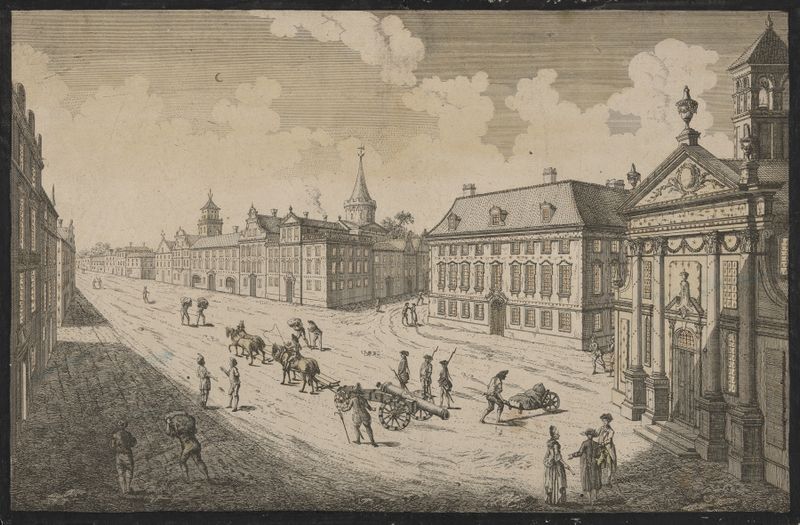
La grande rue a Boston
Franz Xaver Habermann
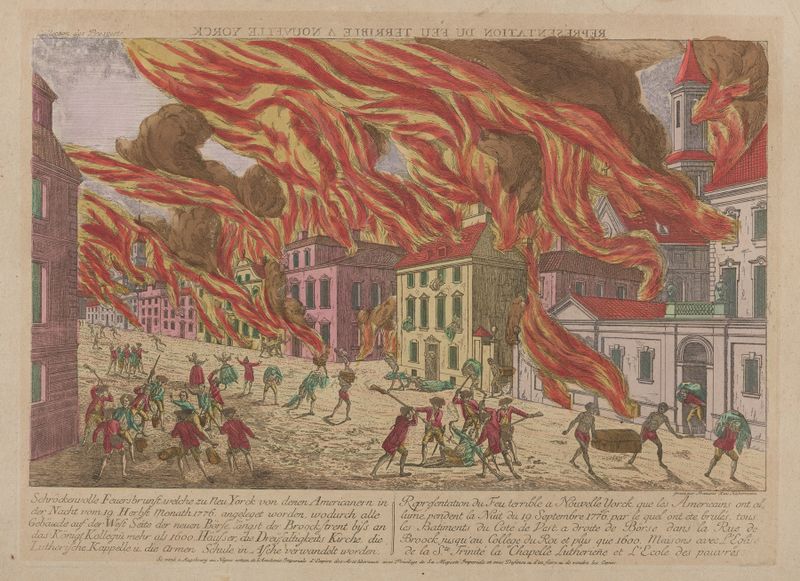
Representatin du fue terrible a Nouvelle Yorck
Franz Xaver Habermann
More Historical Art
Browse all →
The Night Watch Militia Company of District II under the Command of Captain Frans Banninck Cocq
Rembrandt van Rijn

Lincoln Memorial
Henry Bacon

The Third of May 1808
Francisco de Goya

Isaac and Rebecca, Known as ‘The Jewish Bride’
Rembrandt van Rijn

The Charge of the Mamelukes (1814)
Francisco de Goya

De vier ruiters van de apocalyps
Albrecht Dürer