
Vue de Pierre-Pertuis — History & Facts
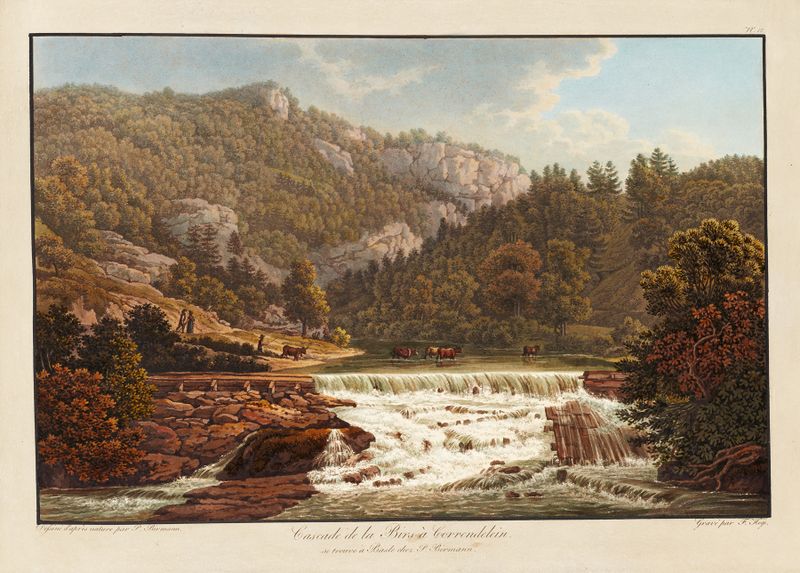
What secret hides in the quiet of the canvas? The serene landscape invites contemplation, yet whispers of an underlying chaos pulse beneath its tranquil surface. Look to the center where the gentle curve of the river meanders, its shimmering waters reflecting a delicate interplay of blues and greens. Notice how the artist employs soft brush strokes, creating a fluid motion that contrasts sharply with the rigid, jagged outline of the distant mountains. The play of light and shadow enhances the depth of the scene, drawing your gaze toward a horizon that feels simultaneously inviting and unknowable. Yet, amidst this tranquility lies a tension — the chaotic interplay of nature and humanity.
The rugged terrain tells stories of erosion and survival, while the sparse figures of travelers along the riverbank hint at the fragility of human presence against the vastness of the landscape. The vibrant hues, though soothing, evoke a sense of unease, suggesting that beneath the calm facade, nature's primal forces persist. Peter Birmann created Vue de Pierre-Pertuis during a period when Romanticism was gaining traction in the art world, emphasizing emotion and the sublime qualities of nature. Working in the late 18th to early 19th centuries, he was influenced by the shifting perceptions of landscape and the exploration of both beauty and chaos within a single frame.
The painting reflects not only his artistic proficiency but also the era's complex relationship with the natural world, merging idyllic scenes with the tumultuous undertones of existence.
More Artworks by Peter Birmann
Browse all →
View from the Isteinerklotz up the Rhine toward Basel
Peter Birmann

Sursee und Umgebung mit Sempachersee und Alpen
Peter Birmann
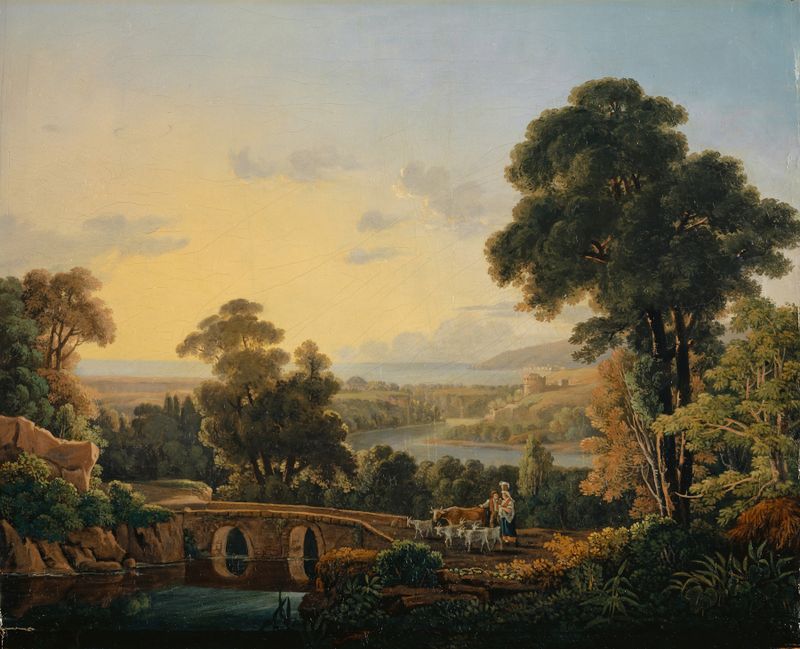
Hilly Landscape with River and Bridge
Peter Birmann
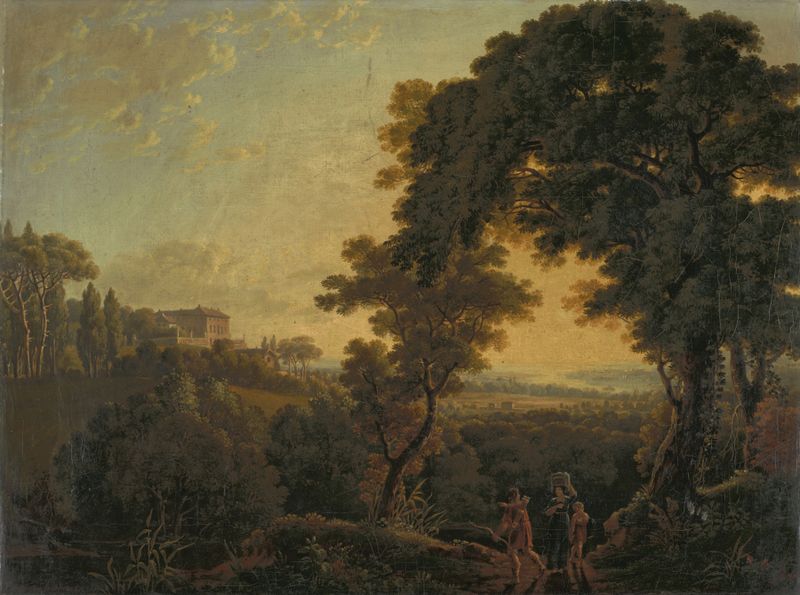
Italian Landscape, Lake Nemi
Peter Birmann

View from the Muttenz Quarry toward Basel
Peter Birmann

Entrée du Val de Moutier
Peter Birmann
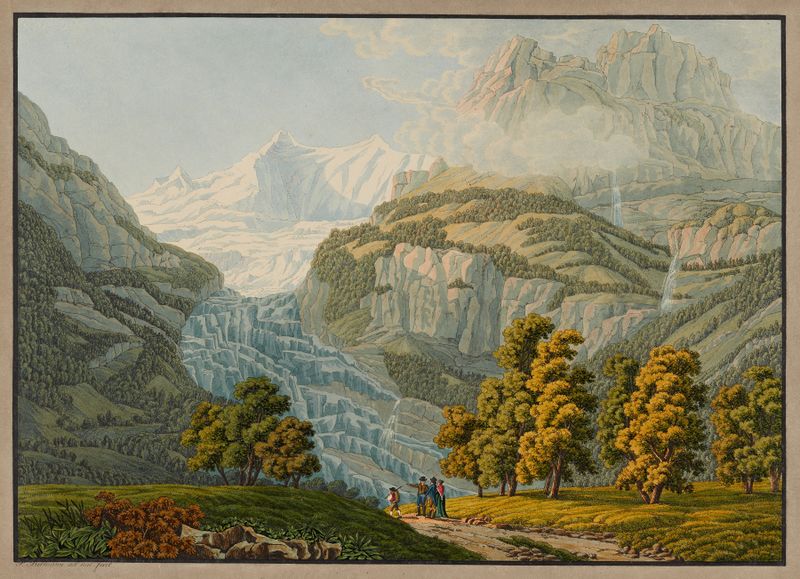
Le Glacier inférieur du Grindelwald, dans le Canton de Berne
Peter Birmann
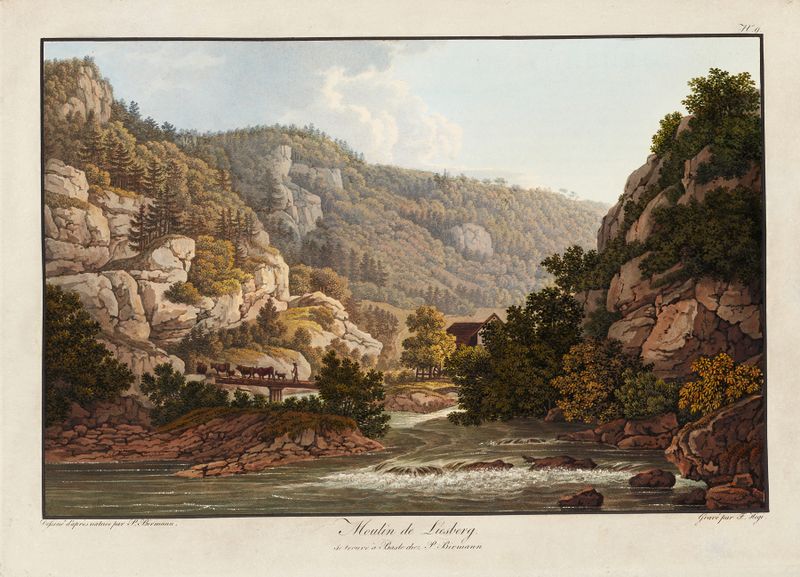
Moulin de Liesberg
Peter Birmann

Blick vom Muttenzer Steinbruch auf Basel (‘Environs de Bâle. prise sur la Carriere de Muttentz’)
Peter Birmann
Cascade de la Birs à Correndelein
Peter Birmann





