
Vue de Viû en Salas et du Môle — History & Facts
Can paint confess what words never could? In Vue de Viû en Salas et du Môle, innocence washes over the viewer like the gentle lapping of waves against a distant shore, inviting contemplation on fleeting moments of beauty. Look to the foreground, where the verdant landscape invites you in, vibrant greens contrasting with soft blues of the sky. Notice how Linck skillfully balances the composition with gentle strokes, leading your gaze towards the serene village nestled against the backdrop of majestic mountains. The light dances across the scene, illuminating the intricate details of the architecture and the natural world, creating a harmonious symphony of color and form. Yet beneath this idyllic portrayal lies a tension between the tranquility of the landscape and the human experience.
The subtle play of light suggests the passage of time, echoing the innocence of those who inhabit this setting, while the looming mountains hint at the unyielding nature of reality. Each brushstroke carries a sense of longing, reflecting the desire to hold onto fleeting moments amidst the uncertainties of life. Jean-Antoine Linck created this piece in 1802 during a period marked by the aftermath of the French Revolution, a time when artists sought refuge in depictions of serene landscapes. Living in a world of upheaval, Linck found solace in capturing the beauty of everyday life, contributing to the Romantic movement that sought to reconnect with the innocence of nature and the human spirit.
More Artworks by Jean-Antoine Linck
Browse all →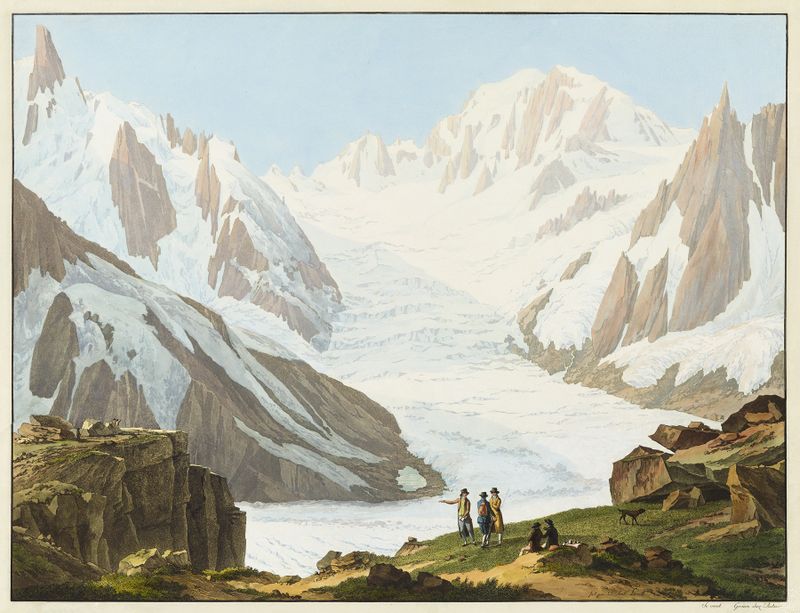
Vue du Mont-Blanc, des Aiguilles du Midi, des Blaitieres, du Géant, du Glacier du Tacul, prise du Sommet du Rocher du Couvercle
Jean-Antoine Linck
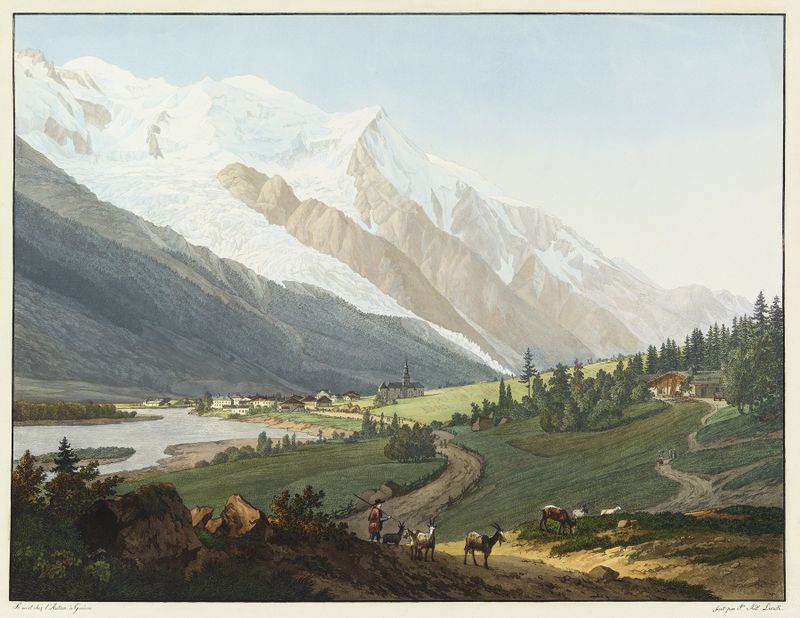
Vue du Prieuré de Chamouni, du Mont-Blanc, de l’Aiguille du Gouté, et du Glacier des Buissons
Jean-Antoine Linck
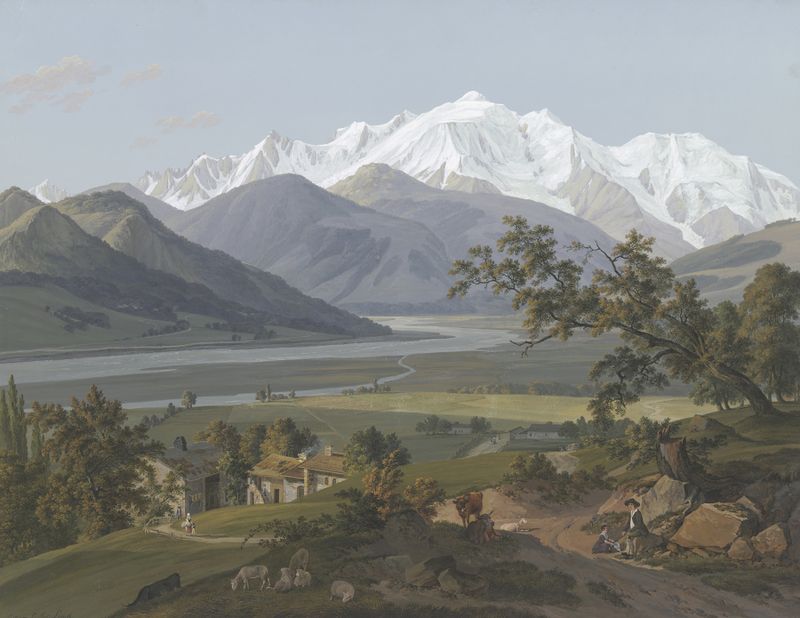
Vue du Mont-Blanc prise près de Salanche
Jean-Antoine Linck
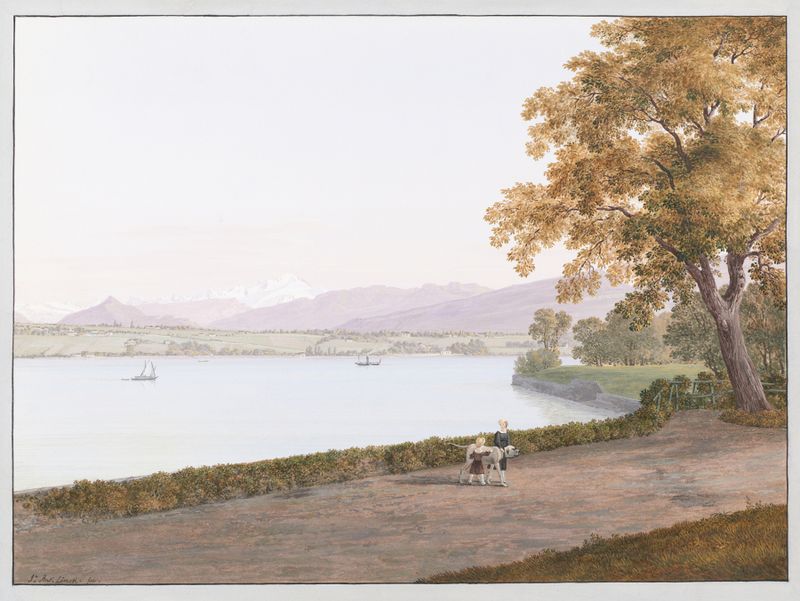
Vue du Lac Léman près de Genève
Jean-Antoine Linck
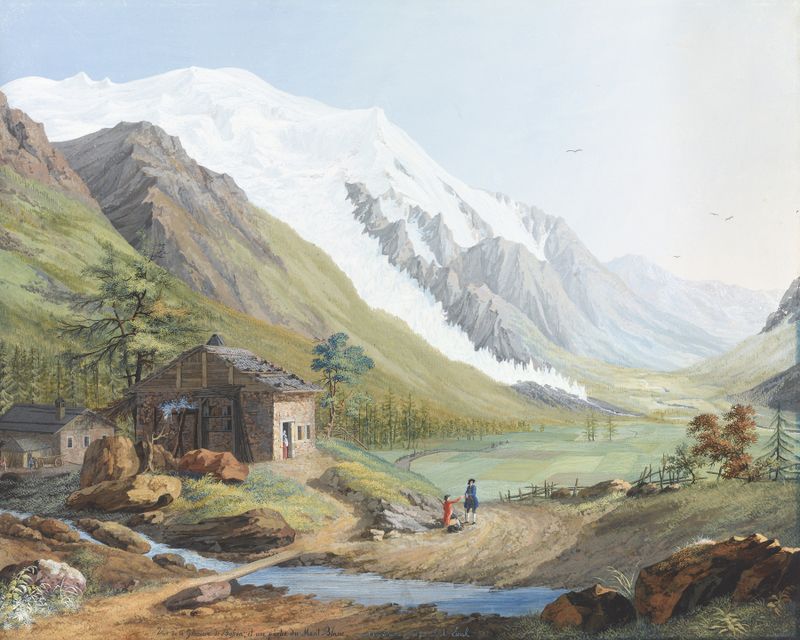
Vue de la Glaciere de Bosson, et une partie du Mont Blanc
Jean-Antoine Linck
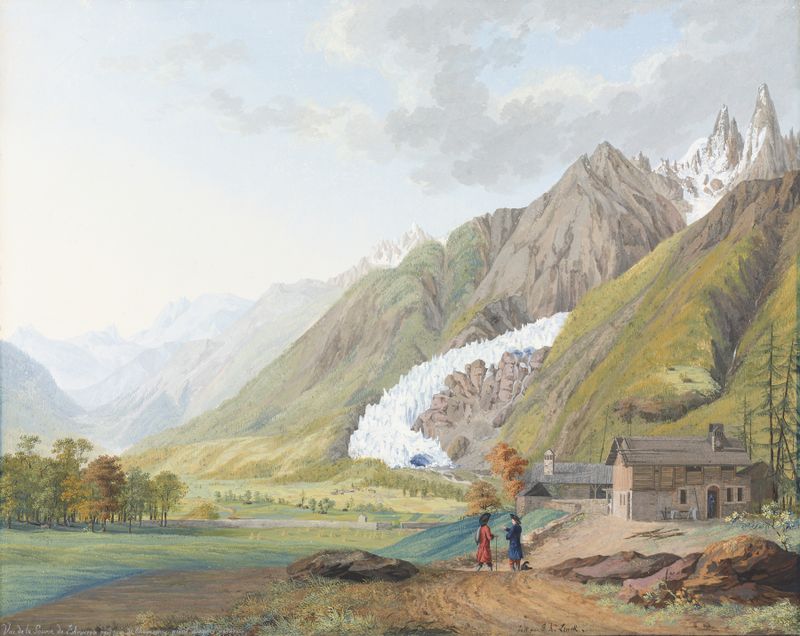
Vue de la Sourse de l’Arveron prit près de Chamouny peint d’après nature
Jean-Antoine Linck
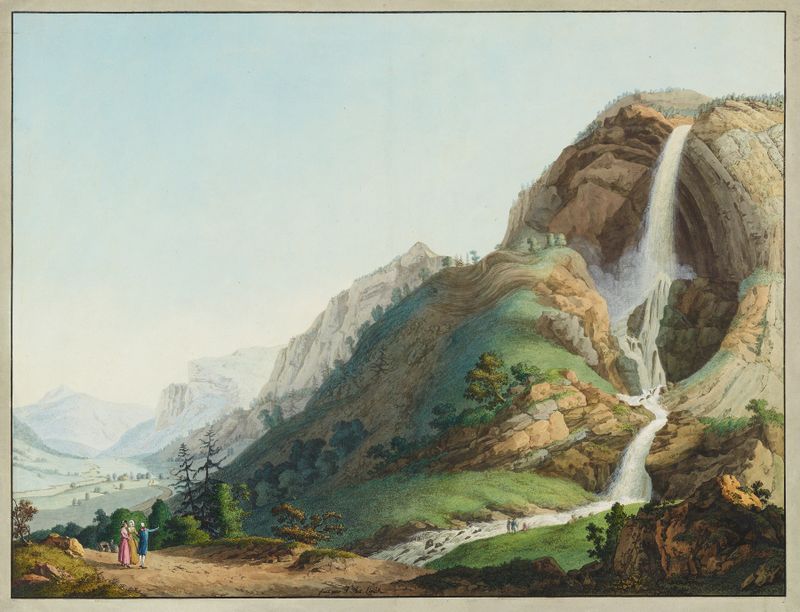
Vue de la Cascade de l’Arpenas
Jean-Antoine Linck
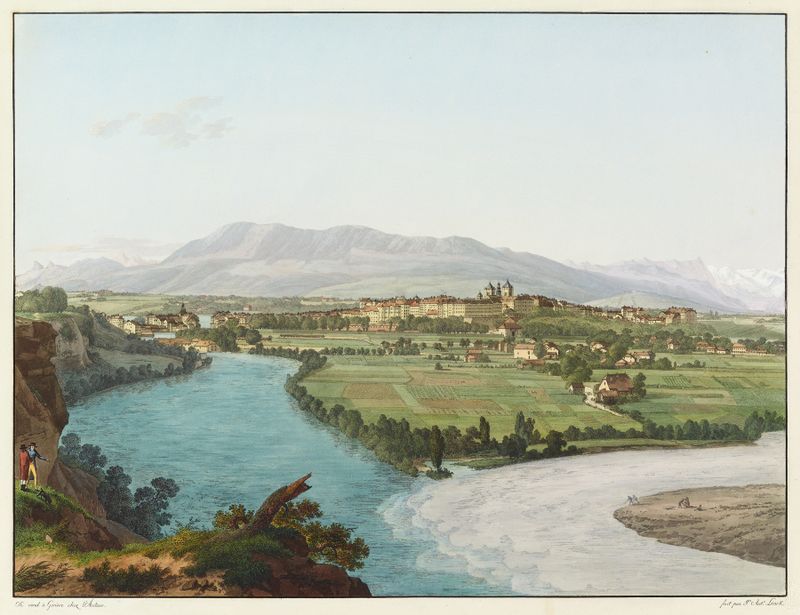
Vue de Genève & Jonction de l’Arve avec le Rhône
Jean-Antoine Linck
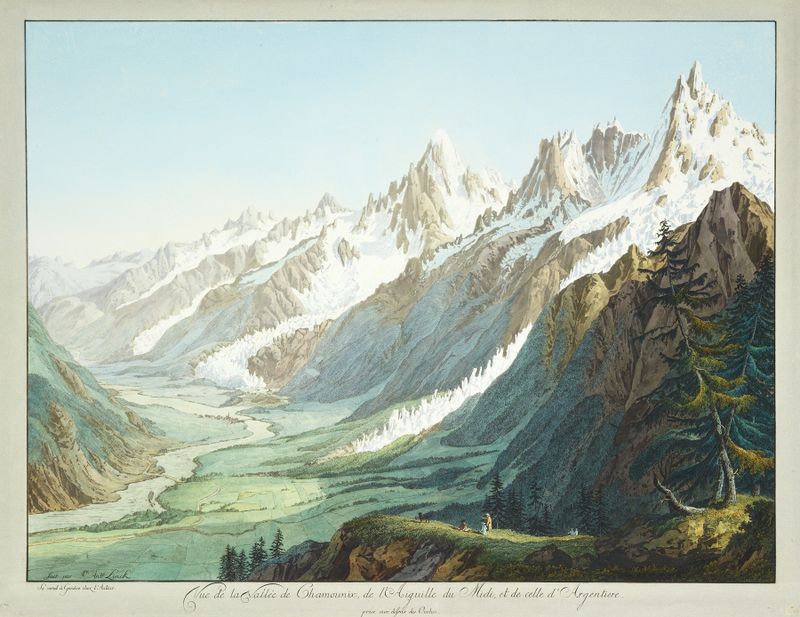
Vue de la Vallée de Chamounix, de l’Aiguille du Midi, et de celle d’Argentiere
Jean-Antoine Linck
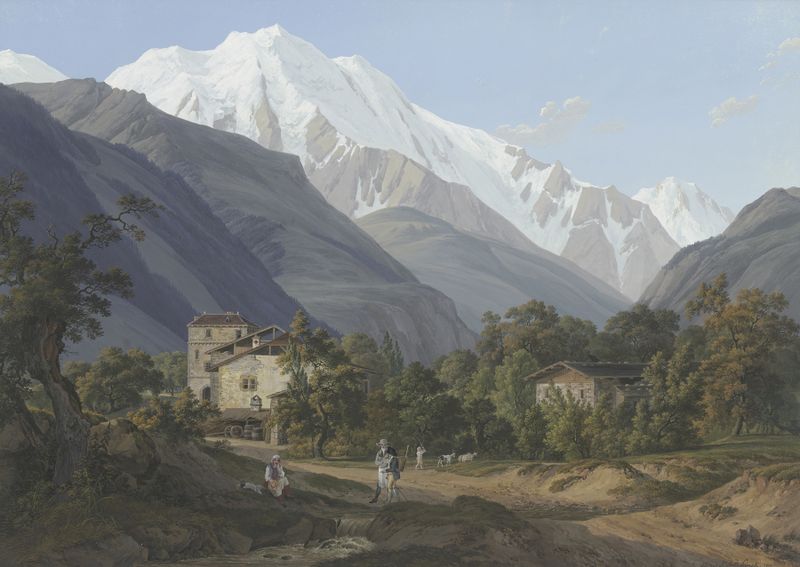
Vue de St. Gervais, de l’Aiguille blance, & du bon homme
Jean-Antoine Linck





