Vue de Vétheuil, bord de Rivière — History & Facts
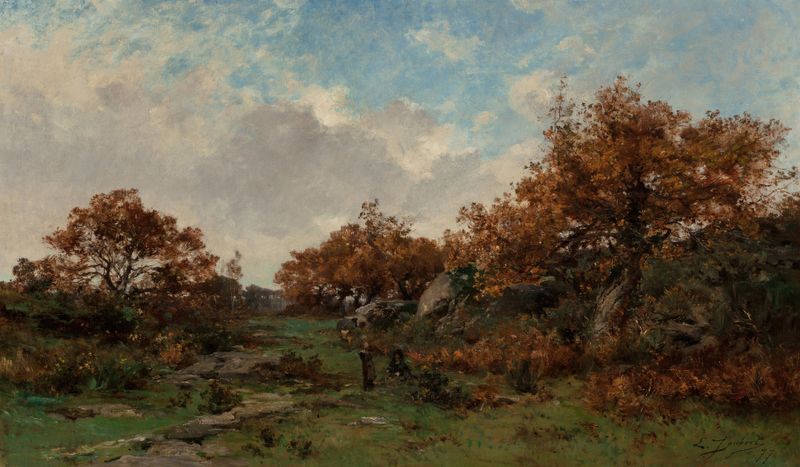
In the quiet embrace of a riverside landscape, the heart beats softly beneath layers of gentle hues and shadowy reflections, waiting for discovery. Look to the center where the shimmering river unfolds like a ribbon, guiding the eye toward the distant horizon. Notice how the interplay of light dances upon the water's surface, revealing Joubert's mastery in capturing the essence of nature. The palette, a soothing blend of greens, blues, and earth tones, conveys serenity, while delicate brushwork creates a soft texture that invites contemplation. Upon closer inspection, one can sense a deeper narrative at play.
The juxtaposition of vibrant foliage on the banks against the tranquil river evokes a sense of harmony and imbalance, hinting at life's dualities. The quietness of the scene suggests the absence of human presence, yet the subtle ripples in the water whisper stories of movement and change, reflecting both the beauty and transience of nature. The artist created this piece during a period of exploration and innovation in Impressionism, likely in the late 19th century. Joubert, influenced by the natural world surrounding him in Vétheuil, sought to capture fleeting moments through his work.
At this time, artists were increasingly drawn to en plein air techniques, allowing them to depict the raw truths of their environments with newfound vibrancy and emotion.