Vue d’Isola Bella, Italie — History & Facts
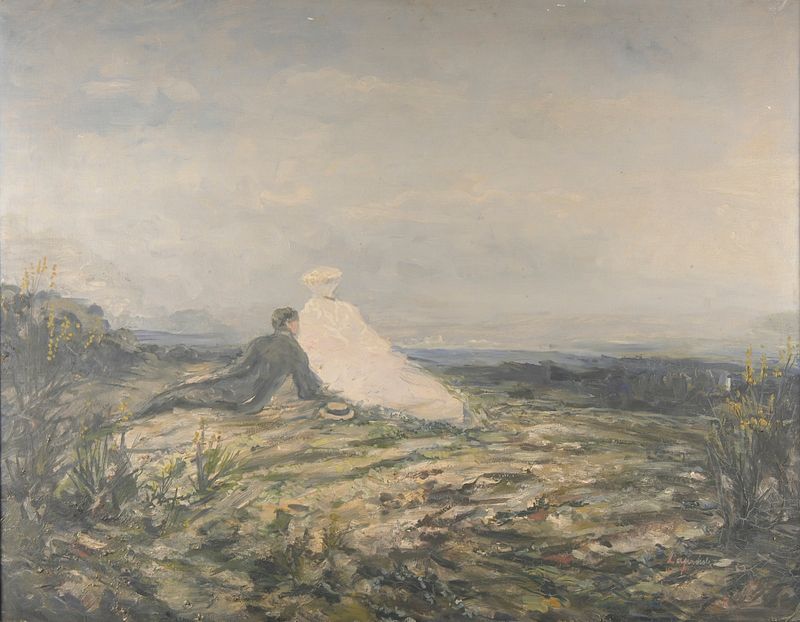
The canvas doesn’t lie — it simply waits. Within its strokes, Vue d’Isola Bella, Italie invites us into a realm where the earthly meets the ethereal, a landscape poised between reality and dream. Look to the horizon where sapphire waters embrace the lush greenery of Isola Bella. The artist's delicate brushwork captures the play of light, illuminating the terraced gardens and ancient architecture with a golden glow.
Notice how the vibrant palette of blues and greens juxtaposes with the warm umbers of the stone, creating an inviting contrast that pulls the viewer into this serene Italian escape. The composition, with its careful balance, leads the eye towards the distant mountains, suggesting a journey that transcends the canvas itself. Yet, beneath the surface beauty lies a tension between nature and man’s creation. The carefully tended gardens stand as a testament to human artistry, while the expansive lake and rolling hills remind us of nature’s grandiosity.
As your gaze wanders, the intricate details of flowers and foliage suggest moments of fleeting beauty, evoking thoughts of ephemerality and the passage of time, forcing us to reconcile the permanence of the painted scene with the transience of our existence. Painted in 1923, the year reflecting a post-World War I world, Vue d’Isola Bella, Italie emerges from Pierre Laprade’s exploration of landscapes that embody both nostalgia and idealism. While living in France, Laprade immersed himself in a revival of neoclassicism, capturing picturesque scenes that resonated with Europe’s longing for serenity amidst the chaos of societal change. This work encapsulates a moment in art history where beauty became a refuge from the tumult of contemporary life.