
Vue Sur Le Village D’osny — History & Facts
When did color learn to lie? In a world where hues blend seamlessly to create both harmony and discord, the truth often lies beneath the surface, waiting to be unearthed. Look to the foreground of the canvas where misty tones of green and brown interplay, framing the village nestled in the distance. Pissarro’s brushstrokes, both loose and deliberate, guide your gaze towards the quaint houses that seem to emerge from the landscape—a gentle embrace of nature and habitation. Notice how the light breaks through the clouds, casting an ethereal glow over the rooftops, contrasting with the shadows that linger below, hinting at untold stories hidden within. Amid the pastoral tranquility, an emotional tension emerges.
The vibrant greens suggest life and vitality, yet the muted colors encase a looming void, reflecting a sense of isolation. The village, although picturesque, feels distant, as if suspended in time, caught between memory and reality. This duality evokes questions of belonging and the passage of time, as the landscape whispers the narratives of those who inhabit it—or perhaps, those who have been lost to it. During the summer of 1883, Camille Pissarro painted this work while living in Éragny-sur-Epte, a small village in France.
It was a period of artistic exploration for him, as he sought to capture the essence of rural life and the changing effects of light. This era was marked by the burgeoning Impressionist movement, in which Pissarro played a pivotal role, blending innovative techniques with a deep appreciation for the natural world around him.
More Artworks by Camille Pissarro
Browse all →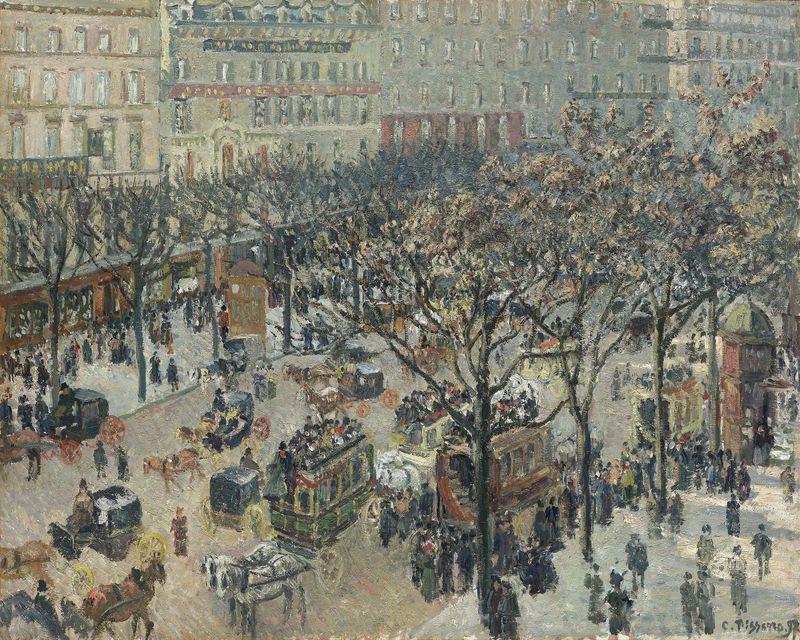
Boulevard des Italiens,Morning_Sunlight
Camille Pissarro
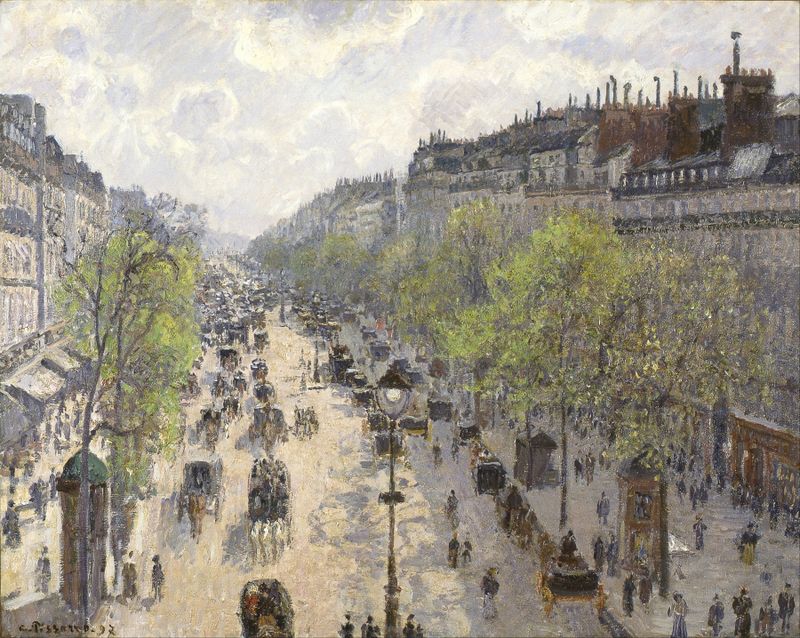
Boulevard Montmartre, Spring
Camille Pissarro
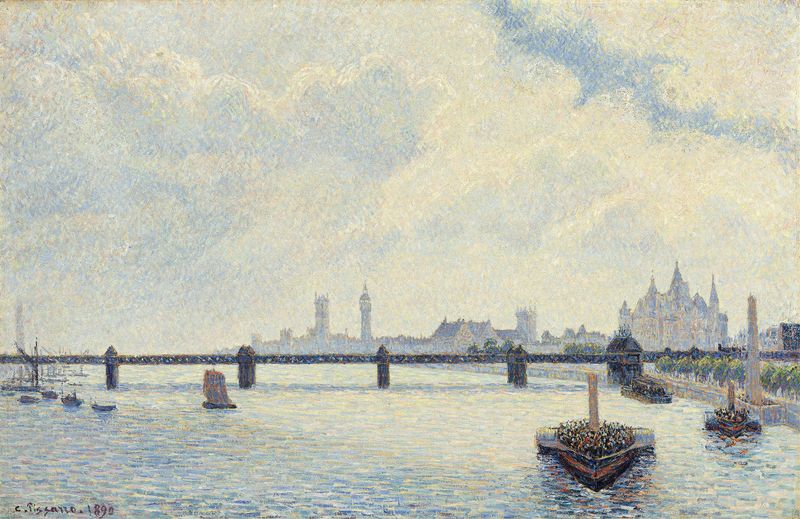
Charing Cross Bridge,London
Camille Pissarro
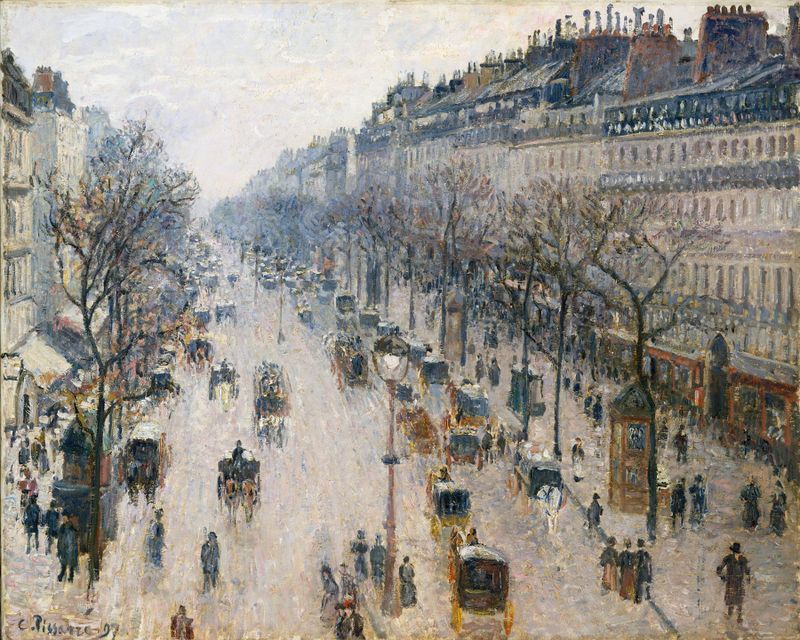
The Boulevard Montmartre on a Winter Morning
Camille Pissarro
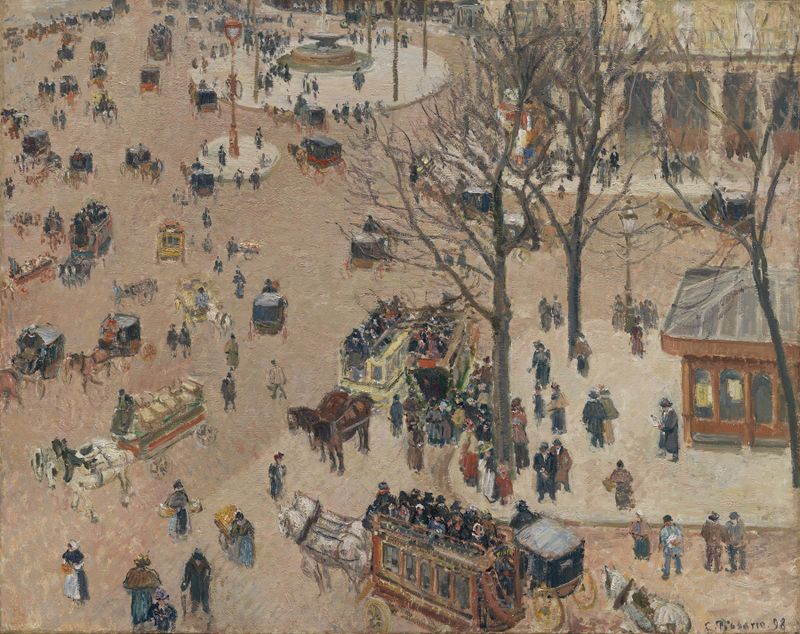
La Place du Théâtre Français
Camille Pissarro

Rue Saint-Lazare, Paris
Camille Pissarro
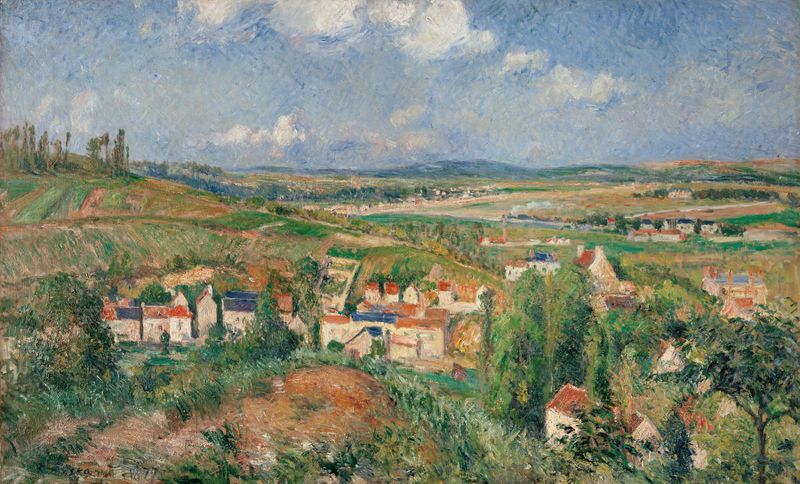
L’hermitage En Été, Pontoise
Camille Pissarro

Place du Theatre Francais,Fog Effect
Camille Pissarro
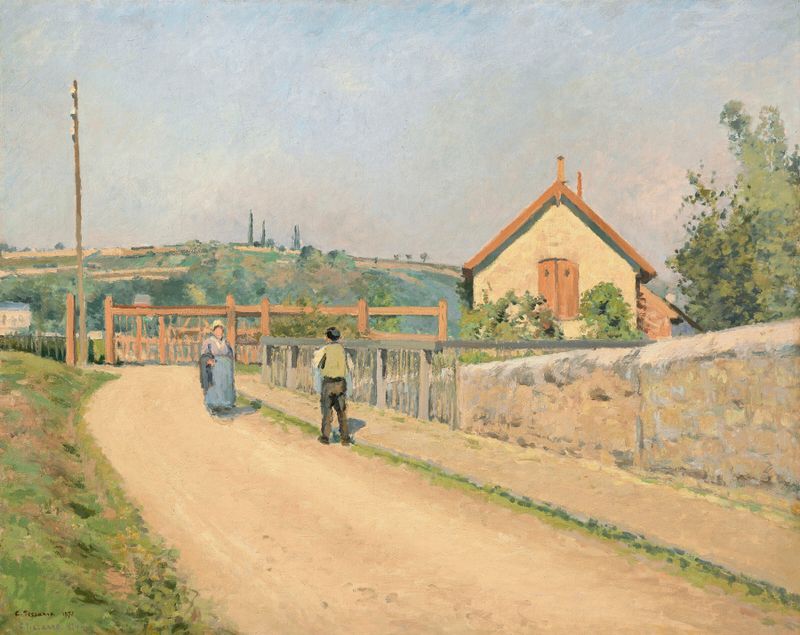
La barrière du chemin de fer, aux Pâtis près Pontoise
Camille Pissarro
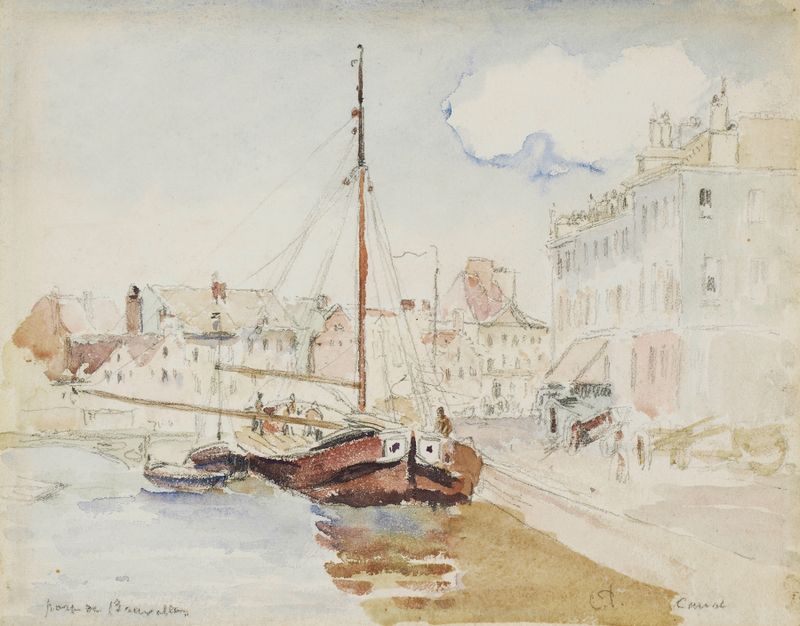
Port de Bruxelles
Camille Pissarro





