Waakhond — History & Facts
In Waakhond, this sentiment unfolds, revealing the delicate interplay between memory and the passage of time, captured forever in oil and canvas. Look to the center of the composition, where a regal dog stands, its posture alert and poised. The light bathes its fur in rich, warm tones, creating a vivid contrast between the animal and the cool, muted background. Notice how the artist employs a blend of short, energetic brushstrokes to convey the texture of the dog’s coat while the surrounding landscape fades into a gentle blur, suggesting a world that is both there and not there, an illusion of presence amidst an ethereal absence. The dog's intense gaze invites contemplation, hinting at themes of loyalty and vigilance.
Yet behind this striking figure lies a subtle irony; the serene stillness of the scene seems to whisper of a fleeting moment, evoking a sense of impermanence. The layered colors speak to the depth of memory, suggesting that while the image captures a singular moment, the essence of its narrative dwells in the shadows of what is not shown. Painted during the early 17th century, Waakhond emerged from Simon de Vlieger’s time in the Netherlands, a period marked by artistic experimentation and the rising popularity of genre painting. As the Baroque movement flourished around him, he contributed to the rich tapestry of Dutch art, striving to encapsulate the essence of nature and life within the confines of his canvas.
More Artworks by Simon de Vlieger
Browse all →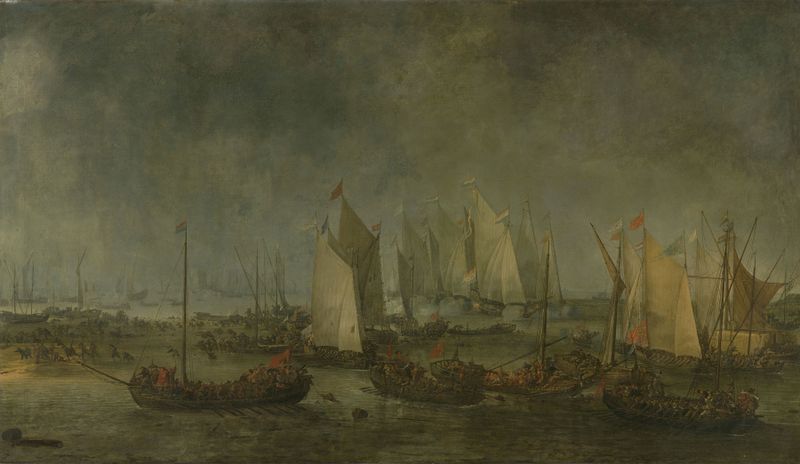
The Battle on the Slaak between the Dutch and Spanish Fleets during the Night of 12-13 September 1631
Simon de Vlieger

Stretch of coast by the Zuiderzee
Simon de Vlieger

Seaside in Scheveningen with fishing boats
Simon de Vlieger
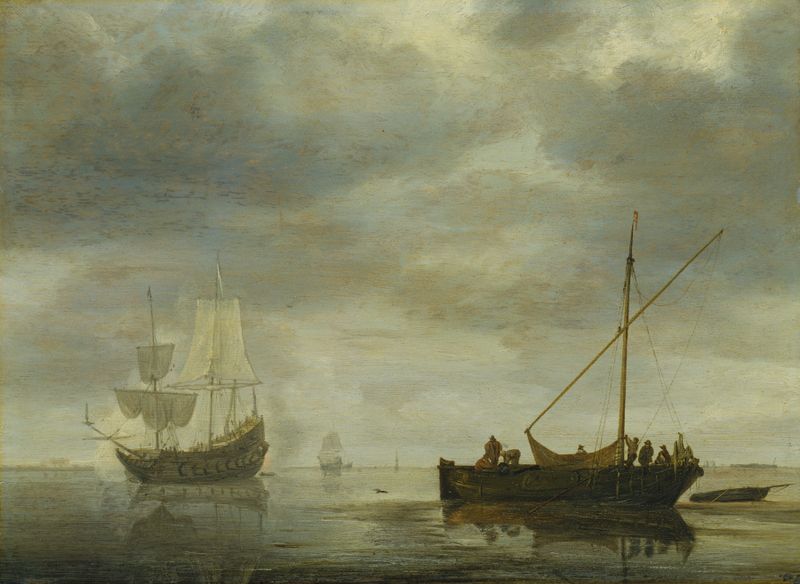
Single-Master and Frigate Firing Salute on a Calm Sea
Simon de Vlieger
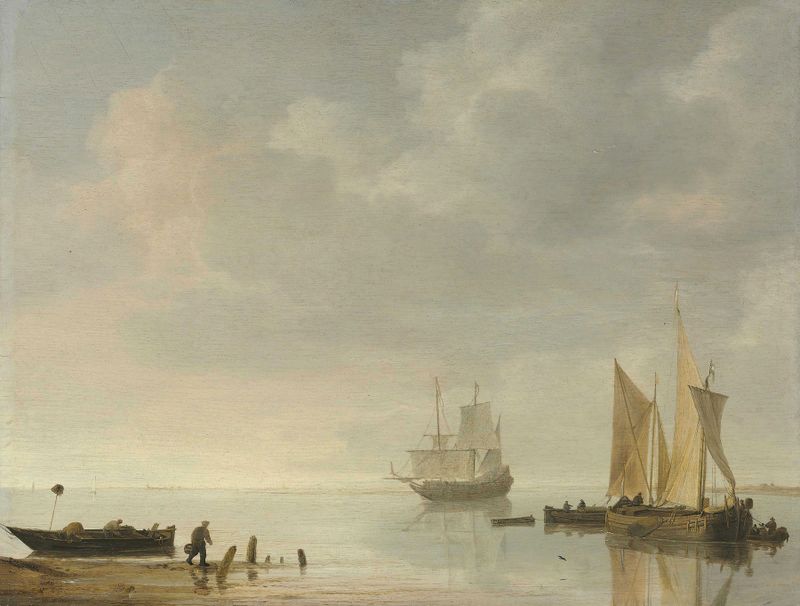
Coastal Scene With Ships Resting On Calm Waters
Simon de Vlieger

A calm estuary with a smalschip and a waterschip at anchor, with other ships in the distance
Simon de Vlieger
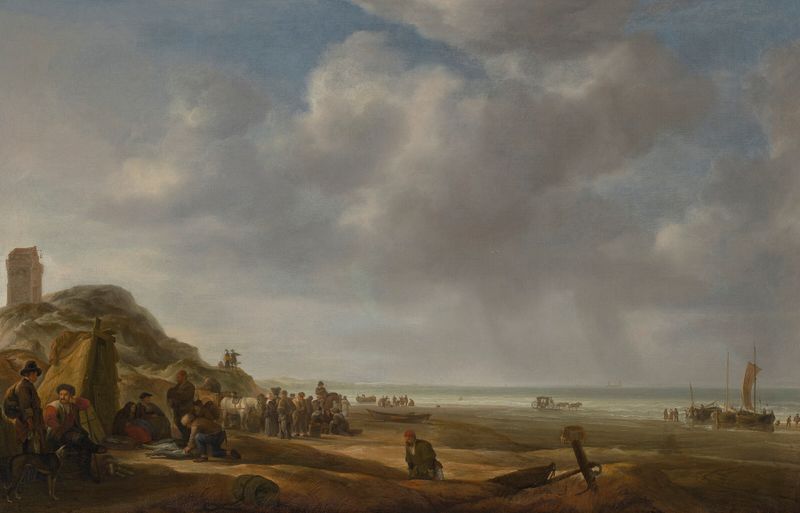
A beach scene with fishermen displaying their catch
Simon de Vlieger

Ship in Distress off a Rocky Coast
Simon de Vlieger
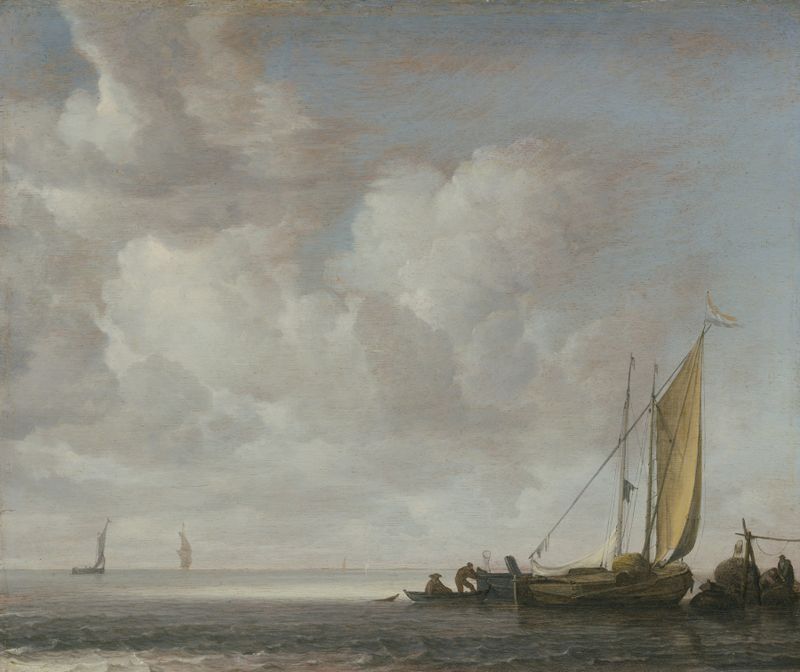
Calm Sea
Simon de Vlieger
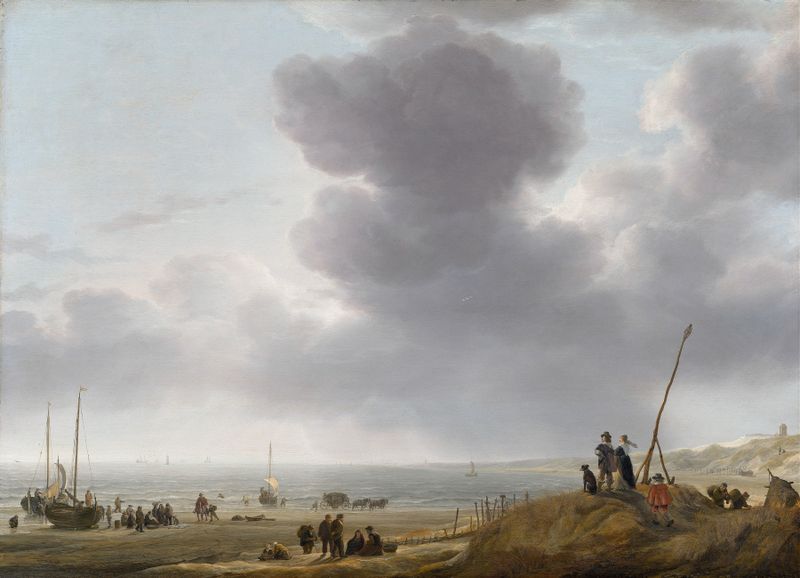
Beach View
Simon de Vlieger