Waldpartie — History & Facts
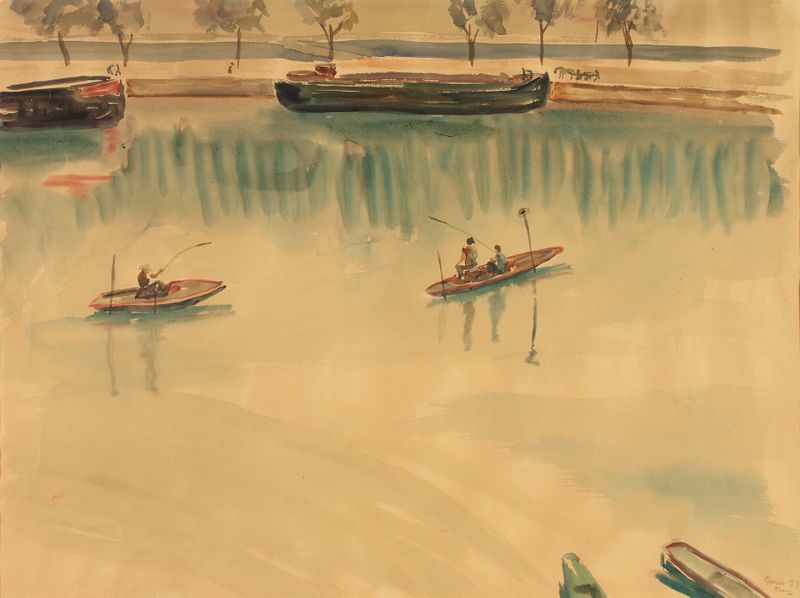
In the hushed embrace of nature, awe emerges from the vivid interplay of light and shadow, inviting us to explore the secrets of the forest. Look to the center of the canvas where the rich greens of foliage converge, an intricate tapestry woven with dappled sunlight filtering through branches. The soft hues blend seamlessly, highlighting the varied textures of leaves and bark — a testament to the artist's mastery of oil paint. The tranquil stream at the bottom reflects the canopy above, creating a mirror of sorts that draws the eye into this serene woodland scene. Beneath the tranquility lies a tension between the vibrant life of the forest and the encroaching shadows.
The interplay of light suggests fleeting moments of beauty, hinting at the ephemeral nature of existence. This duality evokes feelings of nostalgia and wonder, as if the viewer stands on the precipice of discovery, caught between the vibrant colors of life and the silence that follows. Each element contributes to an atmospheric depth, revealing that serenity can coexist with an underlying sense of urgency. Franz Blum created Waldpartie in 1940, during a tumultuous period marked by the onset of World War II.
Working in Germany, he found solace in nature amidst the chaos of societal upheaval. This painting reflects his introspective journey as an artist, seeking beauty in the natural world while grappling with the external conflicts that threatened to engulf it. It captures a moment of stillness in an era of profound change, revealing Blum's nuanced understanding of the landscape both within and beyond.