
Wanderer am Bach — History & Facts
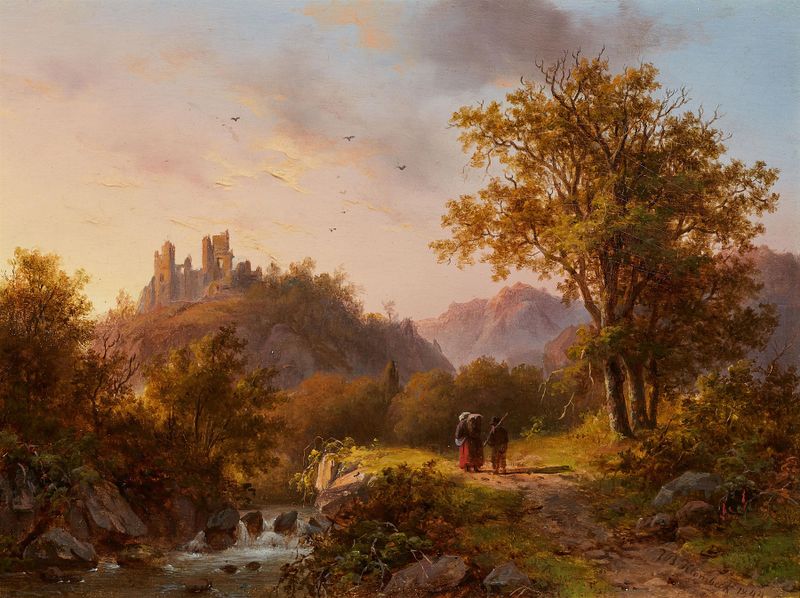
What if silence could speak through light? In Wanderer am Bach, the tranquility of nature invites contemplation, embodying a divine connection between humanity and the universe. Look to the foreground where a solitary figure stands by the gently flowing stream, bathed in the soft, golden hues of an afternoon sun. The warm light dances upon the water, creating a shimmering effect that draws the eye. The lush greenery surrounding the wanderer contrasts with the ruggedness of the rocks, revealing Klombeck’s masterful ability to capture texture and depth.
Notice how the figure, lost in thought, is framed by the delicate arch of overhanging branches, suggesting both solitude and harmony within this serene landscape. The emotional tension lies in the juxtaposition of the wanderer's stillness against the flowing movement of the stream, symbolizing the passage of time and the search for meaning in one’s journey. The interplay of light and shadow not only enhances the natural beauty of the scene but also evokes a sense of spiritual awakening—the possibility of finding divinity in stillness. Each brushstroke carries the weight of contemplation, hinting at the inner dialogue between the wanderer and the divine essence of nature. Created in 1854, the artist painted this work during a time when Romanticism was flourishing, and nature was revered for its spiritual and emotional depth.
Klombeck, who was influenced by the ideals of the Düsseldorf School, sought to express profound connections with the natural world. This period was marked by a growing fascination with landscape as a vehicle for personal reflection and the exploration of the sublime, making this piece a poignant representation of that artistic movement.
More Artworks by Johann Bernhard Klombeck
Browse all →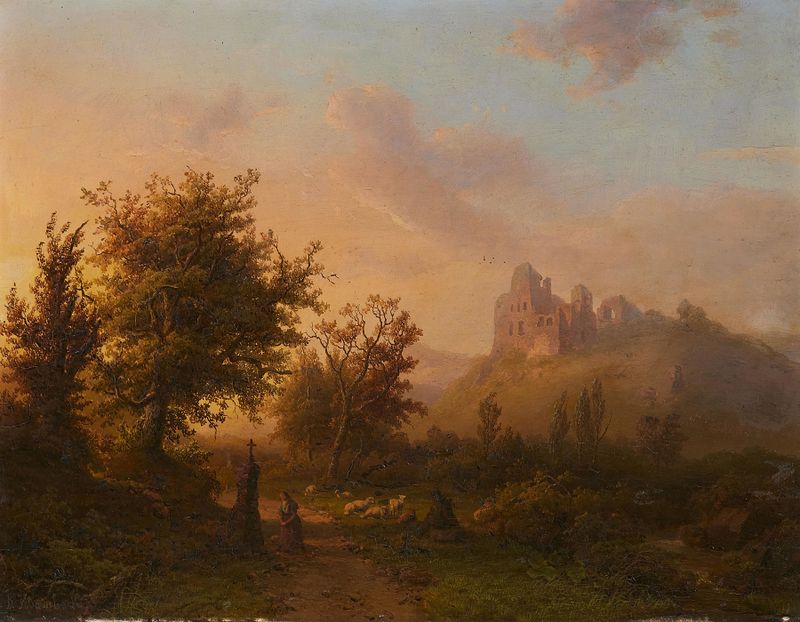
Landschaft mit Burgruine und einer Hirtin im Gebet
Johann Bernhard Klombeck
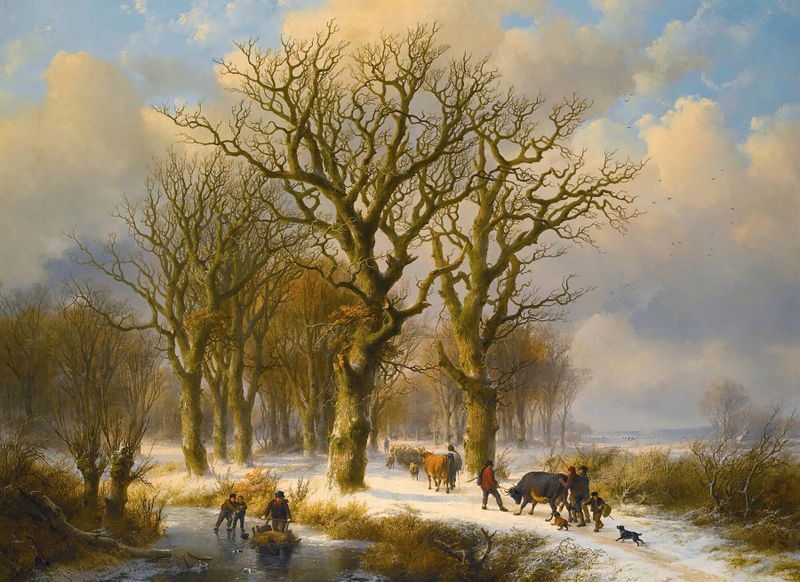
Winter Landscape With Cattle Drivers
Johann Bernhard Klombeck

Blick ins Rheintal
Johann Bernhard Klombeck

Winter Time
Johann Bernhard Klombeck
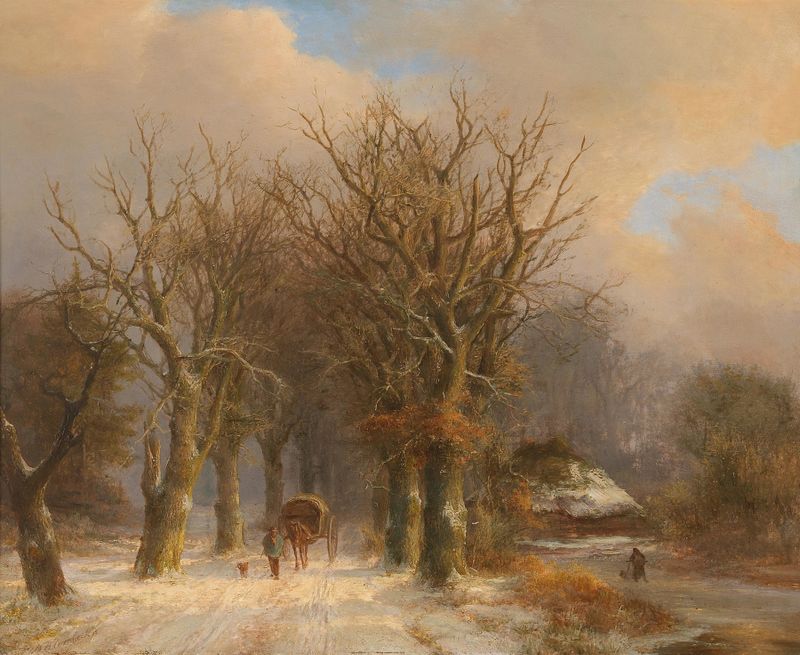
Winter Landscape with Horse and Cart
Johann Bernhard Klombeck
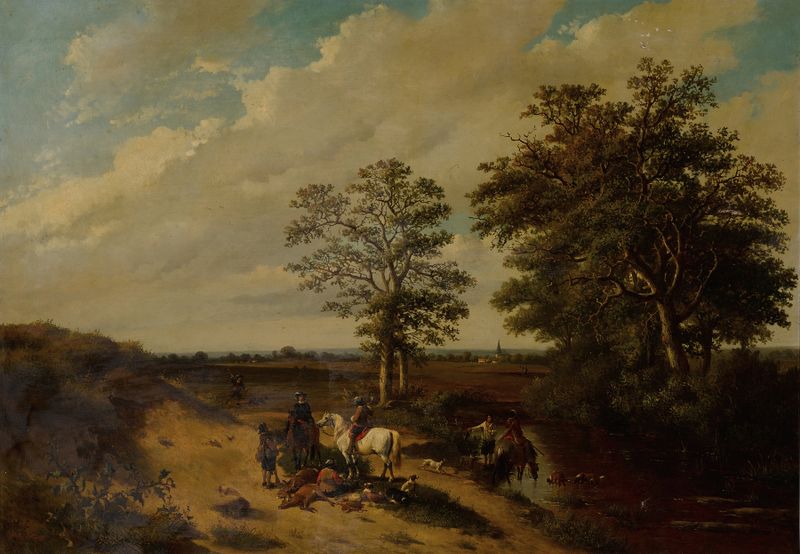
After the Hunt
Johann Bernhard Klombeck
Heimkehr vom Markt
Johann Bernhard Klombeck

Wooded landscape with peasant couple returning home
Johann Bernhard Klombeck

Waldlandschaft mit Teich
Johann Bernhard Klombeck

Landscape With Peasants Walking Near A River At Dusk
Johann Bernhard Klombeck





