
Wasserschloss in Reichertshausen — History & Facts
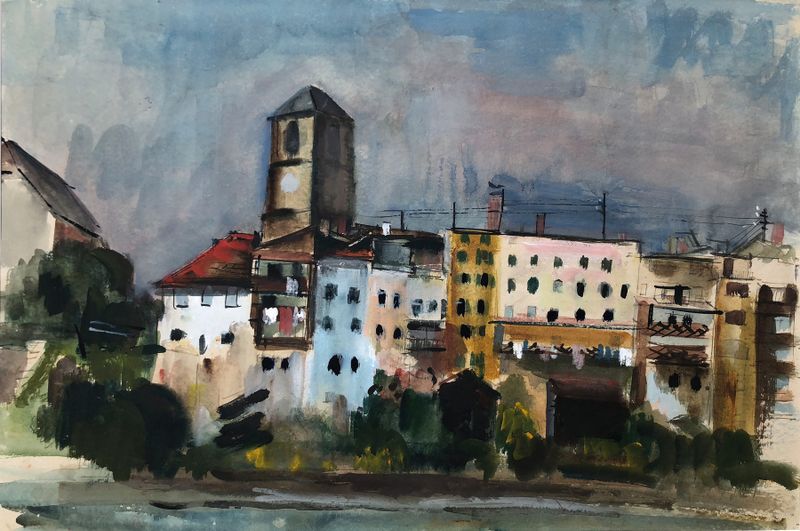
When did color learn to lie? We often trust the hues that envelop us, but in the hands of a master, they can lead us astray, suggesting motion where there is none. Look closely at the center of the canvas, where the waters of the Schloss shimmer like molten glass, reflecting a kaleidoscope of blues and greens. Notice how Geigenberger employs rapid brushstrokes that swirl and dance, transforming the tranquil setting into a symphony of movement. The ripples and reflections mirror not just the physical world, but evoke an emotional tide, suggesting the unseen currents beneath the surface. As you explore the edges, observe the juxtaposition between the sturdy architecture of the castle and the fluidity of the water surrounding it.
The contrast reveals a delicate tension: the permanence of stone against the ephemeral quality of water. This interplay invites contemplation of stability and change, evoking the passage of time and the shifting nature of memory. Each stroke captures a moment fleeting in nature, yet eternally encapsulated within the frame. Otto Geigenberger painted this work in Pfaffenhofen an der Ilm during the early 20th century, a period marked by the rise of expressionism and a growing interest in the emotive potential of color.
Amidst the societal upheaval of post-war Germany, the artist sought to convey a deeper, more visceral experience of the world, shaping his perspective into a vibrant language of movement and emotion.
More Artworks by Otto Geigenberger
Browse all →
Hohe Munde bei Seefeld in Tirol
Otto Geigenberger
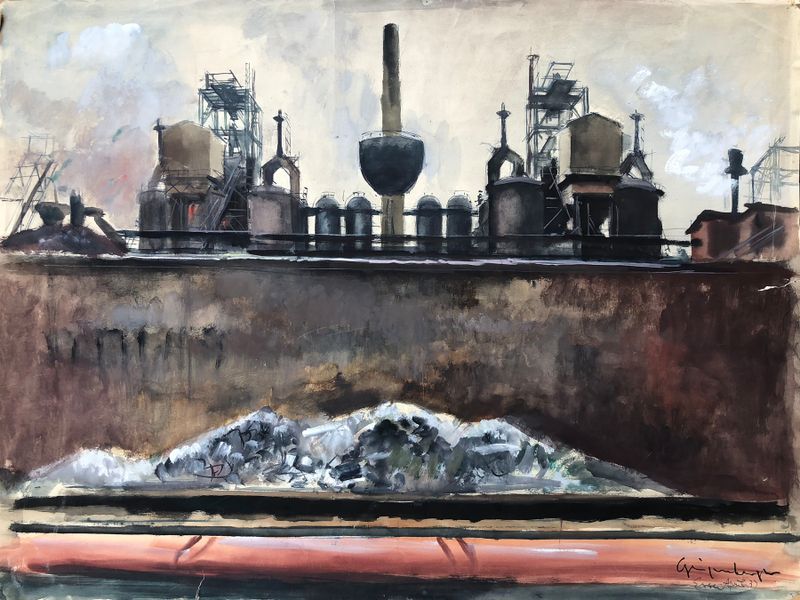
Stahlwerk Krupp in Essen
Otto Geigenberger

Landschaft mit Kirche
Otto Geigenberger

Passau am Inn 2
Otto Geigenberger
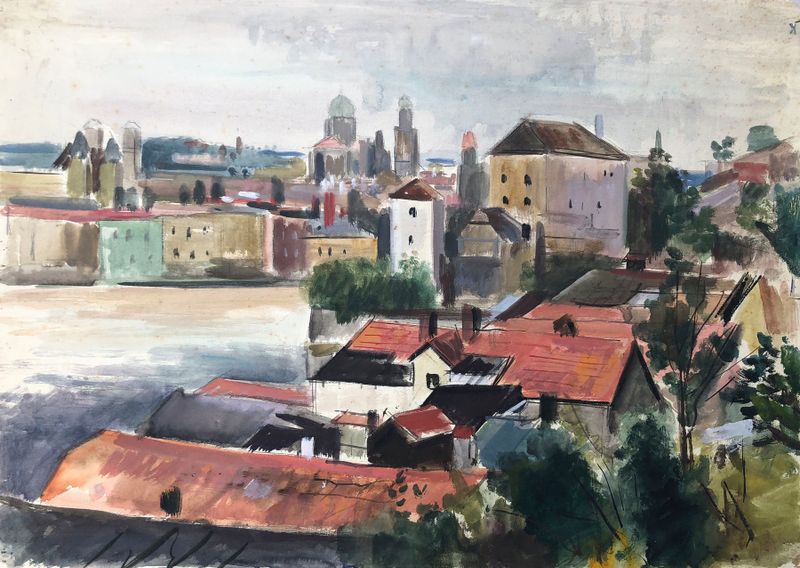
Passau am Inn
Otto Geigenberger
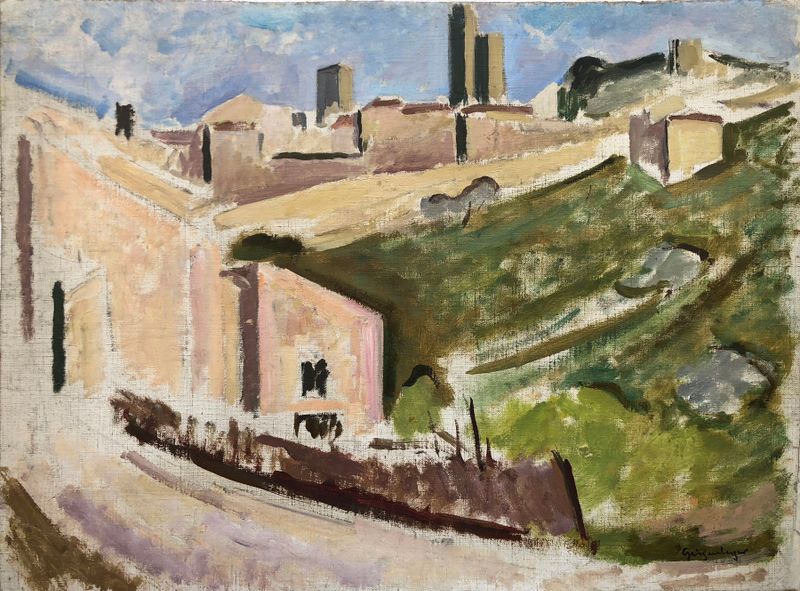
Südliche Stadt auf einem Hügel
Otto Geigenberger

Wasserburg am Inn – Häuserpartie am Inn
Otto Geigenberger

Wasserburg am Inn – Innfront
Otto Geigenberger
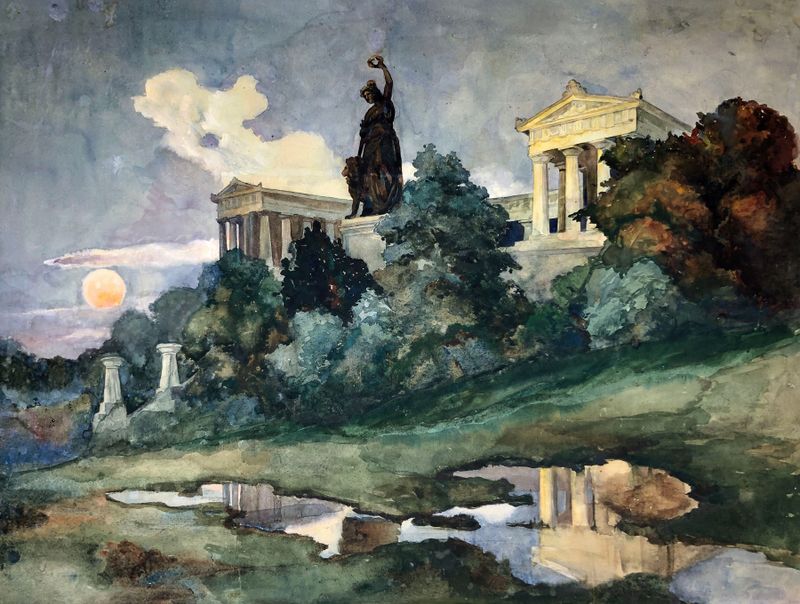
Sonnenuntergang an der Bavaria und Ruhmeshalle in München
Otto Geigenberger
Wasserburg am Inn – Innfront.
Otto Geigenberger





