Water mill in the mountains — History & Facts
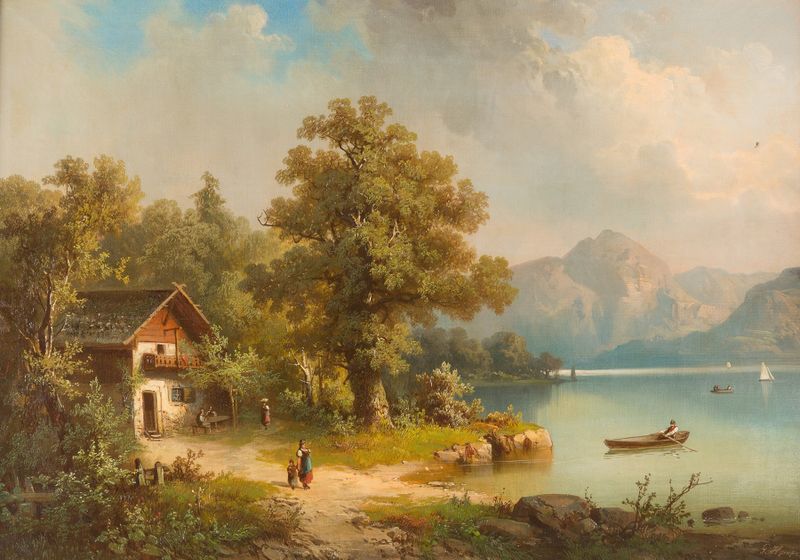
In the quiet solitude of the mountains, a sense of emptiness lingers, echoing the silence of forgotten times. Look to the foreground, where the weathered water mill stands resolute against the backdrop of towering peaks. The artist’s palette, dominated by muted earth tones, evokes both the strength and fragility of this structure. Notice how the light plays across the wooden beams, illuminating textures that tell stories of labor and endurance.
The soft ripples of the stream beside it draw your gaze, creating a serene contrast to the rugged landscape, inviting reflection on the balance between nature and human endeavor. In this work, the interplay of light and shadow reveals deeper emotional resonances. The stillness of the scene speaks to the isolation often found in rural life, while the gentle flow of water suggests continuity and life persisting despite the passage of time. Each brushstroke carries a weight, hinting at memories of those who toiled here, leaving behind traces of their existence.
The absence of figures amplifies the theme of emptiness, evoking a poignant longing for connection in a world that appears both beautiful and desolate. Guido Hampe painted this scene at an unspecified time, likely during a period of introspection amidst the evolving landscapes of early 20th-century art. During this era, artists were exploring a range of styles and techniques, often reflecting on their personal experiences and the tensions of modern life. Hampe’s focus on the rural sublime captures a moment where nature and architecture intertwine, rooted in the echoes of history while still resonating with contemporary viewers.