
Waterfalls at Subiaco — History & Facts
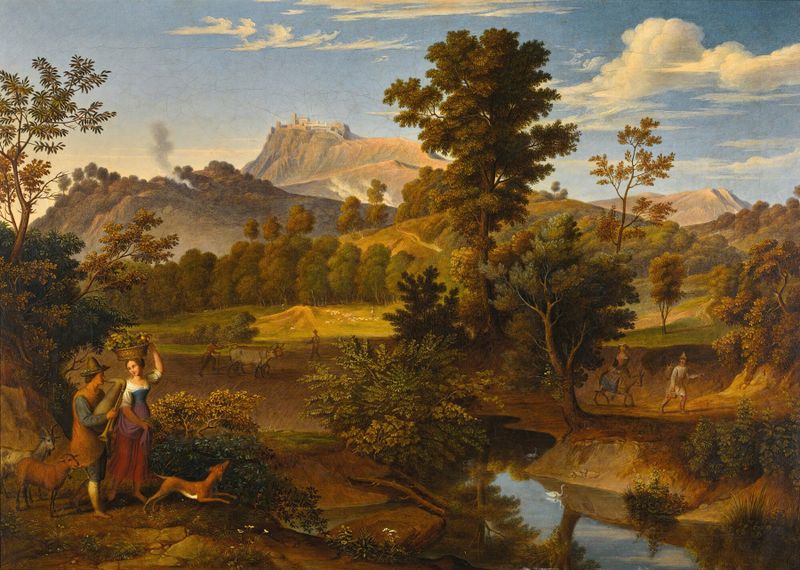
Did the painter know this moment would outlive them? In the delicate strokes of Waterfalls at Subiaco, the essence of nature is captured in a way that transcends time, inviting reflection on our own fleeting existence. Look to the right at the cascading water, where the currents twist and turn, each brushstroke weaving a narrative of movement and life. The vibrant greens and earthy browns create a harmonious balance, while the warm sunlight dapples the rocky outcrops, illuminating the scene with a soft golden hue. Notice how the interplay between light and shadow adds depth, urging the viewer to not only see but feel the rush of the water and the tranquility it provides. Beneath the surface beauty, a deeper tension emerges.
The contrasting elements of the delicate flora surrounding the powerful waterfall evoke a sense of fragility within strength. The juxtaposition of the serene landscape against the tumultuous flow of water hints at the duality of existence—how moments of calm often coexist with the chaotic forces of nature. Each detail, from the mist rising in the air to the rough cliffs, speaks to the artist's intent to immortalize a fleeting moment, a legacy etched into canvas. In 1813, Joseph Anton Koch painted this work during a period of personal exploration and artistic evolution.
At the time, he was navigating his place within the Romantic movement, drawing inspiration from natural landscapes while grappling with the emotional depth that such scenes could convey. This was a pivotal moment in art history, as artists began to shift their focus from idealized forms to the sublime beauty of nature, reflecting a growing recognition of its inherent power and majesty.
More Artworks by Joseph Anton Koch
Browse all →
Landscape near Olevano with a Parade of Dancing Peasants
Joseph Anton Koch
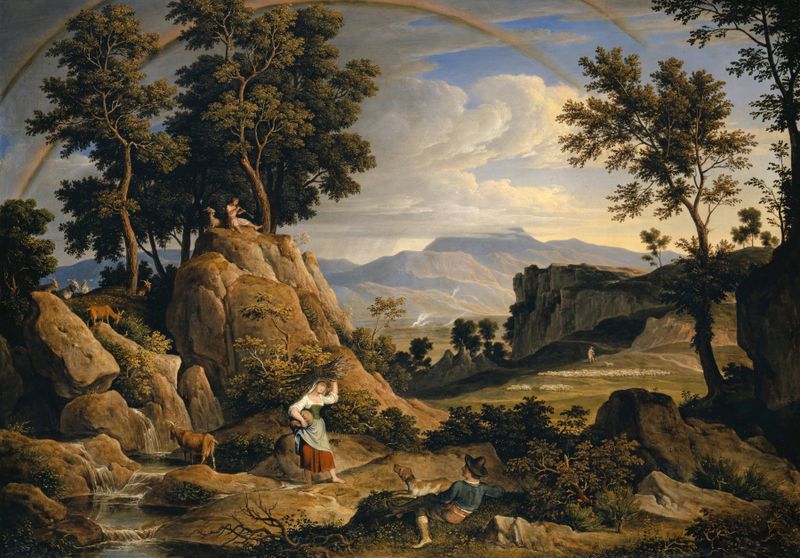
Landscape near Olevano with Rainbow
Joseph Anton Koch
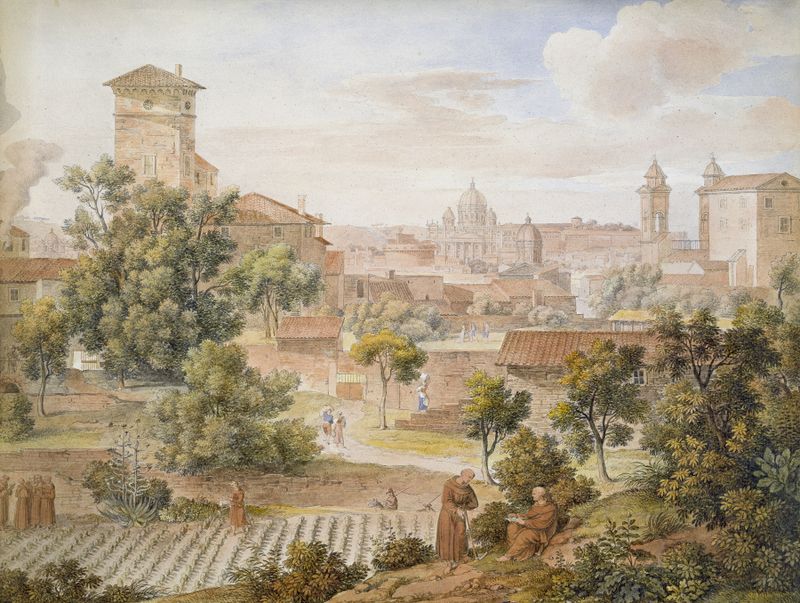
Blick vom Kloster S. Isidoro auf St. Peter in Rom
Joseph Anton Koch
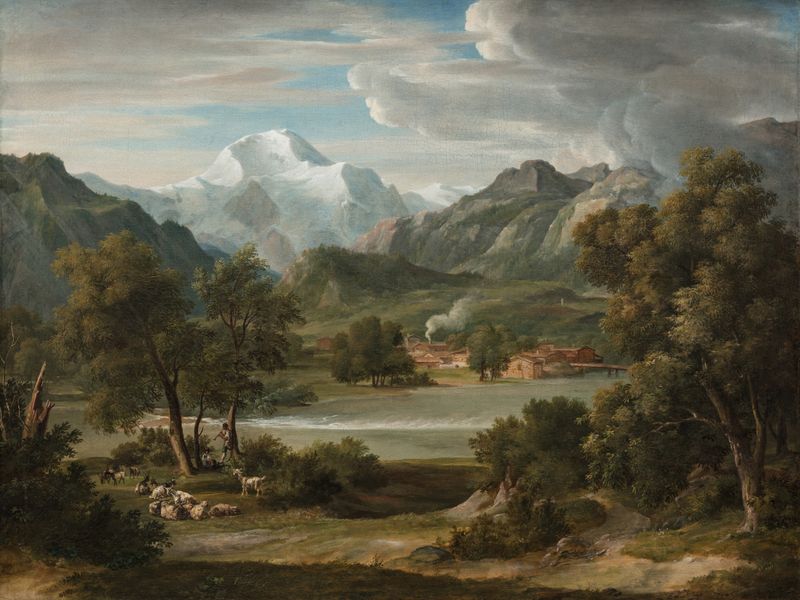
Lauterbrunnertal Near Unterseen With A View Of The Jungfrau
Joseph Anton Koch
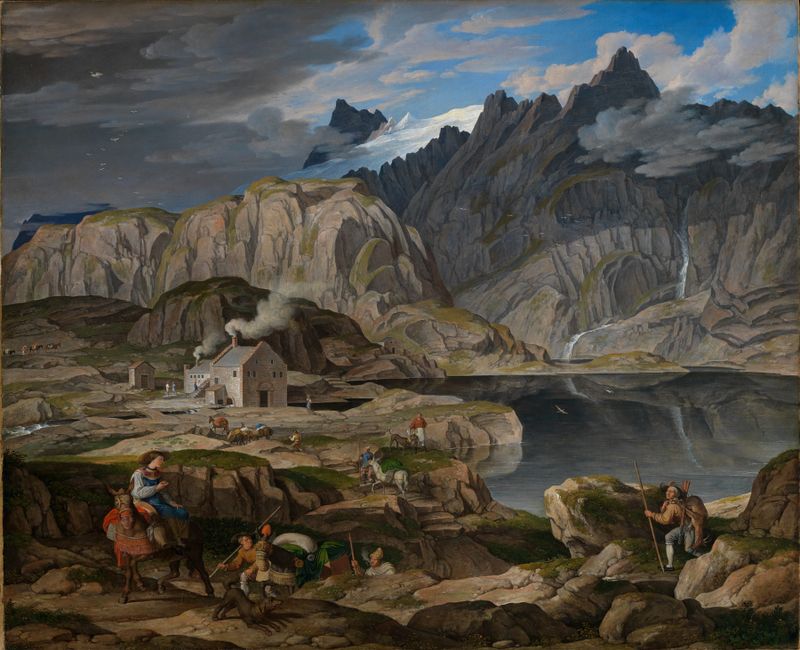
Das Hospiz auf dem Grimselpass
Joseph Anton Koch

Heroische Landschaft mit Regenbogen
Joseph Anton Koch

The Mönch And Jungfrau Seen From Unterseen
Joseph Anton Koch

Das Berner Oberland
Joseph Anton Koch

Das Wetterhorn mit dem Reichenbachtal
Joseph Anton Koch
Landscape Near Paliano
Joseph Anton Koch





