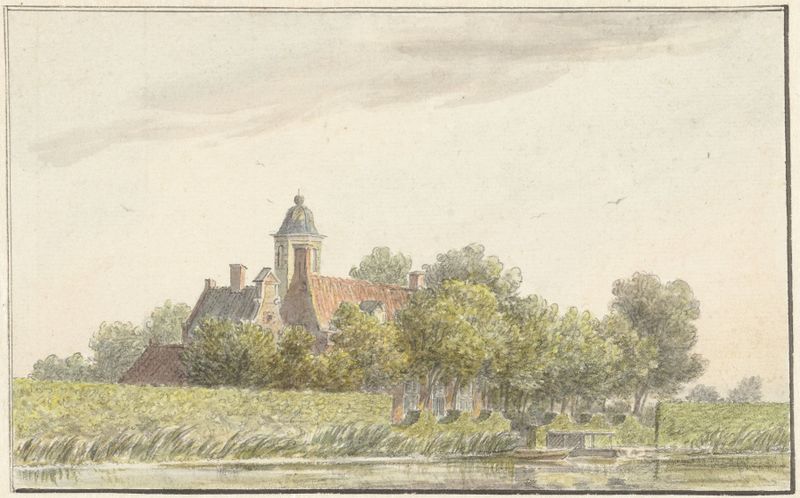
Weg durch einen Buchenwald, vorne eine hölzerne Brücke — History & Facts
This thought lingers in the air as we confront an enchanting depiction of nature, where a serene pathway weaves through a beech forest, inviting exploration yet hinting at underlying complexities. Look to the center, where the wooden bridge stretches gracefully across a gentle stream, its sturdy beams contrasting with the delicate foliage that envelops it. The artist employs a rich palette of green hues interspersed with dappled sunlight that filters through the trees, creating an interplay of light and shadow. The meticulous brushwork captures the texture of the bark and the soft rustling of leaves, drawing the viewer into this tranquil yet mysterious landscape. Yet, amid the charm lies a duality that provokes thought.
The path, though inviting, seems to lead into an unknown, suggesting the beauty of nature often conceals challenges ahead. The gentle curve of the bridge across the water invites reflection, while the dense trees loom like silent sentinels, perhaps guarding secrets or sorrows of the past. This hidden tension, a juxtaposition of peace and uncertainty, mirrors the complexities of life itself. Martinus van der Jagt created this piece during a period when artists were exploring the relationship between humanity and nature, grappling with romantic notions of the sublime and the picturesque.
The exact date remains elusive, but it reflects an era steeped in introspection, as society began to confront the industrial encroachments on the natural world. In this context, the work serves as a quiet yet powerful testament to both beauty and the revelations that lie within the wilderness.