
West Point Foundry, Cold Spring, New York — History & Facts
Can paint confess what words never could? In West Point Foundry, Cold Spring, New York, an unsettling quiet hangs over the industrial landscape, a silence laden with the unspoken violence of creation. Look to the left at the dark, brooding hills that cradle the foundry, the brushstrokes heavy with shadows that hint at the weight of industry. Notice how the light spills across the scene, illuminating the figures working diligently amongst the machinery, their forms nearly swallowed by the amber glow of molten iron. The juxtaposition of live workers against the stark, metallic behemoths of the foundry creates a palpable tension, revealing the relentless drive of human ambition amidst an environment steeped in both labor and danger. Delve deeper, and you'll find emotional contrasts woven into the fabric of the canvas.
The soft blues and earthy tones evoke a sense of somber reflection, where the industrious spirit wrestles with the underlying threat posed by the very machines that promise progress. Each worker’s gesture seems to echo the struggle between man and machine, hinting at the violence inherent in technological advancement—a battle for survival and identity amidst the relentless march of progress. In 1864, Weir painted this scene during the American Civil War, a time when industry was crucial to the war effort. Working in Cold Spring, New York, he was surrounded by an active foundry, producing armaments that would fuel the conflict.
This period was marked by a shift in artistic focus from pastoral life to the realities of modernity, reflecting both the turmoil of the nation and the transformative power of industry.
More Artworks by John Ferguson Weir
Browse all →
West Point Foundry, Cold Spring, New York (Rabbit)
John Ferguson Weir

Niagara Falls
John Ferguson Weir
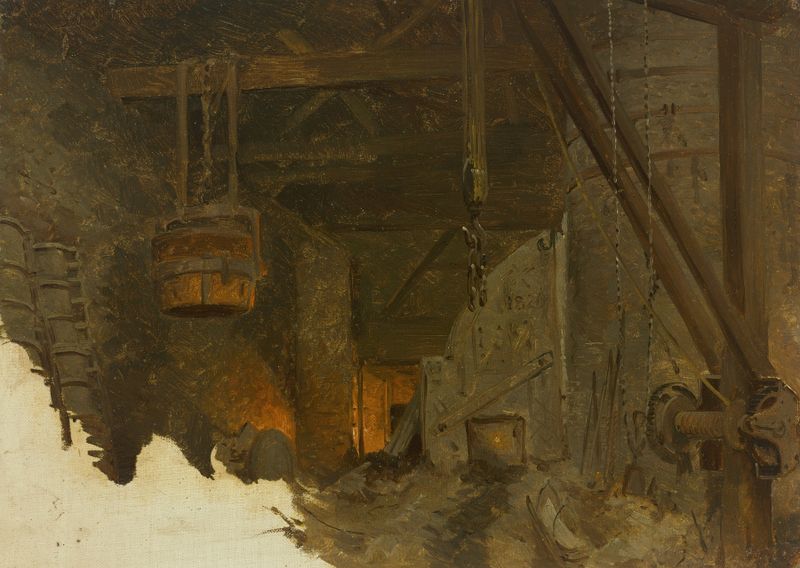
West Point Foundry, Cold Spring, New York
John Ferguson Weir

West Point Foundry, Cold Spring, New York
John Ferguson Weir

Forest Scene
John Ferguson Weir

Forest Scene
John Ferguson Weir

Alhambra, Granada, Spain
John Ferguson Weir

An Abandoned Quarry
John Ferguson Weir
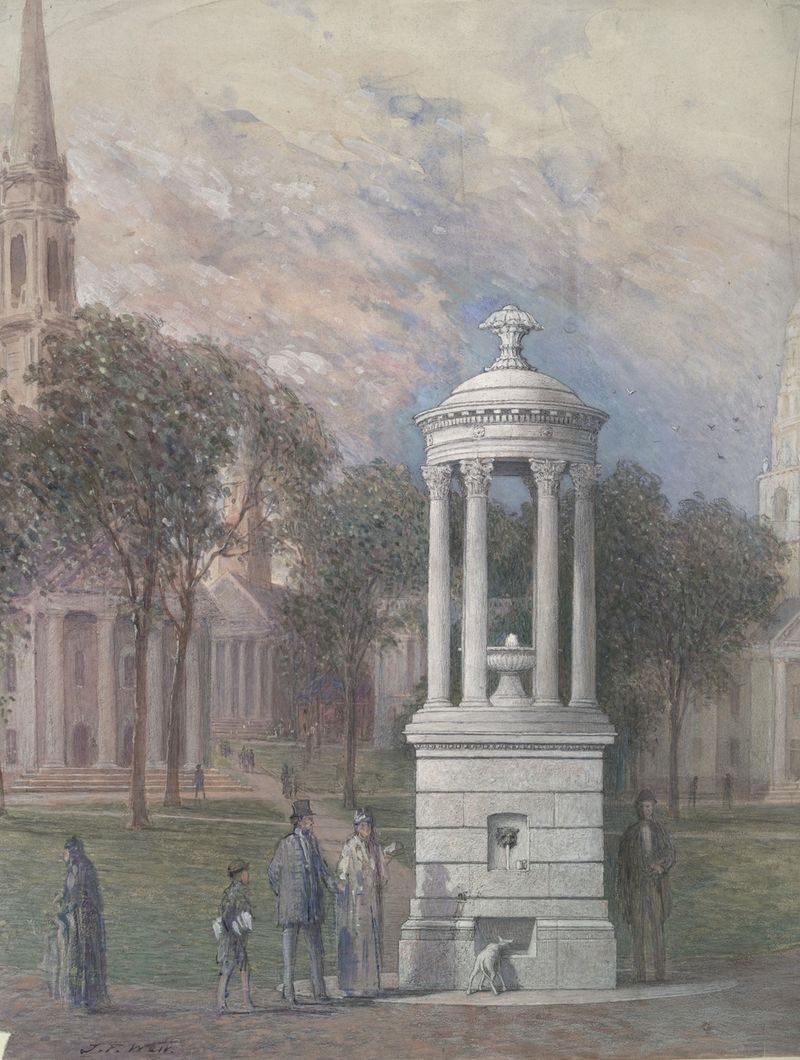
Bennett Fountain on New Haven Green
John Ferguson Weir

West Point Foundry, Cold Spring, New York
John Ferguson Weir





