
West Point Foundry, Cold Spring, New York (Rabbit) — History & Facts
Could beauty survive in a century of chaos? Look to the left at the bold, sweeping lines of the trees entwined with the industrial landscape, framing the scene against a backdrop of vibrant blue sky. The warm hues of sunlight spill over the foundry, illuminating the billowing smoke that dances above chimneys, hinting at the ceaseless activity within. Notice how the artist employs a dynamic palette, blending greens, browns, and metallic grays, creating a vivid contrast that captures both the natural and mechanical realms in delicate harmony. As you delve deeper, reflect on the tension between nature and industry, each element fighting for dominance.
The flowing river at the forefront contrasts with the rigid structures of the foundry, serving as a reminder of life’s persistence amid the encroaching steel. The movement in the water echoes the human spirit's resilience, while the distant mountains stand as silent witnesses to an evolving world. Here, the artist encapsulates the disquiet of progress, suggesting that even in the throes of industrialization, beauty persists in unexpected forms. John Ferguson Weir created this remarkable piece in 1864 while residing in Cold Spring, New York, a period marked by the Civil War's tumult and the rise of American industry.
The foundry depicted was central to manufacturing efforts, and Weir’s work reflects the tensions of a nation in upheaval, grappling with technological advancements against a backdrop of social upheaval. His own life was steeped in the art community, deeply influenced by the Romantic ideals of beauty and the sublime, shaping his perspective on the merging of nature and industry.
More Artworks by John Ferguson Weir
Browse all →
West Point Foundry, Cold Spring, New York
John Ferguson Weir

Niagara Falls
John Ferguson Weir
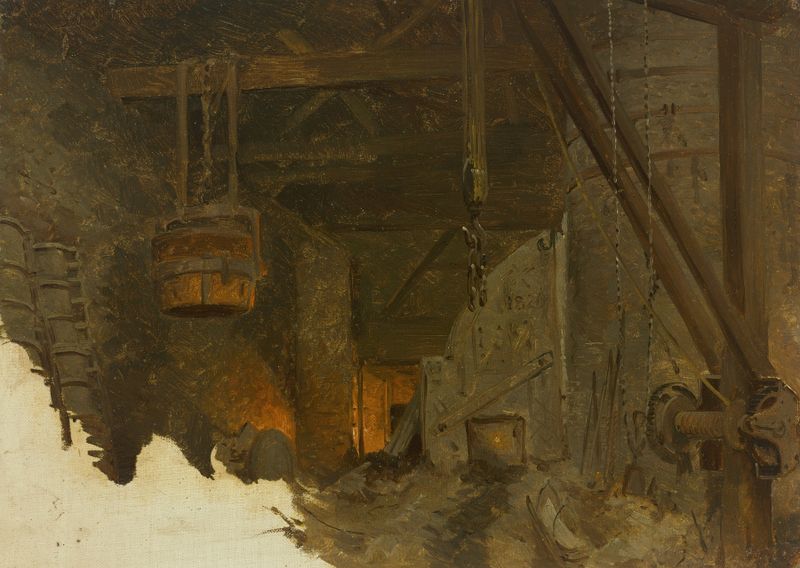
West Point Foundry, Cold Spring, New York
John Ferguson Weir

West Point Foundry, Cold Spring, New York
John Ferguson Weir

Forest Scene
John Ferguson Weir

Forest Scene
John Ferguson Weir

Alhambra, Granada, Spain
John Ferguson Weir

An Abandoned Quarry
John Ferguson Weir
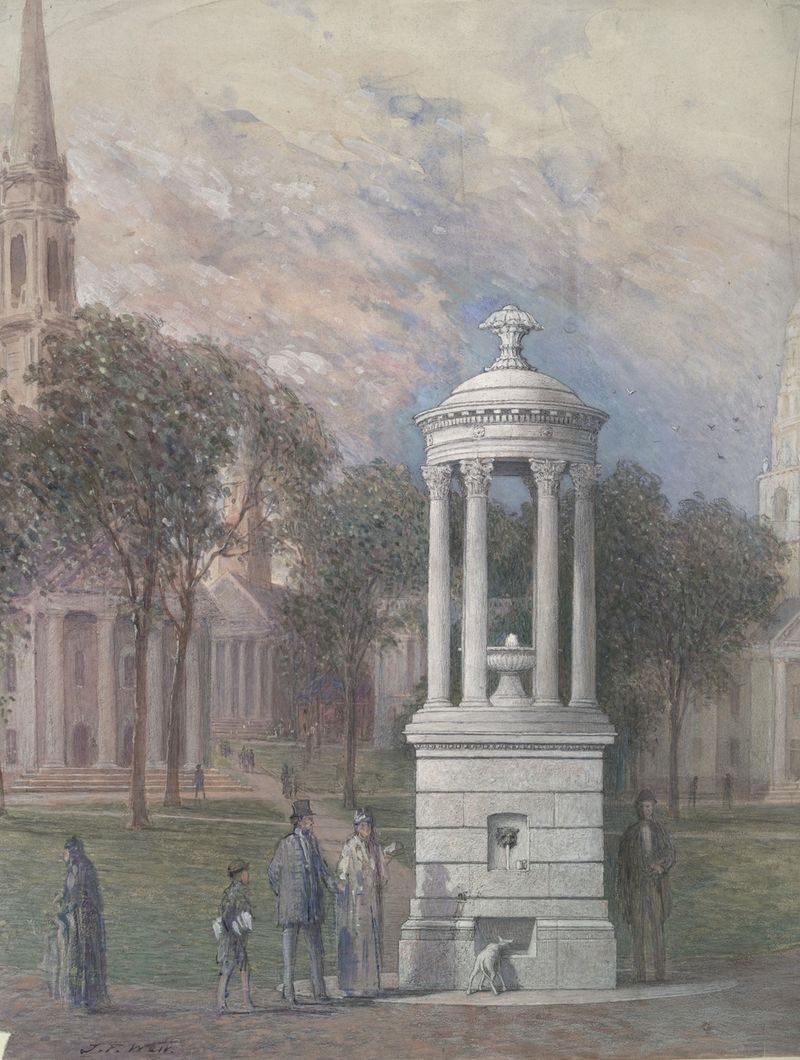
Bennett Fountain on New Haven Green
John Ferguson Weir

West Point Foundry, Cold Spring, New York
John Ferguson Weir





