
West Point Foundry, Cold Spring, New York — History & Facts
In West Point Foundry, Cold Spring, New York, the rhythm of industrial life pulses through the paint, capturing the movement of time and labor in a vivid tableau. Focus first on the foreground, where the figures blend seamlessly into their environment, each one an embodiment of activity. Notice how the play of light illuminates the workers, casting long shadows that stretch across the ground, suggesting both the weight of their toil and the fleeting nature of their labor. The palette is earthy and muted, with shades of browns and grays that reflect the gritty reality of a foundry, yet hints of yellow and orange dance through the composition, infusing it with warmth and life. The juxtaposition of stillness and motion resonates throughout the piece.
While the workers are engaged in various tasks, they are framed by the imposing structures of the foundry, which loom like sentinels of progress and industry. This contrast highlights the emotional tension between human endeavor and the relentless machinery of advancement. Small details, like the scattering of tools and the billowing smoke, speak to both the chaos and the order of labor, encapsulating the spirit of an era marked by innovation. Weir painted this work in 1864 while living in Cold Spring, New York, a period when the nation was grappling with the Civil War's impact on society and industry.
He was deeply influenced by the Hudson River School, yet sought to merge the romanticism of nature with the realities of industrial growth. The painting reflects this transitional moment in American art, where Romanticism began to yield to a more modern understanding of the American landscape and its evolving identity.
More Artworks by John Ferguson Weir
Browse all →
West Point Foundry, Cold Spring, New York
John Ferguson Weir

West Point Foundry, Cold Spring, New York (Rabbit)
John Ferguson Weir

Niagara Falls
John Ferguson Weir
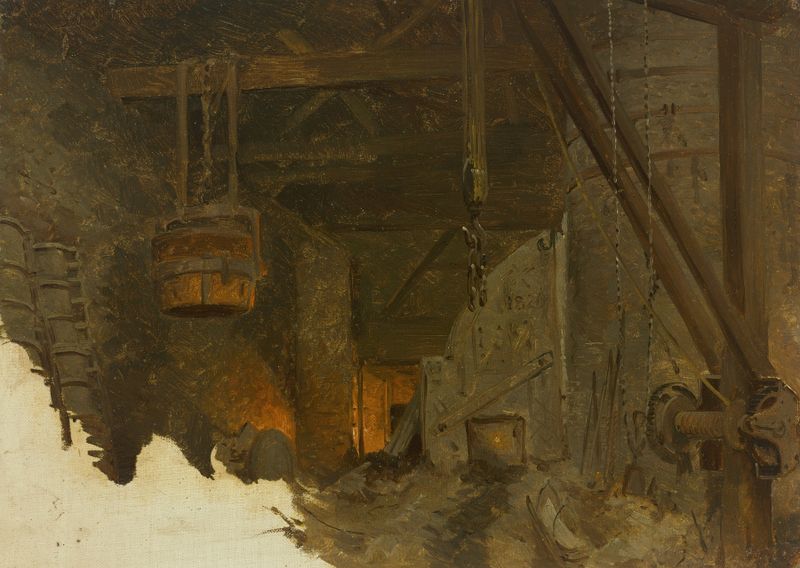
West Point Foundry, Cold Spring, New York
John Ferguson Weir

Forest Scene
John Ferguson Weir

Forest Scene
John Ferguson Weir

Alhambra, Granada, Spain
John Ferguson Weir

An Abandoned Quarry
John Ferguson Weir
Bennett Fountain on New Haven Green
John Ferguson Weir

West Point Foundry, Cold Spring, New York
John Ferguson Weir





