
Western Landscape — History & Facts
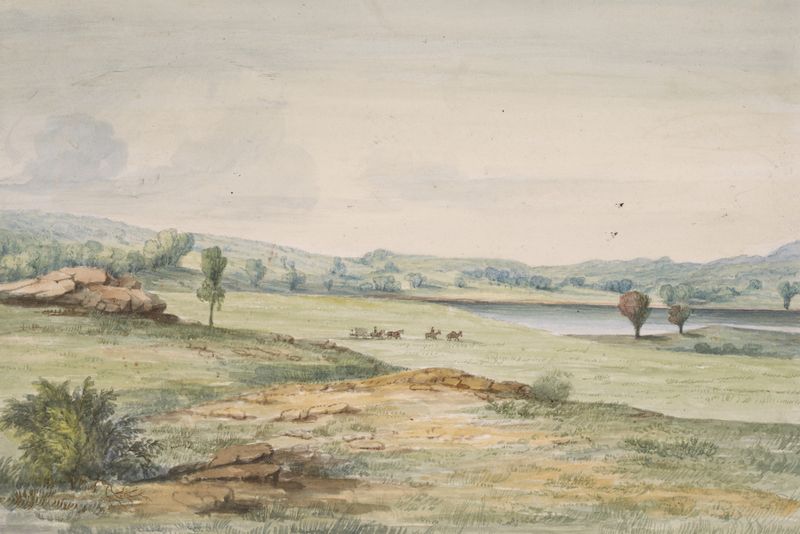
In the vast expanse of the canvas, a delicate equilibrium surfaces, whispering tales of nature's serene strength and fragile vulnerability. Look to the left at the rolling hills that bend seamlessly into the horizon, their muted greens and browns softly melding together. Notice how the clouds hover overhead, their light grays contrasting with the warm tones of the earth, creating a dynamic visual rhythm. The composition is meticulously balanced, with elements of land and sky harmonizing to define a tranquil yet powerful scene.
Each stroke reveals a careful consideration, evoking a sense of calm contemplation. Delve deeper into the painting’s subtle contrasts: the gentle play of light against shadow speaks to the passage of time, while the solitary tree stands as a guardian of memory, its branches reaching out in quiet defiance. The interplay of warm and cool colors invites reflection on the dualities of existence—life and death, serenity and chaos. Here, nature is not merely a backdrop; it is a character, breathing and pulsating through the landscape, echoing the emotions of those who gaze upon it. John Mix Stanley created this evocative piece between 1847 and 1849, during a period marked by the burgeoning exploration of the American West.
Living in a time of heightened interest in westward expansion, his work reflects both the awe and the introspection inspired by untamed landscapes. This painting stands as a testament to his artistic journey, as he sought to balance the sublime beauty of nature with the human experience.
More Artworks by John Mix Stanley
Browse all →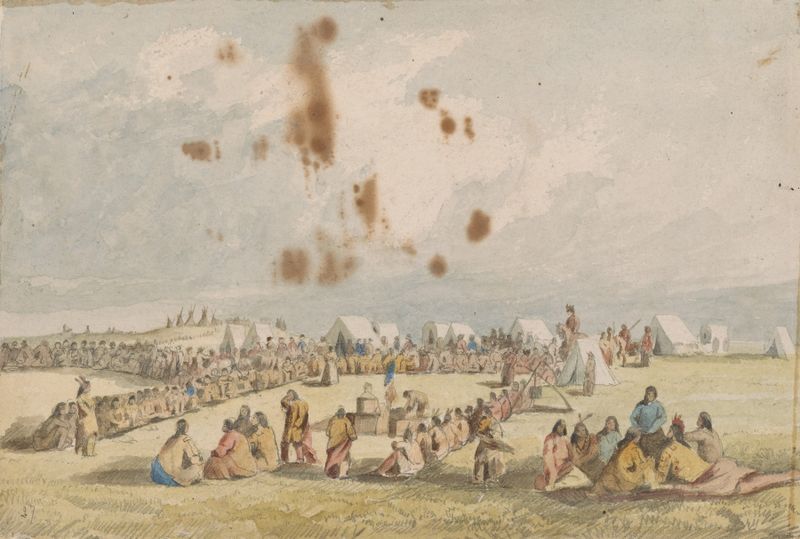
Distribution of Goods to the Assiniboins
John Mix Stanley
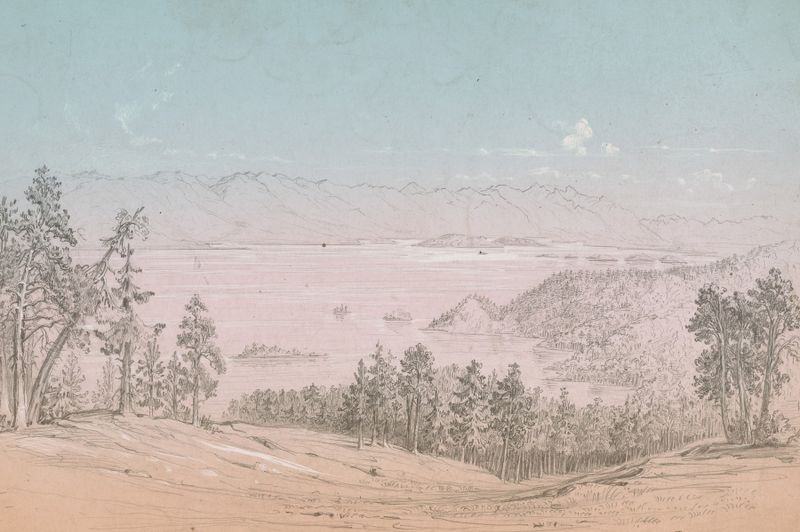
Flathead Lake, Looking toward the South
John Mix Stanley

A Morning in Milk River Valley
John Mix Stanley

Mount Rainier Viewed from Near Steilacoom
John Mix Stanley
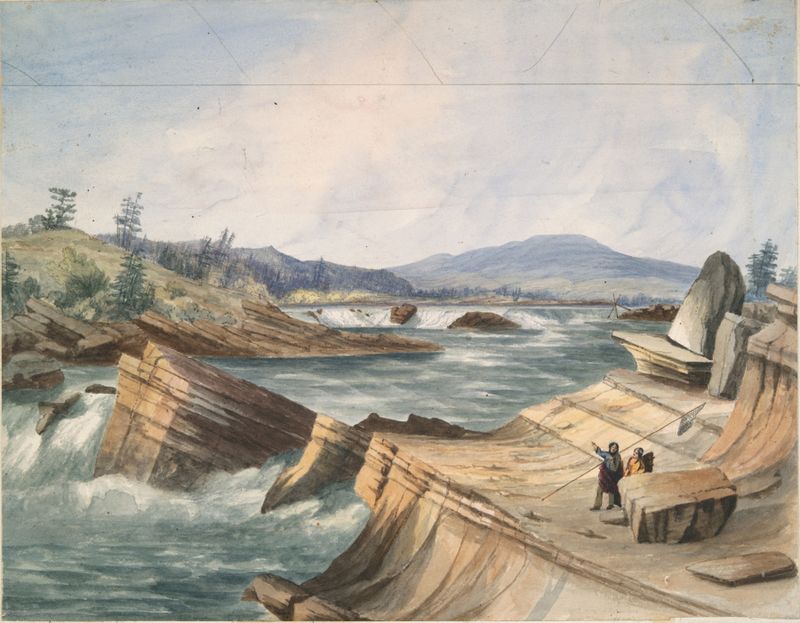
Kettle Falls, Columbia River
John Mix Stanley
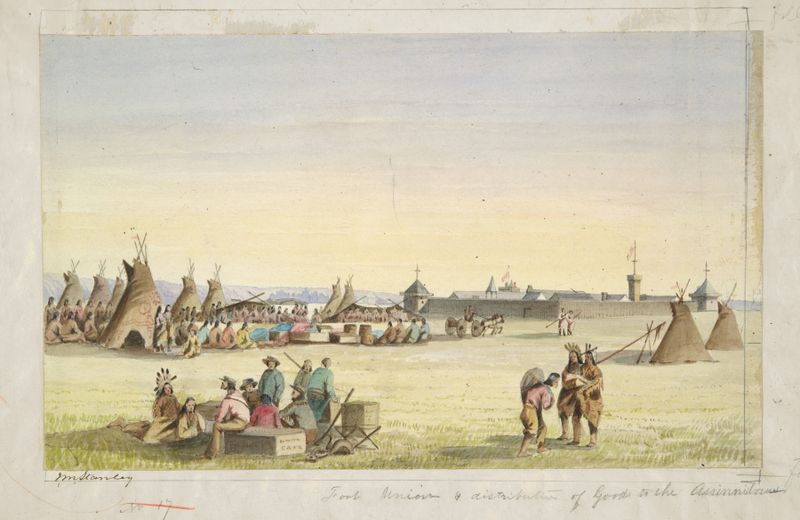
Fort Union and Distribution of Goods to the Assiniboins
John Mix Stanley

Pike Lake M.T.
John Mix Stanley
Sauk River
John Mix Stanley

Milk River – Bear’s Paw Mountain in Distance
John Mix Stanley

Fort Benton
John Mix Stanley





