
White Head, Monhegan — History & Facts
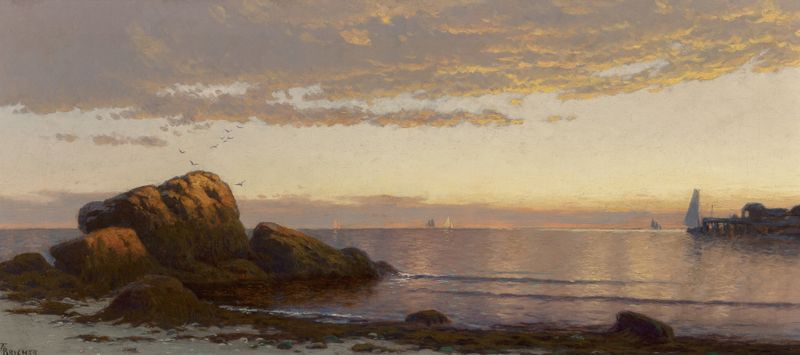
Did the painter know this moment would outlive them? In the delicate balance of nature's chaos lies a quiet madness, captured within the brushstrokes of a master. Look to the center of the canvas, where the lighthouse stands resolute against the tumultuous sea, its white façade gleaming under the soft touch of sunlight. The artist's deft hand conveys movement in the crashing waves, highlighting the rhythm of nature's fury with deep blues and frothy whites. Shades of gray in the sky suggest an impending storm, while the lighthouse itself anchors the scene, a beacon of hope amidst the turmoil.
Notice the way the light dances across the water, a shimmering invitation that draws the eye into the heart of the composition. Beneath the surface of this serene chaos lies an exploration of isolation and endurance. The lighthouse, often seen as a symbol of guidance, also embodies the solitary struggle against nature’s whims. The turbulent waves speak of madness, a relentless and chaotic force that contrasts sharply with the steadfastness of the structure.
Each element—rock, water, light—holds a duality of beauty and danger, hinting at the internal battles faced not just by nature, but also by those who seek solace within it. Created in a time when American landscape painting was evolving, the artist worked during a period marked by an appreciation for natural beauty and a burgeoning desire for artistic expression. Bricher, known for his romantic depictions of coastal scenes, painted this piece likely during his time in Monhegan, Maine, a place that captivated many artists of the late 19th century. The world was shifting, and as nature was revered, the artist found his own footing within a movement that celebrated both the sublime and the maddening power of the environment.
More Artworks by Alfred Thompson Bricher
Browse all →
New England Coast
Alfred Thompson Bricher
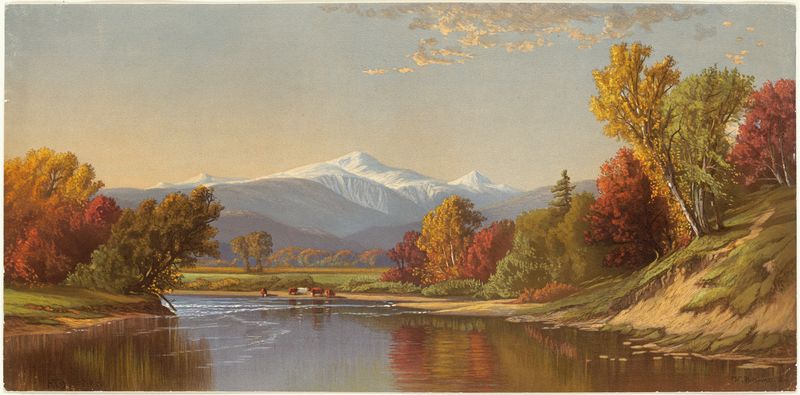
Late Autumn in the White Mountains
Alfred Thompson Bricher
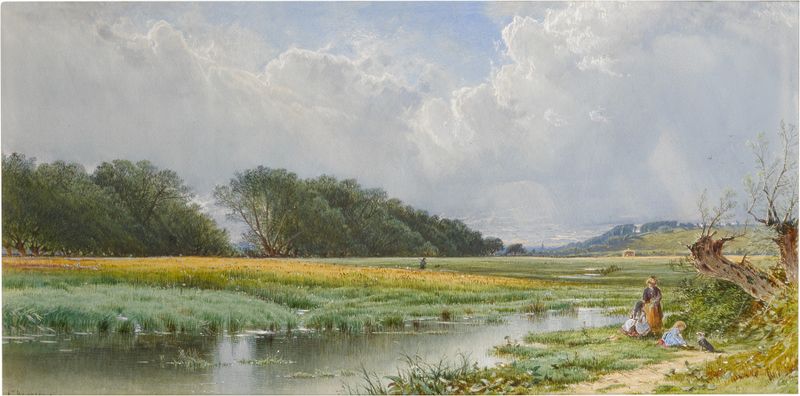
On the Meadows of Old Newburyport
Alfred Thompson Bricher

Along the Maine Coast
Alfred Thompson Bricher
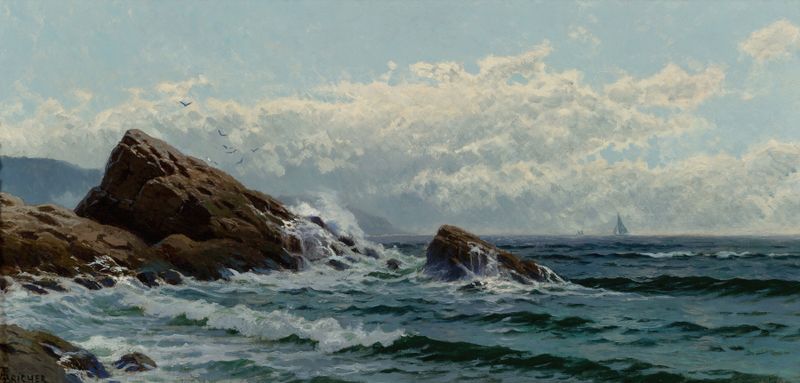
Crashing Waves
Alfred Thompson Bricher

At Water’s Edge
Alfred Thompson Bricher
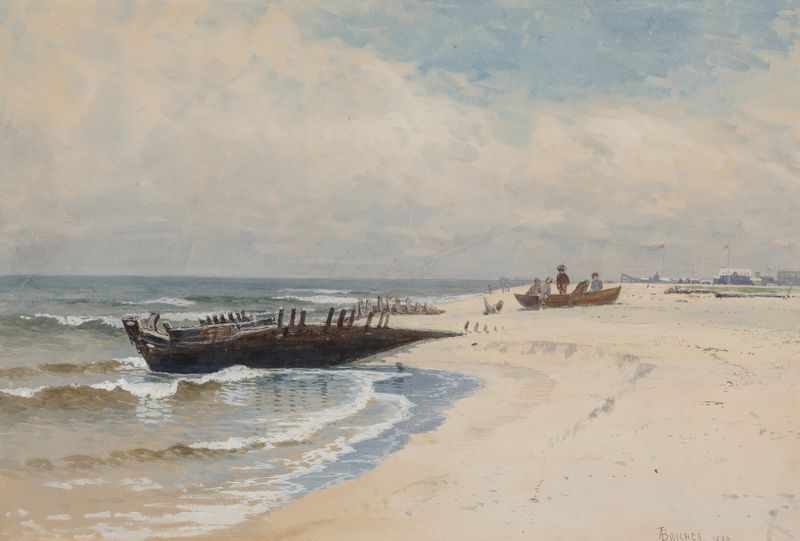
Low Tide
Alfred Thompson Bricher
Sunset on the Coast
Alfred Thompson Bricher

Castle Rock, Nahant, Massachusetts
Alfred Thompson Bricher

On the Meadows of Old Newburyport
Alfred Thompson Bricher





