
Wieża Bernardynów — History & Facts
In the stillness of Wieża Bernardynów, a quiet yet profound exploration of creation unfolds, beckoning viewers to delve into layers of meaning beneath its serene surface. Look to the left at the towering structure, its imposing silhouette rising against a soft sky. The warm hues of ochre and muted greens envelop the scene, inviting a reflection on the passage of time. Notice how the light catches the edges of the bricks, revealing their texture and the history they carry, creating a sense of depth that transcends the canvas.
Each brushstroke becomes a whisper, a testament to the artist’s meticulous technique and the attention to detail that grounds this architectural marvel in reality. Beneath the surface beauty lies a tension between permanence and impermanence. The tower, both a physical and spiritual landmark, stands as a symbol of aspiration and hope, its form echoing the reach for something greater. The surrounding landscape, painted with softer strokes, suggests a quiet melancholy, as if nature itself contemplates the stories held within the walls, each silence imbued with unspoken truths.
This interplay invites the viewer to ponder their own connections to the past and the act of creation itself. In 1930, Tadeusz Cieślewski crafted Wieża Bernardynów during a time marked by the interwar period in Poland, a moment of both cultural flourishing and uncertainty. As artists sought to define their identity amidst shifting socio-political landscapes, Cieślewski turned to architecture to explore notions of heritage and memory. This painting reflects not only his skill but also a collective yearning for stability and meaning in a rapidly changing world.
More Artworks by Tadeusz Cieślewski
Browse all →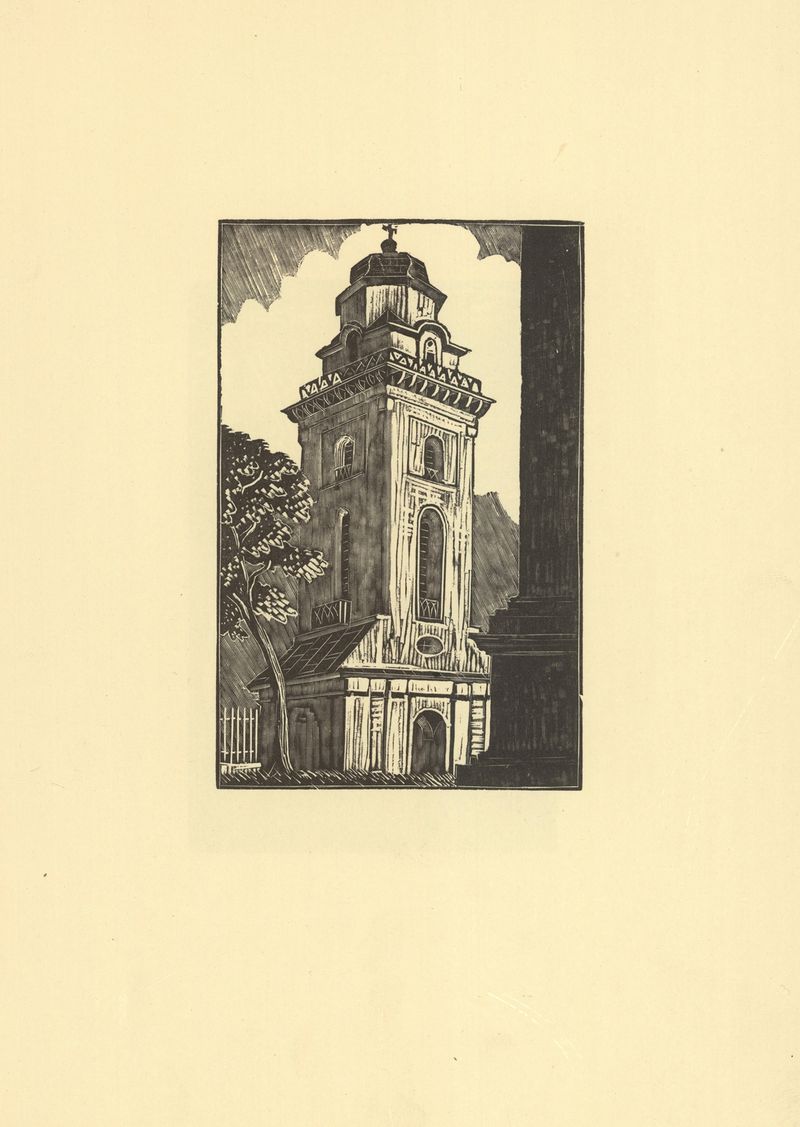
Zamość Pl.2
Tadeusz Cieślewski
Dwanaście widoków Warszawy – Title page
Tadeusz Cieślewski
Mountainous landscape with a river
Tadeusz Cieślewski
Zamość Pl.3
Tadeusz Cieślewski
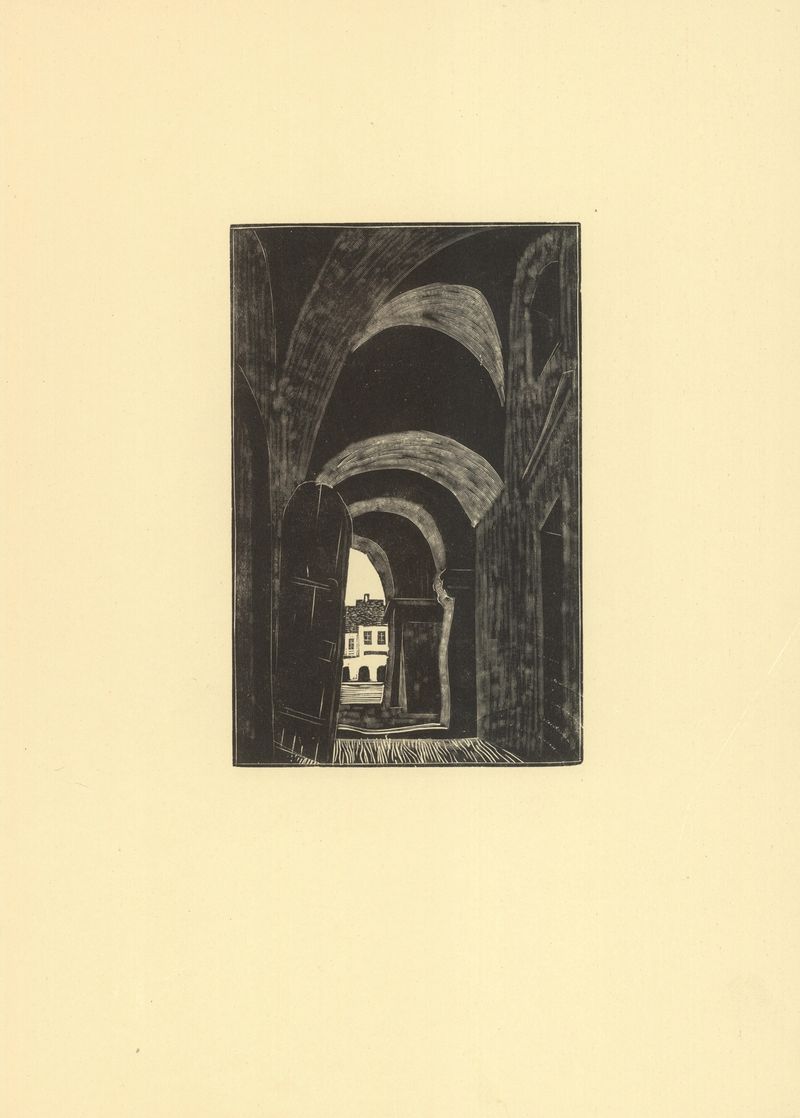
Zamość Pl.5
Tadeusz Cieślewski
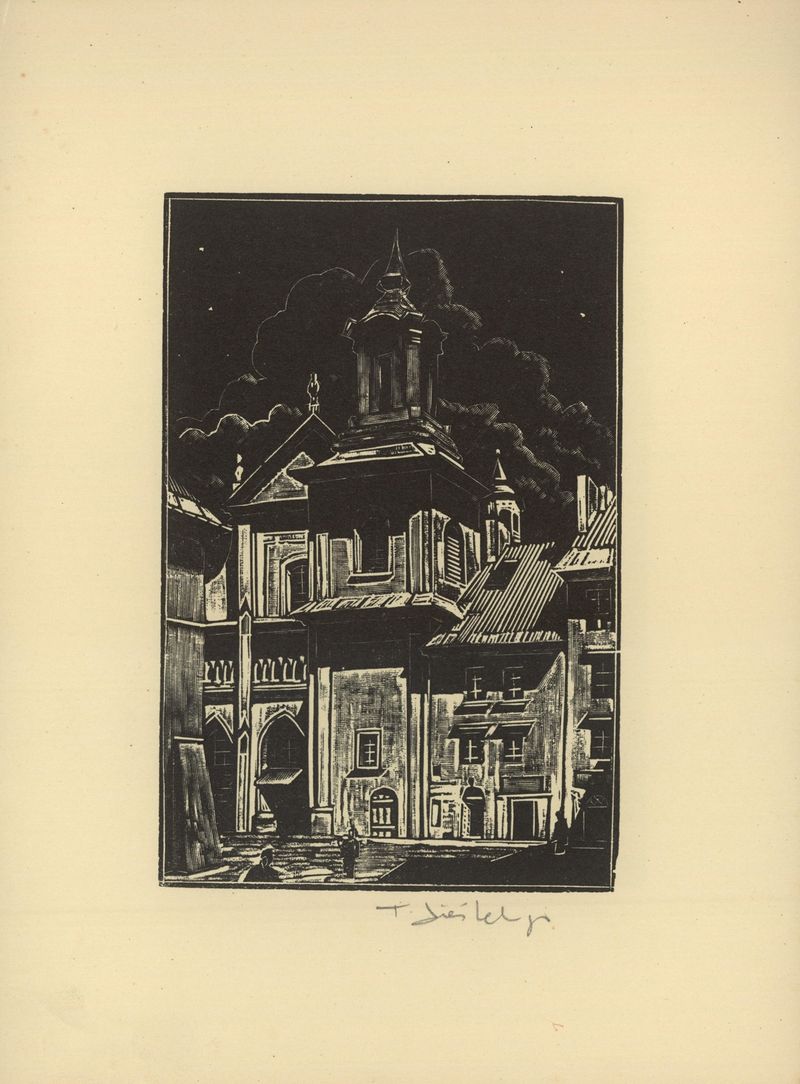
Kościół Dominikanów
Tadeusz Cieślewski

Pomnik Kopernika
Tadeusz Cieślewski
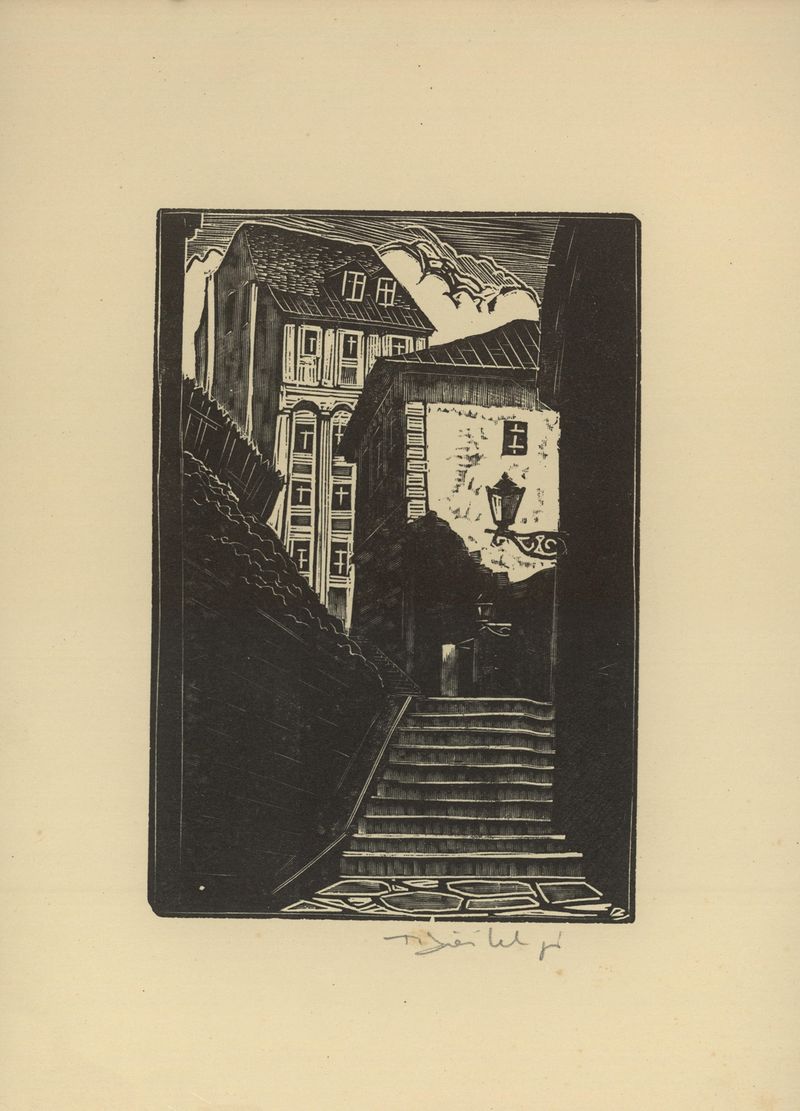
Kamienne Schodki
Tadeusz Cieślewski
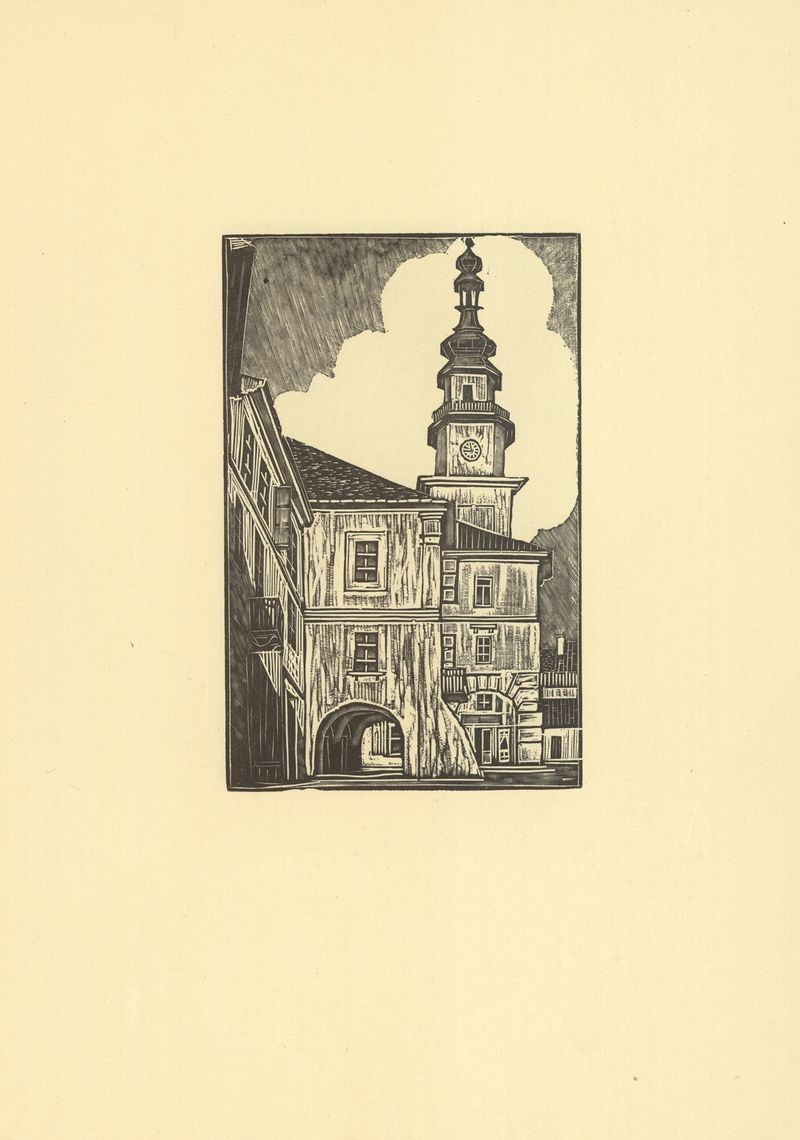
Zamość Pl.4
Tadeusz Cieślewski

Kościół Św. Anny
Tadeusz Cieślewski
More Architecture Art
Browse all →
The statue of Liberty
Frédéric Auguste Bartholdi

View of Houses in Delft, Known as ‘The Little Street’
Johannes Vermeer

View of Houses in Delft, Known as ‘The Little Street’
Johannes Vermeer

The Cathedral in Rouen. The portal, Grey Weather
Claude Monet

The yellow house
Vincent van Gogh

The Church in Auvers-sur-Oise, View from the Chevet
Vincent van Gogh