William Henry Harrison — History & Facts
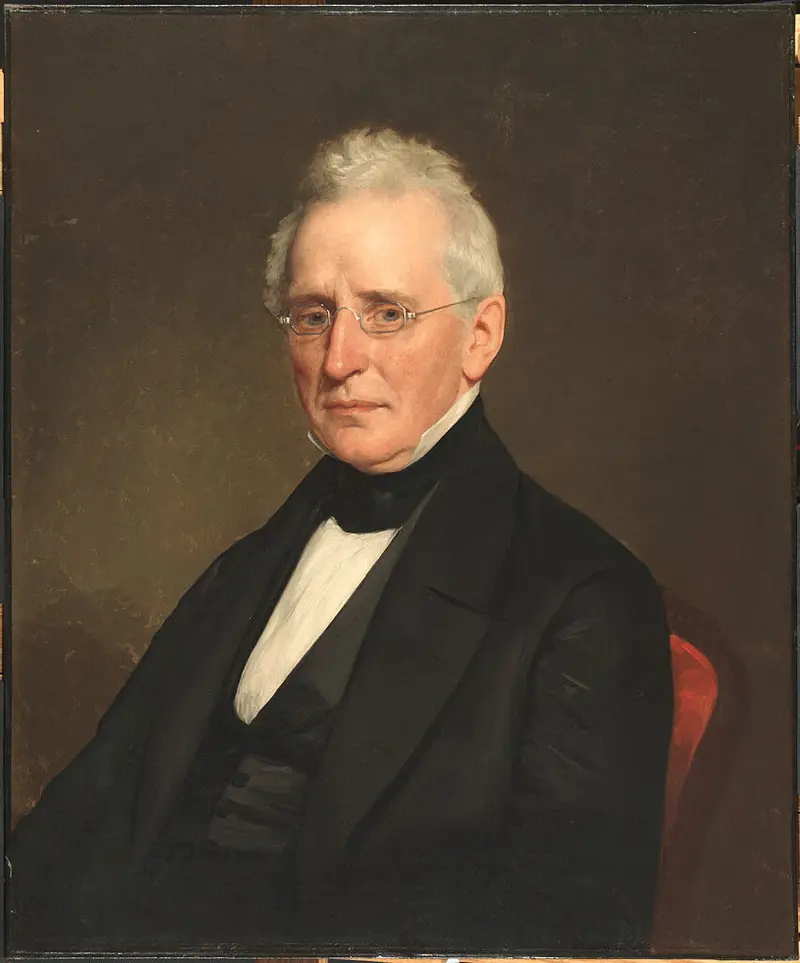
A face emerges from the hush of a brown background, every line of age and care rendered with careful clarity. The sitter’s gaze is steady, his mouth set in a line that suggests both resolve and a hint of fatigue. The artist, Albert Gallatin Hoit, has chosen a sober palette and a direct, unadorned composition, drawing the viewer’s attention to the man’s expression and the crisp white of his cravat.
The light falls from the left, illuminating the planes of his face and the silver in his hair, while the dark coat and background recede, heightening the sense of presence and gravity. The red of the chair, just visible, lends a quiet dignity, a reminder of office or authority without ostentation. Painted in 1840, this portrait belongs to a period when American society was rapidly changing, and likenesses such as this served both public and private purposes. Portraits of statesmen and public figures were commissioned to assert legitimacy, commemorate achievements, or simply to capture a fleeting moment of power.
The straightforward realism and lack of theatrical gesture reflect the values of the era: seriousness, restraint, and the importance of character. Little is recorded about the journey of this specific work, now preserved in the digital collection referenced by its source, but its very survival speaks to the enduring fascination with faces that once shaped a nation. Stand before it a moment longer, and let your eyes meet his — the conversation is silent, but it is not over.